
Selank Research: What Scientists Are Learning About This Anxiolytic Neuropeptide
·

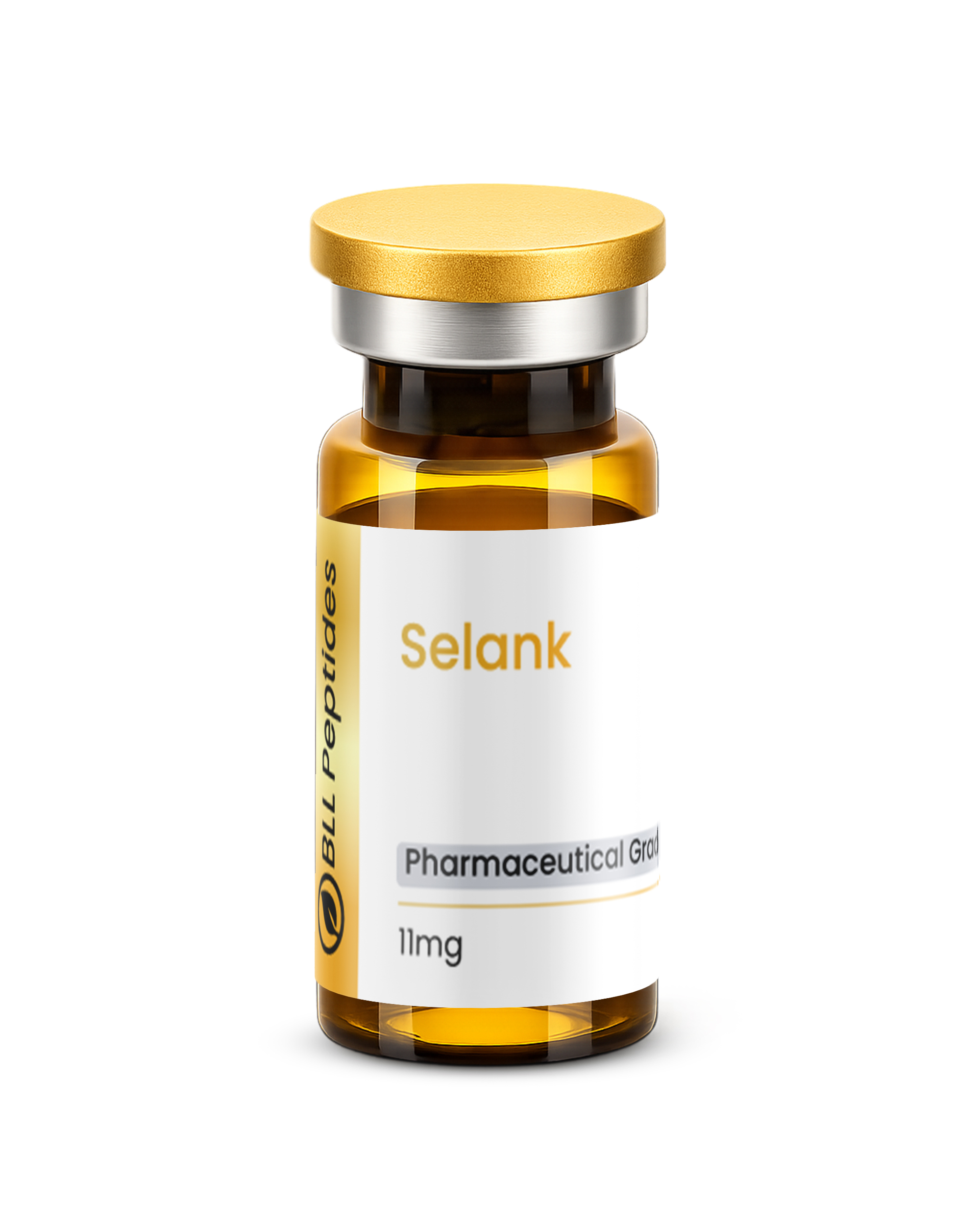
There’s a specific kind of research that catches my attention — compounds that seem to modulate the nervous system without the blunt force of traditional pharmacology. Selank is one of those. When I first came across the literature on this heptapeptide, I was struck by how precisely it seemed to target anxiety-related pathways without the sedation or dependency signals that shadow most compounds in that space. That’s worth looking at carefully.
Selank research centers on a synthetic heptapeptide (Thr-Lys-Pro-Arg-Pro-Gly-Pro) developed as an analog of tuftsin, an endogenous immunomodulatory peptide. Originally developed at the Institute of Molecular Genetics of the Russian Academy of Sciences, Selank has been studied primarily for its anxiolytic properties, cognitive effects, and influence on brain-derived neurotrophic factor (BDNF) expression — with a mechanistic profile that distinguishes it significantly from classical anxiolytics.
What Is Selank?
Selank is a seven-amino-acid peptide — a heptapeptide — synthesized as a modified analog of tuftsin. Tuftsin itself is a naturally occurring tetrapeptide (Thr-Lys-Pro-Arg) produced through proteolytic cleavage of immunoglobulin G. It plays a well-characterized role in immune activation, particularly in macrophage stimulation. Selank extends this base sequence with a Pro-Gly-Pro tripeptide addition, which substantially changes its pharmacological profile and, critically, its stability in plasma.
The added tripeptide increases Selank’s resistance to enzymatic degradation — a practical consideration for any research peptide that needs to maintain bioactivity long enough to produce measurable effects in model systems. This engineering choice is one reason Selank has attracted more consistent research than tuftsin itself in the context of neurological studies.
How Does Selank Work? The Proposed Mechanisms
The neurobiological mechanisms explored in Selank research are multifaceted, which is part of what makes this peptide interesting from a scientific standpoint.
BDNF modulation is perhaps the most frequently cited mechanism in the modern Selank literature. Brain-derived neurotrophic factor is a key signaling protein involved in neuronal survival, synaptic plasticity, and cognitive function. Multiple preclinical studies have found Selank influences BDNF expression in brain tissue — a finding of particular interest given BDNF’s documented roles in anxiety regulation and depression-like behavior in animal models.
Selank has also been examined for effects on the serotoninergic and dopaminergic systems. Research from Russian academic groups suggests the peptide modulates monoamine metabolism in ways consistent with its observed anxiolytic profile — though this work requires independent replication in broader contexts.
Additionally, early research linked Selank’s tuftsin origin to potential immunomodulatory activity — including effects on interleukin expression and T-cell function. The intersection of immune and neurological signaling has become increasingly relevant in modern neuroscience, and Selank’s dual-mechanism background has drawn attention from researchers working at that boundary.
What the Selank Research Shows
The bulk of the substantive Selank literature originates from Russian academic institutions — particularly the Institute of Molecular Genetics and associated laboratories — a provenance that appropriately calls for ongoing independent replication while also representing decades of focused study.
Key findings across the published literature include:
- Anxiolytic effects without sedation: In animal models of anxiety, Selank produced anxiolytic-like behavioral effects comparable to benzodiazepines in some assays — without the sedation, motor impairment, or amnesic effects typically associated with that drug class. This dissociation between anxiolysis and sedation is a consistent finding across multiple model systems.
- BDNF upregulation: A study published in Doklady Biological Sciences (2012) found that Selank significantly increased BDNF expression in the hippocampus of rats — a finding with implications for synaptic plasticity research and models of stress-induced neurobiological change.
- Cognitive effects in animal models: Preclinical studies examining learning and memory tasks found improvements in some cognitive parameters in Selank-treated animal groups, consistent with its BDNF-modulating profile. Researchers noted that Selank-treated animals showed improved performance on maze-based memory tasks compared to controls in several studies.
- Immunomodulatory signals: Studies have examined Selank’s effects on interferon and interleukin expression, finding modulatory activity on cytokine profiles — consistent with its structural relationship to tuftsin and potentially relevant to neuroinflammation research.
Key Research Findings
“Selank’s ability to produce anxiolytic effects without sedation or motor impairment makes it one of the more pharmacologically specific tools available for studying anxiety-related neural circuitry in preclinical models.”
As a neurosurgeon, I find the BDNF dimension of this research particularly compelling. BDNF is one of the proteins I track across multiple research areas — it appears in neuroprotection literature, in neurodegeneration research, and increasingly in work on synaptic resilience under stress. A compound that reliably modulates BDNF expression in hippocampal tissue without obvious toxicity signals in animal studies deserves serious mechanistic attention.
“The dissociation between anxiolytic efficacy and sedative burden in Selank animal studies represents exactly the kind of mechanism-driven selectivity that separates genuinely useful research tools from pharmacological blunt instruments.”
It’s also worth noting Selank’s relatively favorable safety profile in preclinical models. Across the literature, acute and subacute toxicology data in rodents has not surfaced major adverse signals — though long-term safety data and rigorous human pharmacology studies remain limited outside early Russian clinical work.
“For researchers studying the neuroscience of anxiety, cognition, and BDNF-dependent plasticity, Selank offers a mechanistically coherent research tool with an unusually clean preclinical profile.”
Explore Related Research Compounds at BLL Peptides
Researchers studying neuroprotective peptides and CNS-relevant compounds often examine Selank alongside compounds that target tissue repair, mitochondrial function, and cellular resilience. BLL Peptides carries several related research compounds for licensed research use:
- BPC-157 (10mg/3ml) — Studied extensively for cytoprotection, gut-brain axis interactions, and neurological recovery pathways in preclinical models
- NAD+ (500mg/10ml) — Researched for sirtuin activation, mitochondrial function, and neuroprotective signaling — a key adjacent pathway in CNS aging and resilience research
- For longevity and telomere-related peptide research, see our breakdown of Epithalon research and its mechanisms in cellular aging biology
All BLL Peptides products are USA manufactured and GMP-certified, supplied for research purposes only.
Frequently Asked Questions About Selank Research
What is Selank made of?
Selank is a synthetic heptapeptide with the sequence Thr-Lys-Pro-Arg-Pro-Gly-Pro. It was developed as a modified analog of tuftsin — a naturally occurring immunomodulatory tetrapeptide. The additional Pro-Gly-Pro tripeptide increases plasma stability, making Selank more suitable for research applications than the native tuftsin sequence.
What makes Selank different from traditional anxiolytics like benzodiazepines?
In preclinical models, Selank produces anxiolytic-like behavioral effects without the sedation, motor impairment, or memory-disrupting effects associated with benzodiazepines. This pharmacological dissociation — anxiolysis without sedative burden — is a consistent finding across animal studies and represents a mechanistically distinct profile from classical anxiolytic drug classes.
What is the relationship between Selank and BDNF?
Multiple preclinical studies have found that Selank increases BDNF (brain-derived neurotrophic factor) expression in hippocampal tissue in rodent models. BDNF plays a critical role in neuronal survival, synaptic plasticity, and cognitive function. Selank’s BDNF-modulating activity is considered one of its primary research-relevant mechanisms, particularly for researchers studying anxiety, stress, and cognitive neuroscience.
Has Selank been studied in humans?
Some limited human research has been conducted in Russia, primarily examining anxiolytic effects in small clinical populations. However, the majority of mechanistic Selank research is preclinical — animal models, in vitro cell studies, and pharmacological characterization. It has not received broad regulatory approval for clinical use outside specific Russian clinical contexts and remains primarily a research compound internationally.
What is the current research status of Selank?
Selank is an active area of preclinical research, particularly in Russian academic institutions. The primary literature covers anxiolytic mechanisms, BDNF modulation, immunomodulatory activity, and cognitive effects in animal models. Independent replication of key findings in Western research contexts remains an important open question for the field.
About the Author
Dr. James is a board-certified neurosurgeon and member of the BLL Peptides research team. His clinical background spans over a decade in surgical neurology, with research interests in neuroprotection, neuroregeneration, and the biology of cellular aging. He contributes to the BLL Peptides blog to bridge the gap between frontier peptide science and rigorous, accessible public understanding.
Related Research
If you found this research overview helpful, explore our related guides:
This content is intended for research purposes only. BLL Peptides products are not intended for human consumption.