
Thymalin Research: What Scientists Are Discovering About This Thymic Peptide
·

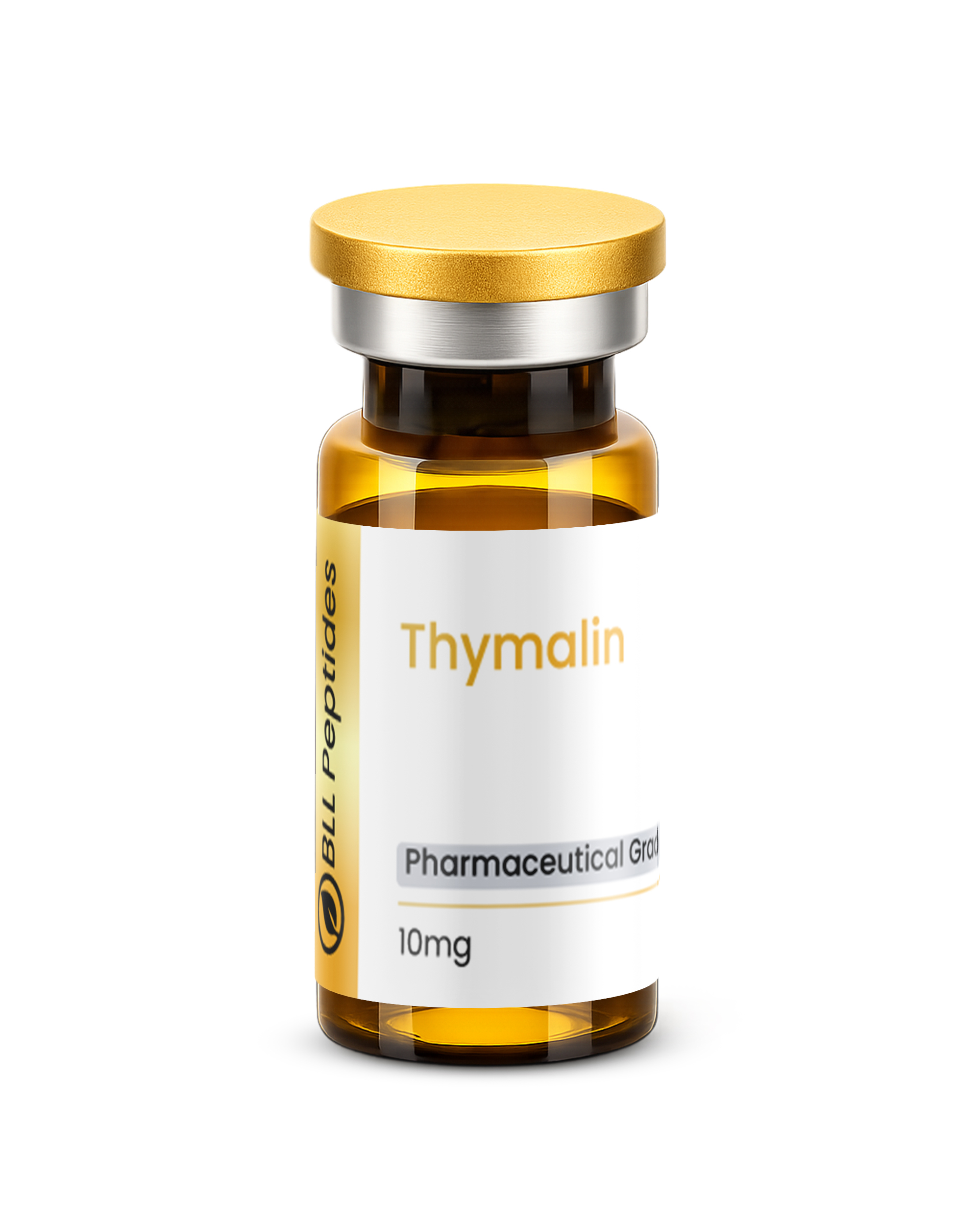
There’s a moment in every researcher’s journey when a compound stops being just a name in a paper and starts feeling genuinely important. Thymalin had that effect on me. As someone who spent years in the operating room dealing with the consequences of immune dysregulation — post-surgical infections, delayed healing, the slow deterioration of aging patients — I found the science behind thymic peptides quietly compelling.
Thymalin is a polypeptide fraction derived from the thymus gland, and research suggests it plays a significant role in immune system regulation and potentially in the biology of aging. Let’s dig into what the science actually shows.
What Is Thymalin?
The thymus gland — that small, often overlooked organ behind your sternum — is the training ground for T-lymphocytes, the white blood cells central to adaptive immunity. Thymalin is a bioregulatory peptide fraction originally isolated from calf thymus tissue by Soviet researcher Vladimir Khavinson in the 1970s and 80s. His work, largely conducted in Russia and later published internationally, positioned Thymalin as a potential immune-restorative agent.
Unlike synthetic single-peptide compounds, Thymalin is a complex mixture of short peptides believed to act through epigenetic and receptor-mediated pathways. It belongs to a broader class of peptide bioregulators — short chains of amino acids that appear to regulate gene expression in a tissue-specific manner.
If you’re interested in how other thymic peptides compare, our research overview of Thymosin Alpha-1 offers useful context on thymus-derived immunomodulators.
How Does Thymalin Work? The Proposed Mechanisms
Thymalin’s biological activity appears to center on a few interconnected mechanisms:
T-cell differentiation and maturation: Research suggests Thymalin supports the development of naive T-cells into functional immune subsets — critically important in aging, when thymic involution (the natural shrinking of the thymus) leads to declining immune surveillance.
Cytokine modulation: Studies in animal models have found Thymalin influences the production of key cytokines including interleukins and interferon-gamma. Rather than simply boosting immune activity, it appears to help recalibrate immune responses toward more balanced, regulated function.
Epigenetic regulation: Khavinson’s group published a series of studies suggesting thymic peptides can activate specific gene promoters, including those associated with telomerase activity — the enzyme complex that maintains chromosome length. This is where the longevity angle enters the conversation.
Antioxidant upregulation: Some studies have noted increased superoxide dismutase and catalase activity following Thymalin exposure, pointing toward a secondary role in reducing oxidative stress at the cellular level.
What the Research Shows
The scientific literature on Thymalin is largely Eastern European in origin, with Khavinson’s institute — the St. Petersburg Institute of Bioregulation and Gerontology — producing the bulk of published work. While this creates some geographic concentration in the evidence base, several findings are notable:
A landmark long-term study followed elderly patients over 6–8 years and found that those receiving thymic peptide treatment showed significantly lower mortality rates compared to controls — with one trial reporting approximately 50% reduced mortality in the treated group over the study period. These numbers are striking and warrant independent replication.
In animal models, Thymalin has been shown to extend mean lifespan in mice and rats, with some studies reporting 20–30% increases in average survival time. Researchers attribute this partly to improved immune surveillance against neoplastic cells and reduced chronic inflammation.
A 2003 study published in the Bulletin of Experimental Biology and Medicine demonstrated Thymalin’s ability to restore immune parameters in immunocompromised subjects, including normalization of T-helper/T-suppressor ratios — a metric that declines predictably with age.
Work on telomere biology has been particularly interesting. Thymalin appears to activate telomerase in lymphocytes, potentially slowing the replicative senescence that contributes to immune aging. This intersects with research on compounds like Epithalon, another bioregulatory peptide with proposed telomerase-related activity.
Key Research Findings at a Glance
- Long-term human studies suggest potential reduction in age-related mortality with thymic peptide supplementation
- Animal lifespan extension of 20–30% observed in controlled studies
- Restoration of T-cell subset ratios in aged and immunocompromised subjects
- Telomerase activation in lymphocytes noted in in vitro studies
- Antioxidant enzyme upregulation (SOD, catalase) in treated models
It’s worth noting that I came to Thymalin through my clinical background — watching patients in their 70s and 80s struggle with infections that younger patients shook off easily. The immunosenescence puzzle is real, and the thymus is central to it. Whether peptide bioregulators like Thymalin can meaningfully address that puzzle is something the scientific community is still actively investigating.
BLL Peptides offers Thymalin for research purposes. You can explore our related NAD+ research compound for complementary cellular aging studies.
Frequently Asked Questions About Thymalin Research
Q: What is Thymalin made from?
A: Thymalin is a polypeptide fraction originally extracted from calf thymus glands. It contains a complex mixture of short peptides and bioregulatory molecules. Modern research preparations are typically synthesized or extracted under controlled conditions for laboratory use.
Q: How does Thymalin differ from Thymosin Alpha-1?
A: Thymosin Alpha-1 is a single, well-characterized 28-amino-acid peptide. Thymalin is a complex fraction containing multiple peptide species. Both are thymus-derived and studied for immunomodulatory effects, but they have distinct molecular profiles and research histories.
Q: What populations have been studied in Thymalin research?
A: Most human research has focused on elderly populations with immune decline, as well as subjects undergoing immunosuppressive conditions. Animal studies have used standard rodent aging models.
Q: Is there peer-reviewed research on Thymalin?
A: Yes — primarily from Russian and Eastern European institutions, with publications in journals including the Bulletin of Experimental Biology and Medicine and various gerontology publications. Western-independent replication is an area where more research is needed.
Q: What other peptides are studied alongside Thymalin?
A: Thymalin is often studied in conjunction with other bioregulatory peptides like Epithalon (Epitalon) and Vilon. Together, these form the core of the peptide bioregulator research framework developed by Khavinson’s group.
Related Research
If you found this research overview helpful, explore our related guides:
About the Author: Dr. James is a board-certified neurosurgeon with over 15 years of clinical and research experience. His interest in peptide science grew from clinical observations of immune function, inflammation, and neurological repair. He contributes research analysis and commentary to BLL Peptides.
This content is intended for research purposes only. BLL Peptides products are not intended for human consumption.