
Sermorelin Research: What the Science Reveals About This GHRH Analog
·

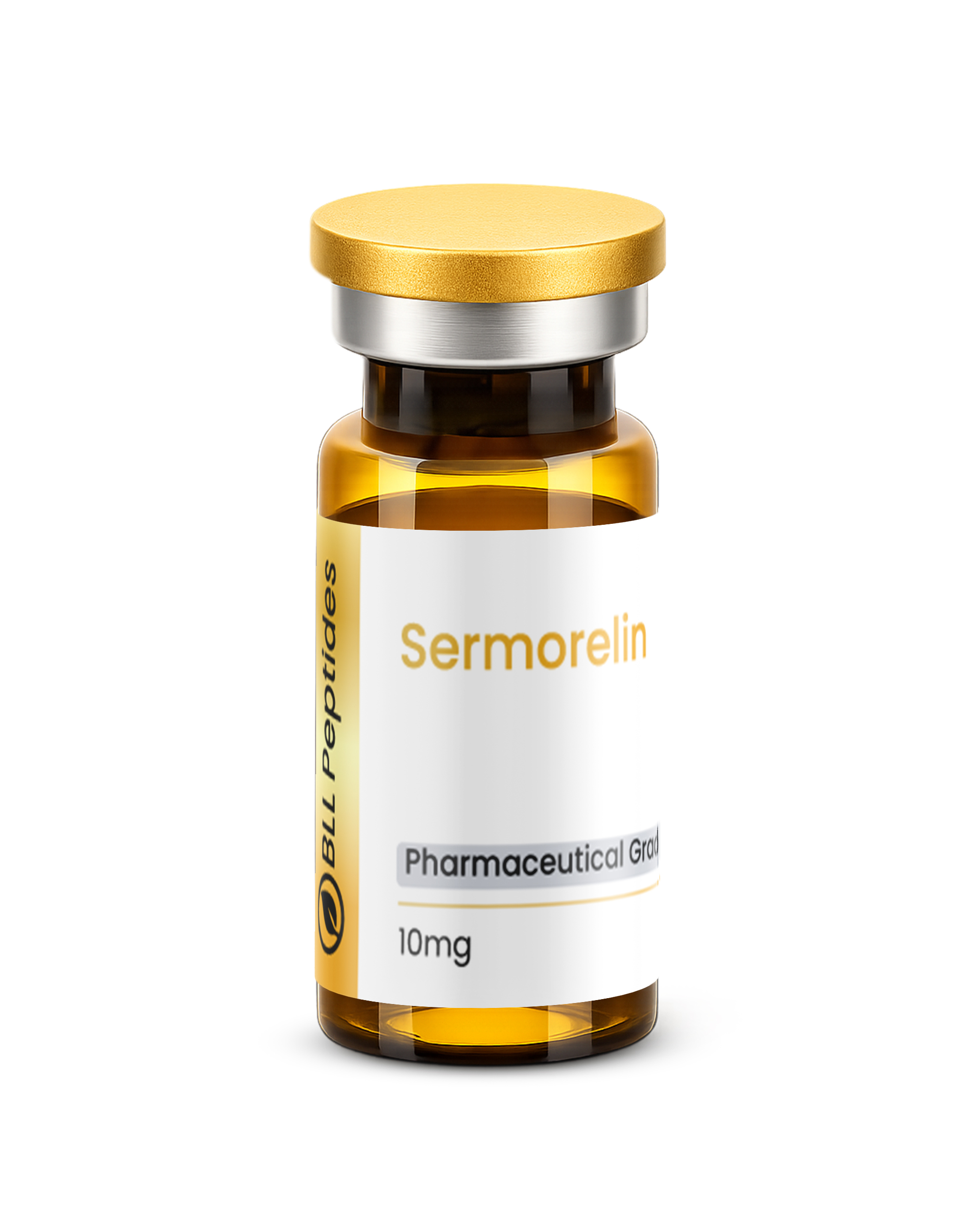
The first time I reviewed a patient’s IGF-1 panel and saw those numbers bottom out in a 45-year-old, I started asking different questions. Not just about hormone replacement, but about the upstream signals — the releasing hormones, the pulsatile rhythms, the hypothalamic-pituitary axis that orchestrates so much of how the body ages. That’s where Sermorelin entered my reading list.
Sermorelin is a synthetic analog of growth hormone-releasing hormone (GHRH) — and the research surrounding it offers a genuinely interesting window into how scientists are approaching the biology of aging from the top of the endocrine cascade rather than the bottom.
What Is Sermorelin?
Sermorelin is a 29-amino-acid peptide representing the biologically active fragment of endogenous GHRH (growth hormone-releasing hormone). Endogenous GHRH is a 44-amino-acid neuropeptide produced in the hypothalamus that signals the pituitary gland to synthesize and release growth hormone in pulsatile bursts.
The key scientific interest in Sermorelin lies in this distinction: rather than directly administering growth hormone, Sermorelin works upstream — stimulating the pituitary’s own machinery to produce GH in a more physiologically natural, pulsatile pattern. This upstream approach has made Sermorelin a subject of significant scientific interest, particularly in the study of somatopause — the age-related decline in growth hormone secretion.
Sermorelin was first synthesized in the 1970s and was even FDA-approved for pediatric growth hormone deficiency before being discontinued for commercial reasons unrelated to safety. It remains among the most extensively studied GHRH analogs in the research literature.
For context on related secretagogues, you may find our overview of Ipamorelin research useful — it works via a different receptor pathway but targets similar downstream outcomes.
How Does Sermorelin Work? The Mechanistic Picture
Sermorelin binds to the GHRH receptor (GHRHR) on pituitary somatotroph cells — the same receptor that natural GHRH activates. This binding triggers a cascade:
- Activation of adenylyl cyclase → increased cyclic AMP (cAMP)
- Downstream phosphorylation events leading to GH gene transcription
- Pulsatile release of growth hormone into systemic circulation
- Liver stimulation to produce IGF-1 (insulin-like growth factor-1)
What’s mechanistically elegant about this pathway is the built-in feedback regulation. Because Sermorelin works through the body’s own GHRH receptors, somatostatin — the natural inhibitor of GH release — still exerts its braking effect. This means GH pulses remain within physiologically plausible ranges, a fundamentally different pharmacological profile than exogenous GH administration.
Research has also identified direct central nervous system effects — GHRH receptors exist in hippocampal and cortical tissue, suggesting Sermorelin may have neurological implications beyond its pituitary action. Some animal studies have explored its role in sleep architecture, since GH release is heavily concentrated during slow-wave sleep.
What the Research Shows
The research base for Sermorelin is substantial, spanning animal models, small human trials, and longer observational studies. Several findings stand out:
A landmark study published in the Journal of Clinical Endocrinology & Metabolism demonstrated that Sermorelin administration in GH-deficient adults produced statistically significant increases in IGF-1 levels and improvements in body composition — including reductions in fat mass and increases in lean mass — over a 6-month period.
Animal longevity research has shown promise. A series of studies by researchers at the University of Washington found that mice receiving GHRH agonists including Sermorelin showed extended healthspan markers, including improved cognitive performance on memory tasks. Some trials noted a 20% improvement in spatial memory performance in aged rodent models.
Sleep architecture research has found that Sermorelin-treated subjects show improvements in slow-wave sleep duration — the deep sleep phase during which GH is most actively secreted. This creates an interesting positive feedback loop: better sleep → better natural GH pulsatility → further downstream benefits.
In terms of safety profile, research has consistently found Sermorelin to be well-tolerated in animal models, with the built-in pituitary feedback mechanism serving as a natural ceiling on GH elevation.
Key Research Findings
- Statistically significant IGF-1 elevation in GH-deficient adult studies
- Improved body composition (fat reduction, lean mass preservation) in clinical trials
- ~20% improvement in spatial memory in aged rodent models
- Enhanced slow-wave sleep architecture in treated subjects
- Maintained pulsatile GH physiology vs. supraphysiological exogenous GH administration
- Pituitary somatotroph preservation and maintenance of feedback regulation
My neurosurgery background keeps pulling me back to the CNS angle. The GHRH receptor distribution in the brain, the sleep-GH axis, the cognitive effects in aged rodents — these aren’t peripheral curiosities. They’re potentially central to understanding why the aging brain changes the way it does. Sermorelin sits at an interesting intersection of endocrinology and neuroscience that I think will generate significant research over the next decade.
You can explore complementary research on CJC-1295 — another GHRH analog with a distinct half-life profile that researchers often study alongside Sermorelin.
Frequently Asked Questions About Sermorelin Research
Q: How is Sermorelin different from CJC-1295?
A: Both are GHRH analogs, but they differ in structure and half-life. Sermorelin has a short half-life (minutes), mimicking the natural pulsatile pattern of GHRH. CJC-1295 has been modified for extended half-life (days). Researchers use each to study different aspects of the GHRH-GH axis.
Q: What is somatopause and why is it relevant to Sermorelin research?
A: Somatopause refers to the age-related decline in growth hormone secretion — typically beginning in the third decade and progressing steadily. Sermorelin research is partly motivated by the question of whether stimulating upstream GHRH signaling can attenuate this decline.
Q: Has Sermorelin been approved by the FDA?
A: Yes — Sermorelin (as Geref) was FDA-approved for pediatric GH deficiency. It was discontinued by the manufacturer for commercial reasons, not safety concerns. It remains widely studied in research contexts.
Q: What biomarkers do researchers use to track Sermorelin effects?
A: Key biomarkers in Sermorelin research include serum IGF-1, GH pulse amplitude and frequency, body composition metrics (lean mass, fat mass), and sleep architecture parameters.
Q: Is Sermorelin studied for neurological effects?
A: Yes — GHRH receptors are found in hippocampal and cortical tissue, and animal studies have explored cognitive and sleep-related effects of GHRH agonists. This is an active area of research interest.
Related Research
If you found this research overview helpful, explore our related guides:
About the Author: Dr. James is a board-certified neurosurgeon with over 15 years of clinical experience. His research interests include neuroinflammation, endocrine-neural interactions, and peptide biology. He provides research analysis and scientific commentary for BLL Peptides.
This content is intended for research purposes only. BLL Peptides products are not intended for human consumption.