
Ipamorelin vs Sermorelin: Comparing Growth Hormone Secretagogues in Research
·

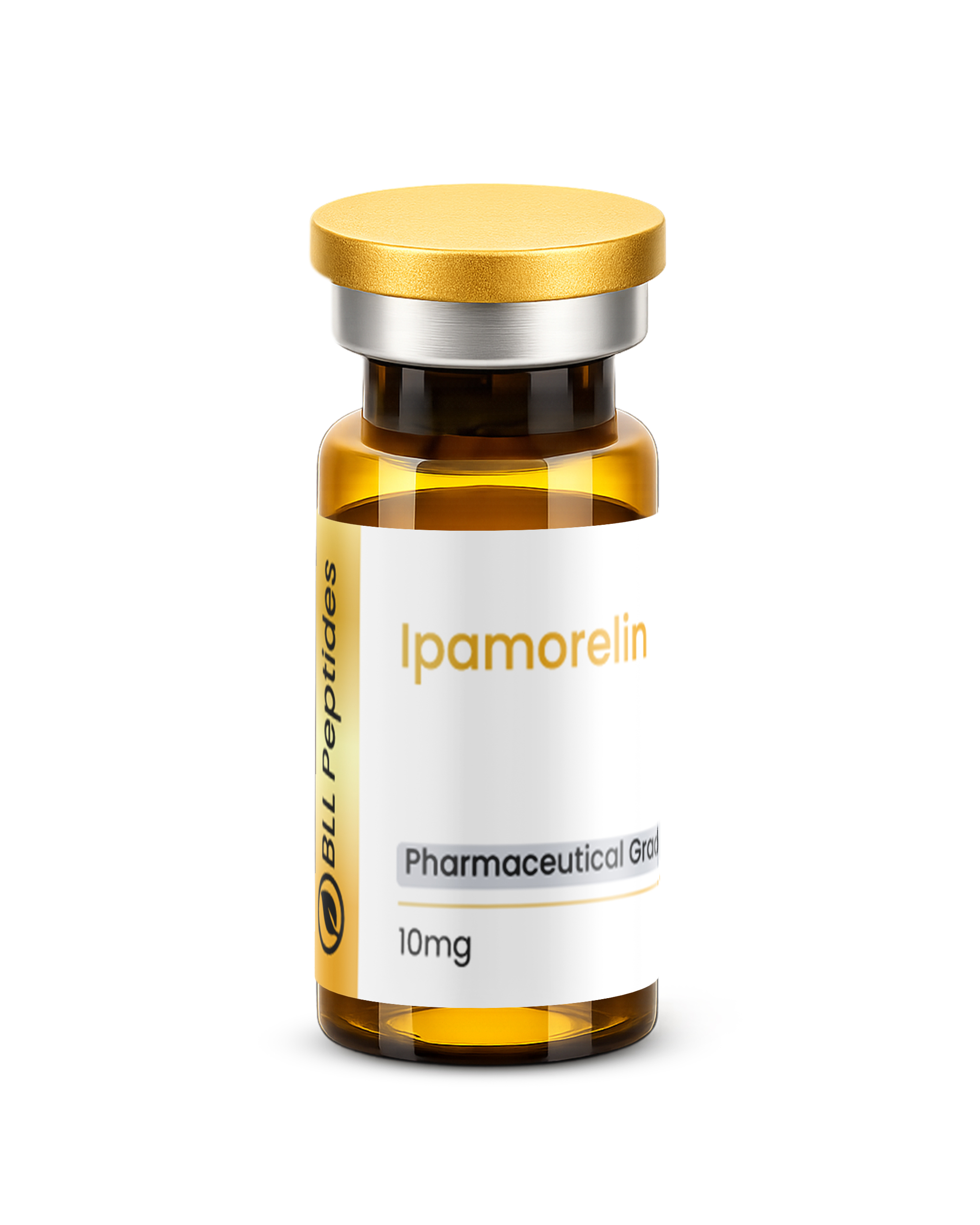
Ipamorelin vs Sermorelin: Comparing Growth Hormone Secretagogues in Research
Growth hormone secretagogue research is often confused by the variety of peptides available with overlapping effects. Ipamorelin vs sermorelin is a comparison that deserves careful mechanistic analysis — because while both stimulate pituitary GH release, they do so through entirely different receptor systems, with different selectivity profiles and research implications.
The key distinction: ipamorelin is a GHRP acting on ghrelin receptors; sermorelin is a GHRH analog acting on GHRH receptors. This mechanistic difference makes them more complementary than competitive for research purposes.
Mechanism: Two Different Pathways to GH Release
Sermorelin: GHRH Receptor Agonism
Sermorelin is a 29-amino acid synthetic analog of growth hormone releasing hormone (GHRH 1-29). It binds GHRH receptors (GHRHR) on pituitary somatotroph cells, directly stimulating GH synthesis and secretion through cAMP-PKA signaling. Sermorelin’s action mirrors endogenous GHRH — it stimulates pulsatile GH release while preserving the pituitary’s negative feedback sensitivity, making it a more physiological GH stimulation method than exogenous GH administration.
Ipamorelin: Ghrelin Receptor Agonism
Ipamorelin is a synthetic pentapeptide that acts on GHS-R1a (ghrelin receptor) in the pituitary and hypothalamus. Unlike GHRP-2 and GHRP-6, which non-selectively activate multiple pathways including cortisol and prolactin release, ipamorelin is highly selective for GH release with minimal effects on these hormones. Its receptor pharmacology makes it a cleaner experimental tool for studying pulsatile GH secretion.
Pulsatility: A Critical Research Consideration
Both peptides stimulate pulsatile GH release — mimicking the body’s natural secretion pattern rather than producing the continuous elevation seen with exogenous GH administration. This physiological pulsatility is important for downstream IGF-1 dynamics, as pulsatile GH produces different liver IGF-1 responses compared to continuous GH exposure.
Researchers designing growth hormone axis studies should note that combining a GHRH analog (sermorelin) with a GHRP (ipamorelin) typically produces synergistic GH release — the two receptor systems are mutually amplifying at the pituitary level.
Key Research Findings
Ipamorelin
- Thorner et al. (1997) characterized ipamorelin’s receptor selectivity and GH pulse amplification in animal models
- Studies confirm minimal cortisol and prolactin elevation at effective GH-stimulating doses — a key advantage over earlier GHRPs
- Ipamorelin combinations with CJC-1295 (a longer-acting GHRH analog) have been studied extensively for synergistic GH release
Sermorelin
- Sermorelin has the most extensive clinical research base among GHRH analogs, having been FDA-approved (Geref) for pediatric GH deficiency
- Multiple studies demonstrate sermorelin’s ability to restore GH pulsatility in GH-deficient adults and aged subjects
- The preserved pituitary feedback loop with sermorelin prevents GH hypersecretion — a pharmacological safety advantage for research design
Comparison Summary
| Property | Ipamorelin | Sermorelin |
|---|---|---|
| Receptor | GHS-R1a (ghrelin) | GHRHR |
| Mechanism | Ghrelin receptor agonism | GHRH mimicry |
| Selectivity | Very high (minimal cortisol/prolactin) | High (preserves feedback) |
| Half-life | ~2 hours | ~12 minutes (short) |
| Clinical history | Preclinical-predominant | FDA-approved history |
FAQ
What is the main difference between ipamorelin and sermorelin?
Ipamorelin is a GHRP acting on ghrelin receptors; sermorelin is a GHRH analog acting on GHRH receptors. Different receptor systems, complementary mechanisms.
Which produces more GH release?
They have comparable GH stimulation but through different pathways. Combination protocols are often used as they act synergistically through complementary receptor systems.
Does ipamorelin affect cortisol or prolactin?
Unlike GHRP-2 and GHRP-6, ipamorelin does not significantly elevate cortisol or prolactin at research doses — a key selectivity advantage.
Related Research
About the Author: Dr. James Nguyen is a Yale-trained neurosurgeon and scientific advisor to BLL Peptides.
Disclaimer: This content is intended for research purposes only. BLL Peptides products are not intended for human consumption.