Retatrutide Research: The Triple Hormone Receptor Agonist Scientists Are Watching Closely
·

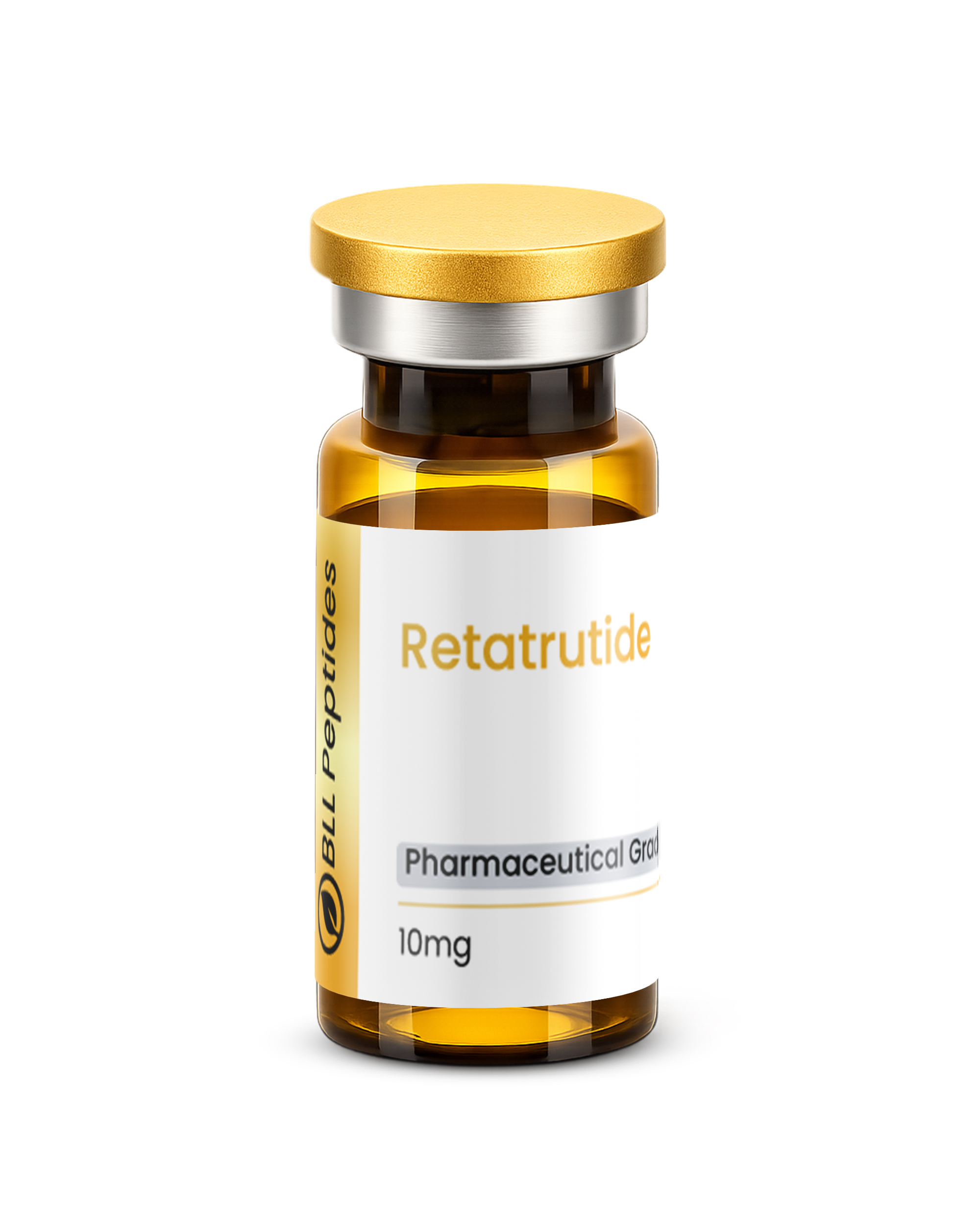
When a Phase 2 clinical trial produces results that make researchers stop and read the data twice, the scientific community pays attention. That’s what happened with Retatrutide. The numbers coming out of early trials were striking enough that the compound quickly became one of the most discussed emerging molecules in metabolic research — and in my view, it deserves a careful, evidence-based look.
Retatrutide (LY3437943) is a next-generation metabolic peptide that simultaneously targets three hormone receptors: GIP (glucose-dependent insulinotropic polypeptide), GLP-1 (glucagon-like peptide-1), and glucagon. This triple agonism sets it apart from currently available compounds and has generated significant research interest.
What Is Retatrutide?
Developed by Eli Lilly, Retatrutide is a 40-amino-acid modified peptide engineered for once-weekly subcutaneous administration in research protocols. It represents the next evolution in the incretin-based metabolic compound class, going beyond the dual agonism of Tirzepatide (GIP/GLP-1) to add glucagon receptor activity.
The three receptors Retatrutide targets each play distinct roles in energy metabolism:
- GLP-1 receptor: Reduces gastric emptying, suppresses appetite, stimulates insulin secretion in a glucose-dependent manner
- GIP receptor: Augments insulin secretion, supports fat metabolism, may promote energy expenditure
- Glucagon receptor: Increases energy expenditure, promotes fat oxidation, influences hepatic glucose output
The addition of glucagon agonism is what makes Retatrutide mechanistically distinct — and scientifically fascinating. Glucagon has traditionally been viewed as a metabolic antagonist to insulin, but research has revealed that when combined with GLP-1 and GIP activity, glucagon agonism may enhance overall energy expenditure without the hyperglycemic consequences seen with glucagon alone.
For comparison, our research coverage of Tirzepatide’s mechanism and the Tirzepatide vs Semaglutide comparison provide useful context on where Retatrutide fits in the evolving landscape of metabolic research peptides.
How Does Retatrutide Work?
Retatrutide’s design is deliberate: it’s a balanced triple agonist, meaning its activity at each of the three receptors is calibrated. The GLP-1 component provides appetite regulation and glucose-dependent insulin stimulation. The GIP component enhances the insulinotropic response and may support body composition. The glucagon component drives energy expenditure and fat oxidation.
From a pharmacological standpoint, the molecule uses a fatty acid conjugate attached to a modified peptide backbone — similar to the approach used in Semaglutide — to achieve extended half-life appropriate for weekly research protocols. This structural motif promotes albumin binding, prolonging circulation time.
The central mechanism for body weight effects appears to operate through both reduced energy intake (appetite/satiety signaling via GLP-1 and GIP) and increased energy expenditure (via glucagon receptor activity on thermogenic adipose tissue and hepatic metabolism). This dual-pathway weight reduction — eating less AND burning more — is mechanistically distinct from single or dual receptor approaches.
What the Research Shows
The Phase 2 clinical trial results for Retatrutide, published in The New England Journal of Medicine (2023), are among the most discussed findings in recent metabolic research:
Over 48 weeks, participants receiving the highest dose of Retatrutide (12 mg) achieved mean weight reduction of approximately 24.2% of body weight — a figure that exceeded the headline results from Phase 3 trials of both Semaglutide (~15% in SURMOUNT-equivalent) and Tirzepatide (~22.5% in SURMOUNT-1). At 48 weeks, a significant proportion of participants had lost more than 25% of their body weight — a threshold previously thought to require bariatric surgery.
Cardiometabolic markers also showed improvement: reductions in waist circumference, triglycerides, and blood pressure were observed across dose groups. Lean mass preservation — a key concern with rapid weight reduction — showed favorable profiles in preliminary analyses.
Perhaps most notable was the apparent dose-response relationship: higher doses produced greater weight reduction, suggesting the compound’s ceiling had not been reached at the doses tested. Phase 3 trials (TRIUMPH program) are underway to confirm these findings in larger populations.
Key Research Findings
- ~24.2% mean body weight reduction at highest dose over 48 weeks (Phase 2)
- Exceeds weight reduction magnitude seen with Semaglutide and Tirzepatide in comparable trials
- Triple receptor agonism (GIP + GLP-1 + glucagon) — first of its class
- Favorable cardiometabolic marker changes including triglycerides and blood pressure
- Phase 3 TRIUMPH trials currently enrolling
- Dose-response relationship suggests potential for further optimization
Frequently Asked Questions About Retatrutide Research
Q: How does Retatrutide differ from Semaglutide?
A: Semaglutide is a GLP-1 receptor agonist only. Retatrutide simultaneously targets three receptors: GLP-1, GIP, and glucagon. This triple mechanism produces a broader metabolic profile and, in Phase 2 data, greater weight reduction magnitude than Semaglutide.
Q: How does Retatrutide differ from Tirzepatide?
A: Tirzepatide is a dual GIP/GLP-1 agonist. Retatrutide adds glucagon receptor agonism to the dual agonism profile of Tirzepatide. The glucagon component is believed to increase energy expenditure through thermogenesis and fat oxidation.
Q: What is GIP and why is it important?
A: GIP (glucose-dependent insulinotropic polypeptide) is an incretin hormone released from intestinal K cells after eating. It augments insulin secretion, supports bone metabolism, and may influence fat tissue metabolism. Its combination with GLP-1 appears synergistic for metabolic outcomes.
Q: What stage is Retatrutide clinical research at?
A: As of 2025-2026, Retatrutide has completed Phase 2 trials with published results in the New England Journal of Medicine and is currently in Phase 3 trials (TRIUMPH program) being conducted by Eli Lilly.
Q: Why does glucagon receptor agonism help rather than hurt in this context?
A: In isolation, glucagon raises blood sugar. But when combined with GLP-1 agonism (which drives insulin secretion), the hyperglycemic effect is blunted while glucagon’s fat-burning and energy expenditure effects are preserved — a concept called “glucagon/GLP-1 balance.”
Related Research
If you found this research overview helpful, explore our related guides:
About the Author: Dr. James is a board-certified neurosurgeon with clinical and research experience spanning neurology, metabolic medicine, and peptide biology. He contributes research analysis to BLL Peptides.
This content is intended for research purposes only. BLL Peptides products are not intended for human consumption.