KPV Peptide Research: The Anti-Inflammatory Tripeptide Derived From Alpha-MSH
·

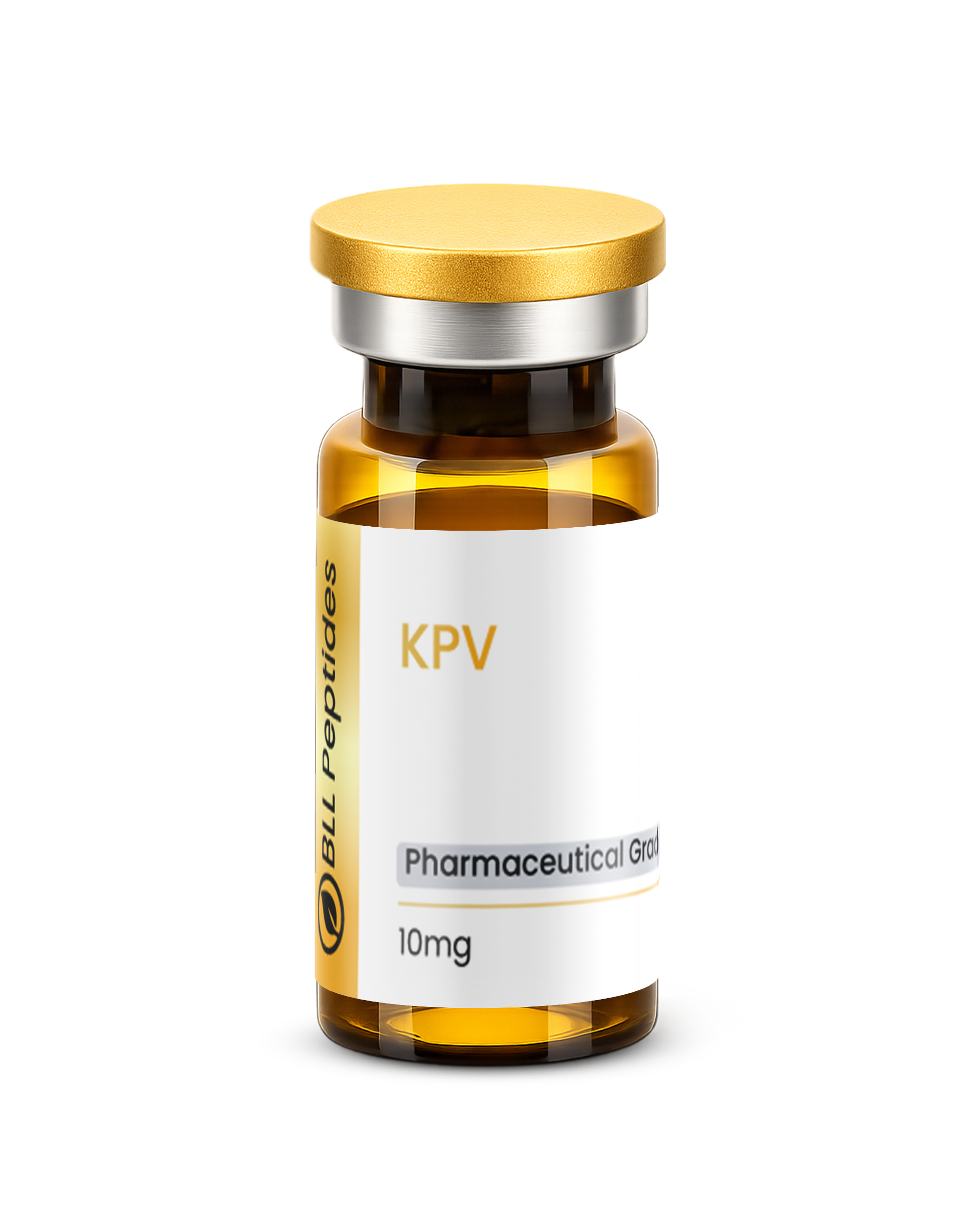
Sometimes the most interesting science comes packaged in the smallest molecules. KPV is a three-amino-acid peptide — just three residues: Lys-Pro-Val — derived from the C-terminal fragment of alpha-melanocyte-stimulating hormone (α-MSH). It’s one of those compounds that makes you realize how much biological information can be encoded in an extremely short sequence.
KPV research has accelerated significantly over the past decade, particularly in the context of gut inflammation and skin biology. The findings are compelling enough to warrant a thorough look at the mechanisms and what the data actually shows.
What Is KPV?
KPV is a C-terminal tripeptide fragment of alpha-melanocyte-stimulating hormone (α-MSH). The parent molecule, α-MSH, is a 13-amino-acid neuropeptide derived from proopiomelanocortin (POMC) — a precursor protein that also gives rise to ACTH (adrenocorticotropin), β-endorphin, and other bioactive peptides.
α-MSH has long been known for its pigmentation effects (hence the melanocyte-stimulating name), but its anti-inflammatory properties — mediated through melanocortin receptors, particularly MC1R and MC3R — are what have driven modern peptide research. KPV retains these anti-inflammatory properties in a far smaller, more stable package.
The significance is practical as well as scientific: as a tripeptide, KPV is more resistant to proteolytic degradation than the full α-MSH molecule, making it a more tractable research compound for studying melanocortin-based anti-inflammatory mechanisms.
If you’re interested in how other peptides modulate immune and inflammatory responses, our overview of Thymosin Alpha-1 explores a complementary immune-regulatory compound with a different mechanism of action.
How Does KPV Work? The Mechanistic Landscape
KPV’s anti-inflammatory activity operates through several converging mechanisms:
Melanocortin receptor engagement: KPV binds melanocortin receptors (particularly MC1R) on immune cells including macrophages and T-cells. This binding attenuates NF-κB activation — the master transcription factor for pro-inflammatory cytokine production. By modulating NF-κB, KPV can reduce the transcription of TNF-α, IL-1β, IL-6, and other key mediators of acute and chronic inflammation.
Direct cellular internalization: Research has shown that KPV can be internalized by intestinal epithelial cells through a transporter-mediated mechanism (PepT1 — the peptide transporter responsible for absorbing dietary di- and tripeptides). This means KPV can potentially reach intracellular inflammatory pathways directly, not just via surface receptor binding.
NLRP3 inflammasome inhibition: Emerging research suggests KPV may suppress activation of the NLRP3 inflammasome — a protein complex that drives IL-1β and IL-18 maturation in response to cellular stress. NLRP3 dysregulation is implicated in inflammatory bowel disease, metabolic syndrome, and neurodegeneration.
Gut epithelial barrier support: Studies in colitis models have found that KPV treatment supports tight junction protein expression (claudin, occludin) — proteins that maintain the physical barrier integrity of the intestinal lining and prevent bacterial translocation.
What the Research Shows
Gastrointestinal research has been the most productive area for KPV science. A landmark study published in the Journal of Clinical Investigation demonstrated that oral KPV administration significantly reduced inflammation scores in a murine colitis model — notably with oral delivery, which is unusual for peptide compounds and reflects KPV’s tripeptide stability and PepT1-mediated absorption.
In that study, colonic inflammation markers including myeloperoxidase activity (a measure of neutrophil infiltration) were reduced by approximately 40-50% in KPV-treated animals compared to controls. Histological scoring of mucosal damage showed parallel improvements. The oral efficacy of KPV in gut inflammation models sets it apart from most research peptides that require parenteral delivery to maintain biological activity.
Skin inflammation research has also produced notable findings. In models of contact dermatitis and psoriasis, KPV application has shown anti-inflammatory effects comparable to reference compounds, with reductions in epidermal hyperplasia, immune cell infiltration, and inflammatory cytokine levels.
A particularly interesting research direction involves nanoparticle delivery of KPV — encapsulating the peptide in hydrogel nanoparticles to enhance colonic targeting. Studies using this approach have shown even more potent effects in colitis models, with the nanoparticle formulation achieving targeted delivery to inflamed tissue. This represents a convergence of materials science and peptide research that I find intellectually exciting.
For researchers interested in other anti-inflammatory peptides, our analysis of LL-37 research covers another fascinating compound at the intersection of antimicrobial and immunomodulatory biology.
Key Research Findings
- Oral bioavailability in gut research models via PepT1 transporter-mediated absorption
- 40-50% reduction in colonic myeloperoxidase activity in murine colitis studies
- NF-κB signaling suppression → reduced TNF-α, IL-1β, IL-6 production
- NLRP3 inflammasome inhibition in emerging research
- Tight junction protein support in intestinal epithelial models
- Anti-inflammatory efficacy in skin inflammation models (dermatitis, psoriasis)
- Enhanced potency with nanoparticle delivery systems in experimental models
Frequently Asked Questions About KPV Research
Q: What does KPV stand for?
A: KPV refers to the single-letter amino acid codes for the peptide sequence: Lysine (K) – Proline (P) – Valine (V). It is the C-terminal tripeptide fragment of alpha-melanocyte-stimulating hormone (α-MSH).
Q: How is KPV related to alpha-MSH?
A: α-MSH is a 13-amino-acid peptide whose C-terminal three amino acids form the KPV sequence. KPV retains the anti-inflammatory properties of full α-MSH with improved stability and, in some models, oral bioavailability due to its recognition by intestinal peptide transporters.
Q: What is NF-κB and why is it important in inflammation research?
A: NF-κB (nuclear factor kappa-light-chain-enhancer of activated B cells) is a transcription factor that controls the expression of hundreds of genes involved in immune response, inflammation, and cell survival. Its dysregulation is implicated in virtually every major inflammatory disease.
Q: What is PepT1 and how does it relate to KPV oral activity?
A: PepT1 (SLC15A1) is a proton-coupled peptide transporter expressed in intestinal epithelial cells that absorbs dietary di- and tripeptides. KPV’s tripeptide structure allows it to be recognized and transported by PepT1, which may explain its oral activity in gut inflammation models.
Q: What other conditions is KPV being researched for beyond gut inflammation?
A: Research has explored KPV in skin inflammation models (dermatitis, psoriasis), wound healing, neuroinflammation, and metabolic inflammation contexts. Its broad anti-inflammatory profile through NF-κB and melanocortin pathways makes it relevant to multiple inflammatory phenotypes.
Related Research
If you found this research overview helpful, explore our related guides:
About the Author: Dr. James is a board-certified neurosurgeon with research interests spanning neuroinflammation, gut-brain axis biology, and peptide therapeutics. His clinical background informs a deep interest in how anti-inflammatory compounds affect both peripheral and central nervous system pathology. He contributes scientific analysis to BLL Peptides.
This content is intended for research purposes only. BLL Peptides products are not intended for human consumption.