Semaglutide Research: A Deep Dive Into the GLP-1 Analog That Reshaped Metabolic Science
·

There are compounds that appear in the literature and compounds that reshape entire fields of medicine. Semaglutide belongs to the second category. Having watched the clinical trial data emerge over several years — from early efficacy signals to the landmark SUSTAIN and STEP trials — I’ve been consistently impressed by the depth of the science and the consistency of the findings.
Semaglutide is a GLP-1 (glucagon-like peptide-1) receptor agonist, and while it’s now widely known in clinical contexts, the peptide chemistry, mechanisms, and expanding research applications are worth exploring in detail for anyone interested in metabolic biology at a fundamental level.
What Is Semaglutide?
Semaglutide is a synthetic analog of human GLP-1 — a naturally occurring incretin hormone secreted from intestinal L-cells in response to food intake. Native GLP-1 has a half-life of just 2-3 minutes in circulation due to rapid degradation by the enzyme DPP-4 (dipeptidyl peptidase-4) and renal clearance.
Semaglutide overcomes this limitation through three key structural modifications compared to native GLP-1:
- Amino acid substitution at position 8 (alanine → 2-aminoisobutyric acid) — confers DPP-4 resistance
- C-18 fatty diacid chain attached via a linker to lysine at position 26 — enables albumin binding
- Amino acid substitution at position 34 — further optimizes albumin interaction
The result is a molecule with a half-life of approximately 7 days — enabling once-weekly research protocols — while retaining high selectivity and potency at the GLP-1 receptor.
Novo Nordisk’s research team made an elegant engineering choice with Semaglutide: maximize receptor specificity while solving the half-life problem through structural chemistry rather than PEGylation or other modifications that can introduce their own complications.
For context on how Semaglutide compares to next-generation dual and triple agonists, see our analyses of Tirzepatide’s mechanism and Retatrutide research.
How Does Semaglutide Work?
Semaglutide acts through the GLP-1 receptor (GLP-1R), which is expressed in the pancreas, brain, gastrointestinal tract, heart, kidney, and lung. This broad receptor distribution explains Semaglutide’s diverse physiological effects:
Pancreatic effects: Stimulates glucose-dependent insulin secretion from beta cells and suppresses glucagon from alpha cells. The glucose-dependence is mechanistically important — insulin release only increases when blood glucose is elevated, reducing hypoglycemia risk compared to older insulin secretagogues.
Central nervous system effects: GLP-1 receptors in the hypothalamus and brainstem mediate appetite suppression and satiety signaling. Research has mapped GLP-1 receptor expression in the arcuate nucleus, paraventricular nucleus, and nucleus tractus solitarius — key appetite-regulatory regions. As a neurosurgeon, I find this CNS dimension of Semaglutide’s biology particularly interesting: the weight effects are substantially neurally mediated, not merely peripheral.
Gastric effects: Delayed gastric emptying reduces post-meal glucose spikes and contributes to satiety by extending the sense of fullness after eating.
Cardiovascular effects: GLP-1 receptors in cardiac tissue mediate direct cardioprotective effects — research has shown reduced cardiomyocyte apoptosis, improved endothelial function, and anti-atherosclerotic effects in animal models.
What the Research Shows
Semaglutide has one of the largest clinical research bases of any peptide compound — with Phase 3 trial data involving thousands of participants across multiple indications.
The STEP 1 trial, published in the New England Journal of Medicine, is perhaps the landmark study: participants receiving 2.4 mg weekly Semaglutide achieved mean weight loss of 14.9% of body weight over 68 weeks, compared to 2.4% in the placebo group. More than 86% of participants lost at least 5% of body weight, and 69% lost at least 10%.
The SUSTAIN-6 cardiovascular outcomes trial demonstrated a 26% relative risk reduction in major adverse cardiovascular events (MACE) — cardiovascular death, non-fatal MI, and non-fatal stroke — in a high-risk population over 2 years. This cardiovascular protection signal was subsequently confirmed and extended in the SELECT trial (Semaglutide Effects on Cardiovascular Outcomes in People with Overweight or Obesity), which showed a 20% MACE risk reduction in subjects with obesity but without diabetes.
Beyond metabolic and cardiovascular research, emerging studies have explored Semaglutide’s effects on non-alcoholic fatty liver disease (NASH), Alzheimer’s disease risk (GLP-1 receptors in the brain and potential neuroprotective mechanisms), and addiction biology — with animal studies showing reduced reward-seeking behavior, a finding with potential implications for substance use disorder research.
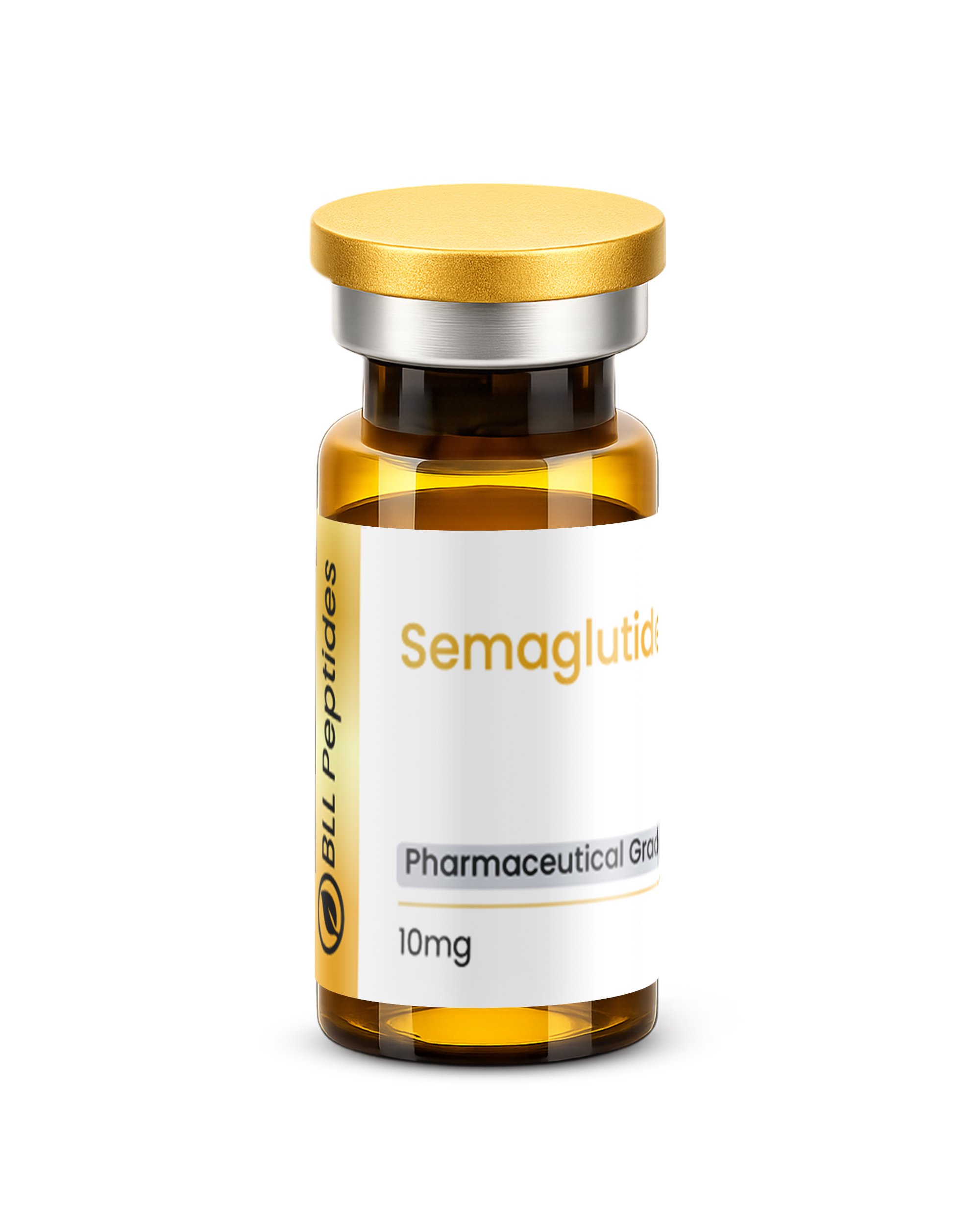
Explore our Semaglutide research compound available from BLL Peptides for laboratory research applications.
Key Research Findings
- ~14.9% mean body weight reduction in STEP 1 (68 weeks, 2.4 mg weekly)
- 86% of participants achieving ≥5% weight loss in STEP 1
- 26% relative MACE risk reduction in SUSTAIN-6 cardiovascular trial
- 20% MACE risk reduction in SELECT trial (obesity without diabetes)
- 7-day half-life enabling once-weekly research protocols
- Emerging research in NASH, neurodegeneration, and addiction biology
Frequently Asked Questions About Semaglutide Research
Q: How does Semaglutide achieve its long half-life?
A: Semaglutide binds reversibly to albumin — the most abundant protein in blood — via its fatty diacid chain. This albumin binding shields the molecule from DPP-4 degradation and renal clearance, extending its half-life to approximately 7 days.
Q: What are GLP-1 receptors and where are they found?
A: GLP-1 receptors (GLP-1R) are G-protein coupled receptors expressed in the pancreas, hypothalamus, brainstem, gastrointestinal tract, heart, kidney, and lungs. Their broad distribution explains why GLP-1 agonists like Semaglutide have effects beyond simple blood sugar regulation.
Q: What is the SELECT trial and why is it significant?
A: SELECT (Semaglutide Effects on Cardiovascular Outcomes) was a landmark trial showing a 20% reduction in major adverse cardiovascular events with 2.4 mg weekly Semaglutide in people with obesity but without diabetes — demonstrating cardiovascular benefit independent of diabetes status.
Q: How is Semaglutide being studied in neuroscience?
A: GLP-1 receptors are expressed in hippocampal and cortical tissue. Research is exploring Semaglutide’s potential neuroprotective effects in models of Alzheimer’s disease, Parkinson’s disease, and neuroinflammation. Clinical trials in neurodegenerative disease are underway.
Q: How does Semaglutide compare to Tirzepatide in research?
A: Semaglutide is a selective GLP-1 agonist. Tirzepatide is a dual GIP/GLP-1 agonist. Phase 3 head-to-head comparison data (SURPASS-CVOT and related trials) generally shows Tirzepatide producing greater weight reduction, though both have shown cardiovascular outcome benefits in their respective trials.
Related Research
If you found this research overview helpful, explore our related guides:
About the Author: Dr. James is a board-certified neurosurgeon with research interests spanning metabolic-neurological interactions, peptide biology, and clinical research methodology. He provides research analysis and scientific commentary for BLL Peptides.
This content is intended for research purposes only. BLL Peptides products are not intended for human consumption.