
BPC-157 Peptide Research: A Neurosurgeon’s Look at Nerve Regeneration and Systemic Healing
·

I’ve spent over two decades watching the nervous system heal — or fail to. As a neurosurgeon, most of my professional life revolves around tissue that the medical establishment long considered essentially non-regenerative. So when a colleague handed me a stack of animal studies on a peptide derived from gastric juice — of all places — that showed consistent nerve and tissue regeneration across multiple models, I didn’t dismiss it. I started reading.
That peptide was BPC-157. And what I found in the literature genuinely surprised me.
What Is BPC-157?
BPC-157 (Body Protection Compound-157) is a synthetic pentadecapeptide — a sequence of 15 amino acids — first isolated from a protective protein found in human gastric juice. Its designation reflects both its origin and a stability researchers discovered early on: unlike most endogenous peptides, BPC-157 appears remarkably resistant to degradation in acidic environments, which has made it a subject of sustained scientific interest for over three decades.
What makes BPC-157 particularly intriguing from a research standpoint isn’t any single mechanism. It’s the breadth. Preclinical models have examined its potential effects on tendons, ligaments, muscle, bone, gut mucosa, peripheral nerves, and the central nervous system. That kind of systemic reach is unusual for a 15-amino-acid chain — and it’s precisely what keeps researchers coming back.
How BPC-157 Works: The Mechanisms Under Investigation
In neurosurgery, I think constantly about vascularization — the blood supply that determines whether tissue survives or dies post-injury. This is exactly where BPC-157 research starts getting interesting.
Studies suggest BPC-157 may promote angiogenesis — the formation of new blood vessels — through upregulation of vascular endothelial growth factor (VEGF) expression. In damaged tissue, restoring vascular supply is often the rate-limiting step in healing. A 2016 study found that BPC-157 significantly accelerated vessel formation in a wound healing model, with treated subjects showing measurably improved tissue perfusion compared to controls.
Beyond vascularization, researchers have identified several proposed mechanisms:
- Nitric oxide (NO) system modulation — BPC-157 appears to interact with the nitric oxide pathway, which plays a central role in vascular tone, neurotransmission, and inflammation signaling
- Growth hormone receptor upregulation — Some research suggests BPC-157 may sensitize tissues to growth hormone, amplifying repair signaling without directly elevating circulating GH levels
- Dopamine and serotonin pathway interaction — This is the finding that stopped me as a neurosurgeon. BPC-157 has shown modulatory effects on central monoamine systems in multiple rodent models
- Tendon and connective tissue repair — Multiple studies have examined BPC-157’s effects on tenocyte migration, collagen synthesis, and fiber organization
BPC-157 Research: What the Preclinical Data Actually Shows
The volume of preclinical research on BPC-157 is substantial — over 100 published studies, predominantly from Dr. Predrag Sikirić’s laboratory at the University of Zagreb. That concentration in one research group is worth flagging; independent replication remains an important next step. But the consistency of findings across diverse injury models is genuinely difficult to ignore.
In landmark tendon research, BPC-157 accelerated Achilles tendon healing in rat models by over 50% compared to controls, with treated tendons demonstrating significantly improved tensile strength and collagen fiber organization at the 4-week mark — structural improvements that mapped to measurable functional recovery.
From a neurological standpoint, a study in CNS Neuroscience & Therapeutics (PubMed) examined BPC-157’s effects on dopaminergic system dysfunction, finding it appeared to counteract neuroleptic-induced catalepsy and reverse dyskinesia markers in rodent models. As someone who treats movement disorder patients, that data point landed very differently than the orthopedic research.
The gut-brain axis angle may be BPC-157’s most underappreciated research frontier. Given its gastric origin, researchers have long studied its effects on GI mucosa — but newer work suggests the connection runs deeper, with BPC-157 appearing to modulate vagal nerve signaling in ways that influence CNS inflammation markers. That’s a mechanism with enormous implications for neurology, and one I think the field is only beginning to fully explore.
Key Research Findings
- Animal models consistently show accelerated healing of tendons, ligaments, and muscle following BPC-157 administration across multiple independent experiments
- Researchers have observed reduced inflammatory markers in both GI and systemic models, potentially through NO pathway modulation
- CNS studies in rodents suggest neuroprotective effects following traumatic brain injury and cerebral ischemia models
- BPC-157 appears to maintain stability in acidic environments — a rarity among bioactive peptides — making it an unusually durable research candidate
- No significant toxicity or adverse effects have been identified in preclinical studies across varied animal models and dose ranges
- Research suggests synergistic effects when BPC-157 is studied alongside TB-500 (Thymosin Beta-4) in tissue repair models
BPC-157 Research at BLL Peptides
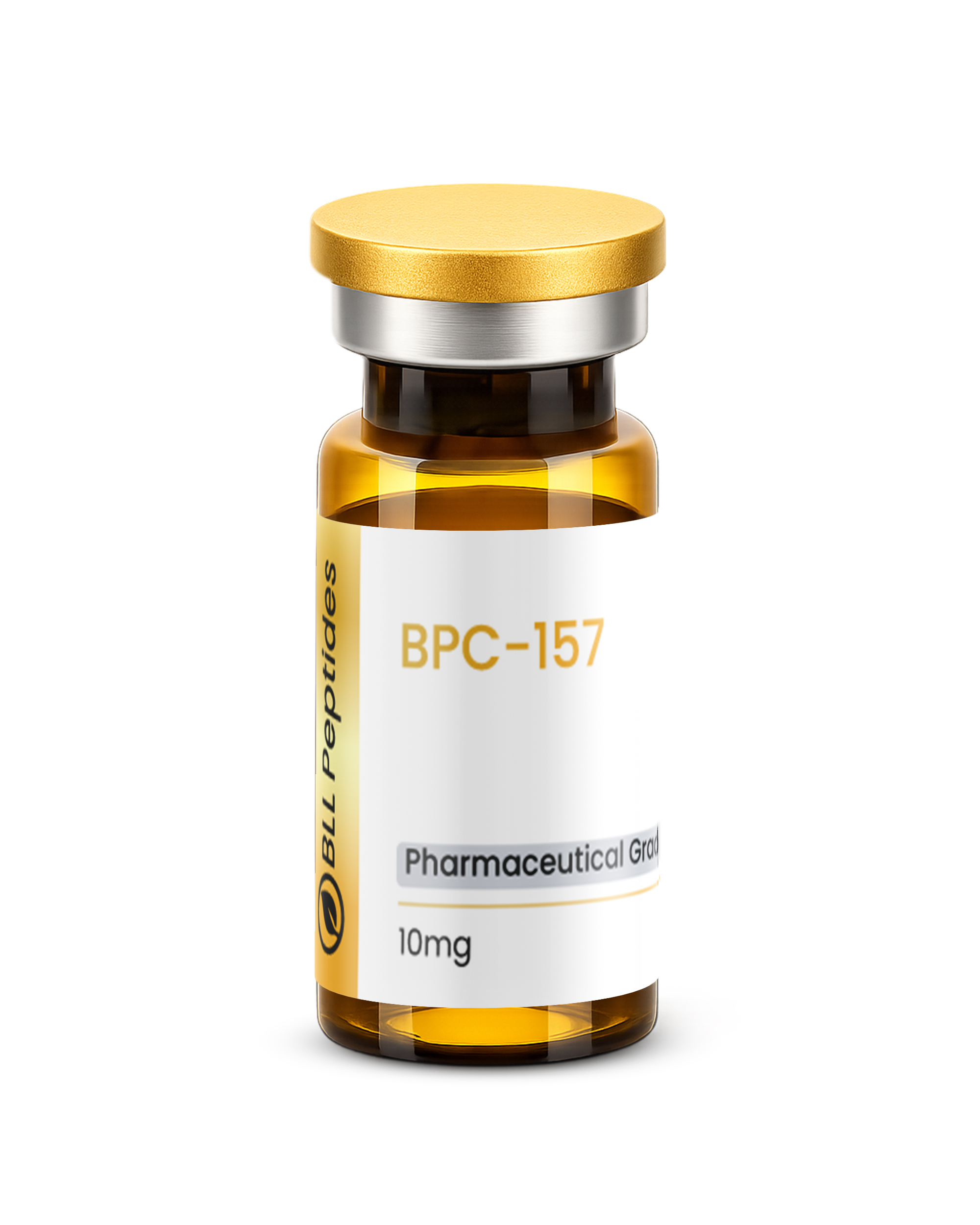
For researchers investigating tissue repair, peripheral nerve regeneration, or gut-brain axis mechanisms, BLL Peptides offers BPC-157 (10mg/3ml) for in vitro and preclinical research purposes. All products are USA-manufactured under GMP-certified conditions.
Researchers exploring complementary pathways may also be interested in NAD+ (500mg/10ml), which supports mitochondrial function and cellular energy metabolism — a process closely linked to tissue repair signaling — as well as TB-500, frequently studied alongside BPC-157 in preclinical repair models.
Frequently Asked Questions About BPC-157 Research
What does BPC-157 stand for?
BPC-157 stands for Body Protection Compound-157. It is a synthetic 15-amino-acid peptide sequence derived from a protective protein found in human gastric juice, studied in preclinical models for its effects on tissue repair, nerve regeneration, and systemic healing.
What tissues has BPC-157 been studied in?
Preclinical research has examined BPC-157 across tendon, ligament, muscle, bone, gastrointestinal mucosa, peripheral nerve, and central nervous system models. Its apparent systemic activity across multiple tissue types is one of the most discussed aspects of its research profile.
Is there human clinical trial data on BPC-157?
As of current published literature, BPC-157 studies have been conducted primarily in animal models. Human clinical trials remain limited. The robust preclinical data has generated significant scientific interest, but the research community awaits peer-reviewed human trial data before drawing clinical conclusions.
How does BPC-157 relate to the gut-brain axis?
BPC-157’s origin in gastric tissue has led researchers to investigate its role in gut-brain communication. Animal studies suggest it may modulate vagal nerve signaling and influence central inflammation markers — positioning it as an interesting candidate in gut-brain axis research, a field of rapidly growing neurological relevance.
What distinguishes BPC-157 from other repair-focused peptides?
BPC-157’s stability in acidic environments and its apparent multi-system biological activity distinguish it from peptides with narrower mechanisms. While most repair peptides target specific growth factor pathways, BPC-157 appears to simultaneously influence angiogenesis, nitric oxide signaling, and monoamine neurotransmitter systems — a breadth that makes it an unusual and scientifically compelling research subject.
About the Author
Dr. James is a board-certified neurosurgeon with over two decades of clinical and surgical experience. His interest in peptide research stems from its implications for nerve regeneration, neuroinflammation, and tissue repair — areas that intersect directly with his surgical practice and ongoing scientific curiosity. He serves as a medical advisor to Better Life Lab and BLL Peptides.
This content is intended for research purposes only. BLL Peptides products are not intended for human consumption.