
SS-31 Peptide Research: A Neurosurgeon’s Look at Mitochondrial Targeting, Cardiolipin Protection, and Cellular Bioenergetics
·

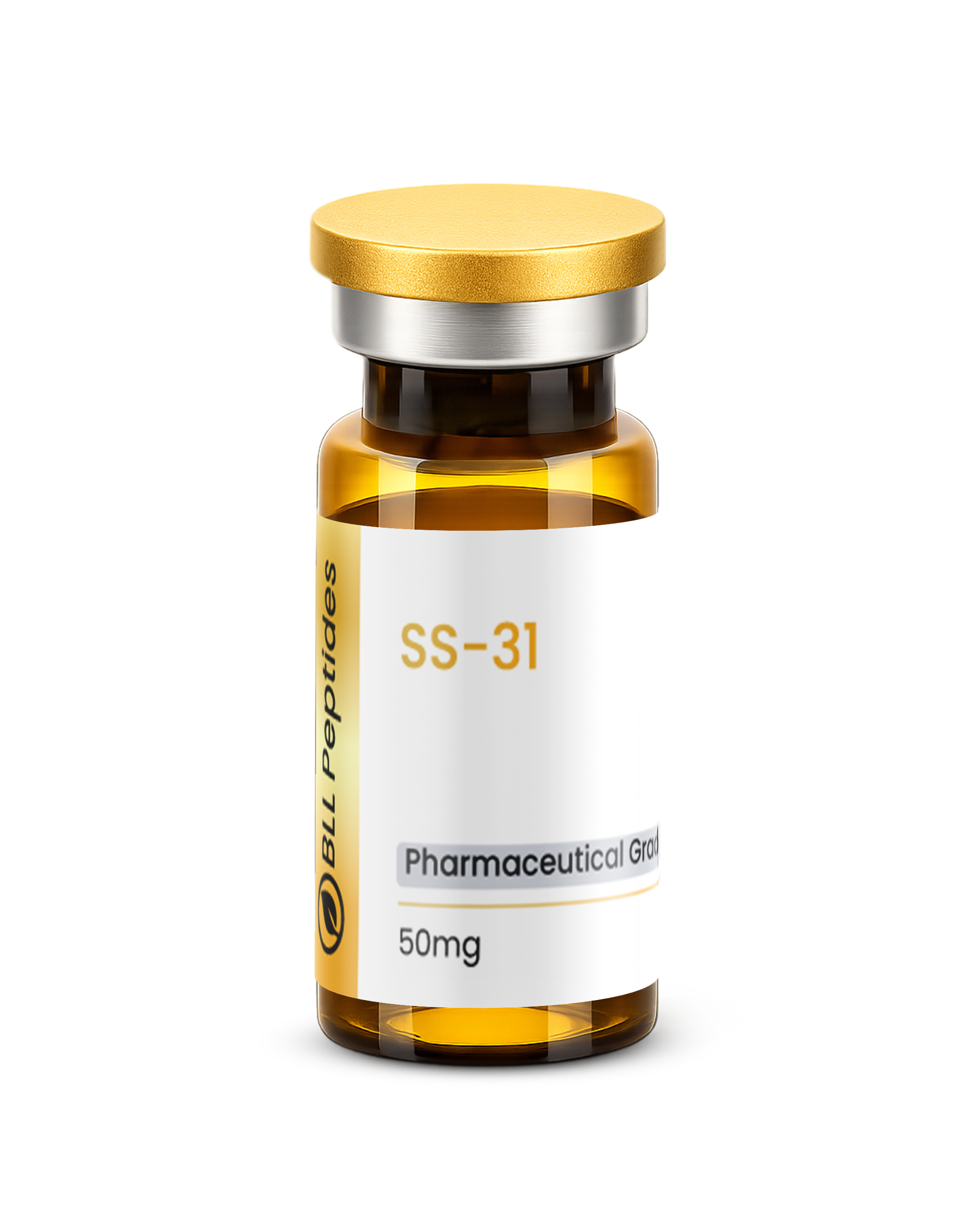
The patient was a 58-year-old marathoner. Pre-op, she had run four marathons a year. Eighteen months after her spinal procedure — technically successful, no complications — she came back describing something she called “cellular exhaustion.” Not fatigue from exertion. Fatigue from existing. That description sent me back into the mitochondrial biology literature, and eventually to SS-31 peptide research — a compound I had seen referenced at conferences but never investigated in depth. What I found genuinely changed how I think about energy metabolism at the organelle level.
SS-31 peptide research sits at the intersection of mitochondrial membrane biophysics, cardioprotection, and metabolic aging — converging in a tetrapeptide that does something most compounds cannot: selectively accumulate at the inner mitochondrial membrane to protect cardiolipin, the structural lipid on which everything else depends.
What Is SS-31? The Direct Answer
SS-31 (also known as Elamipretide, MTP-131, or Bendavia) is a synthetic cell-permeable tetrapeptide — D-Arg-2′6′-Dmt-Lys-Phe-NH₂ — designed to selectively target and protect cardiolipin at the inner mitochondrial membrane. Cardiolipin is a unique phospholipid found almost exclusively in the inner mitochondrial membrane, where it plays a structural role in organizing electron transport chain complexes, maintaining membrane curvature, and regulating ATP synthase efficiency. When cardiolipin becomes oxidized — as it does under conditions of oxidative stress, ischemia, or aging — electron transport chain efficiency collapses, ROS production escalates, and the downstream cascade of metabolic dysfunction and cell death follows. SS-31 research targets precisely that upstream event.
How SS-31 Works: Cardiolipin Binding, ROS Attenuation, and Bioenergetic Restoration
As a neurosurgeon who thinks in systems, I was drawn to SS-31’s elegant specificity. Rather than acting as a broad-spectrum antioxidant scavenging free radicals throughout the cell, SS-31 operates at a precise structural target — a feature that mechanistically distinguishes it from compounds like NAD+ or general antioxidants.
Cardiolipin protection: SS-31 binds directly to cardiolipin at the inner mitochondrial membrane, stabilizing its structure and preventing its oxidation by cytochrome c. This is the anchor event: by protecting cardiolipin from peroxidation, SS-31 preserves the scaffolding on which Complexes I, III, IV, and V depend for efficient electron transport. Research published in the Journal of the American Heart Association demonstrated that SS-31 maintained cristae architecture and ATP production in ischemia-reperfusion models — findings that illuminate why this compound has generated significant cardiac and neuroprotective research interest.
ROS attenuation at the source: Rather than neutralizing reactive oxygen species after they have already caused damage, SS-31 reduces their production at the point of origin — the mitochondrial electron transport chain. By maintaining efficient electron flow through intact cardiolipin-organized complexes, the electron leakage that generates superoxide is minimized. The distinction between scavenging ROS and preventing their production is more than semantic — it means SS-31 addresses mitochondrial dysfunction upstream, before the oxidative cascade begins.
ATP synthesis enhancement: Multiple preclinical studies have documented that SS-31 improves cellular ATP production in models of ischemia, aging, and metabolic stress. In skeletal muscle models, SS-31 increased complex I-linked respiration and significantly improved mitochondrial coupling efficiency. These bioenergetic effects represent the functional endpoint of cardiolipin protection: when the membrane is structurally intact, energy production recovers.
What SS-31 Peptide Research Actually Shows
Ischemia-Reperfusion and Cardiac Models
The most extensively published preclinical data in SS-31 research involves cardiac ischemia-reperfusion injury — the cellular damage that occurs when blood flow is restored to oxygen-deprived tissue. In multiple animal models, SS-31 significantly reduced infarct size, preserved mitochondrial membrane potential, and improved post-ischemic cardiac function. Research documented reductions in myocardial infarct size of 40–52% in rodent ischemia-reperfusion models with SS-31 treatment — a clinically meaningful magnitude that moved the compound into Phase II cardiac clinical trials, including the EMBRACE-STEMI and PROGRESS trials. PubMed-indexed research on SS-31 and mitochondrial function in aging skeletal muscle provides an excellent foundation for understanding the compound’s broader bioenergetic profile.
Skeletal Muscle and Metabolic Aging Models
Research in aged animal models found that SS-31 restored mitochondrial function, improved muscle fiber morphology, and enhanced exercise capacity. The mechanism connects directly to cardiolipin: aging is associated with progressive cardiolipin oxidation and cristae architecture disruption, and SS-31 appears to reverse key components of that degradation. In muscle aging models, SS-31 improved complex I and IV activity and restored mitochondrial ATP production toward younger-animal baselines — findings that overlap significantly with the metabolic decline research addressed by NAD+ and other bioenergetics-focused interventions.
Neuroprotective Research
Given my specialty, the neuroprotection data was where I spent the most time. Neurons are among the most metabolically demanding cells in the body — their large surface area and continuous signaling require uninterrupted mitochondrial ATP production, making them exquisitely vulnerable to mitochondrial dysfunction. Preclinical SS-31 research in models of traumatic brain injury, ischemic stroke, and retinal degeneration documented consistent neuroprotective effects: preserved neuronal mitochondrial membrane potential, reduced apoptotic signaling, and improved behavioral outcomes. Research in retinal degeneration models showed SS-31 preserving 60–70% more photoreceptor function than controls in light-damage paradigms — compelling evidence of efficacy in high-energy-demand neural tissue directly relevant to neurological research contexts.
Key Findings from SS-31 Peptide Research
- Selectively accumulates at the inner mitochondrial membrane via its aromatic-cationic structure, binding cardiolipin and preventing its oxidation — the upstream structural event driving electron transport chain failure
- Reduces myocardial infarct size by 40–52% in rodent ischemia-reperfusion models across multiple independent research groups — a magnitude sufficient to support Phase II clinical translation
- Improves mitochondrial ATP production and complex I/IV activity in skeletal muscle aging models, restoring bioenergetics toward younger-animal baselines
- Preserves 60–70% more photoreceptor function in retinal degeneration models vs. controls — evidence of neuroprotective efficacy in extremely high-energy-demand neural tissue
- Progressed to Phase II clinical investigation in cardiac ischemia-reperfusion contexts (EMBRACE-STEMI, PROGRESS trials) — an unusually high level of clinical translation for a peptide research compound
- Prevents ROS production at the source rather than scavenging after oxidative damage — a mechanistically upstream strategy distinct from all broad antioxidant approaches
A peptide that targets the structural foundation of mitochondrial energy production — cardiolipin itself — rather than individual downstream symptoms of dysfunction, represents one of the most upstream and mechanistically coherent approaches to cellular bioenergetics research I have encountered in this literature.
SS-31 and Related Research Compounds at BLL Peptides
For researchers exploring mitochondrial biology and cellular bioenergetics, SS-31 fits naturally alongside other compounds targeting metabolic function through distinct mechanisms. Our NAD+ research compound addresses mitochondrial function through sirtuin activation and the NAD+/NADH ratio that governs electron transport chain cofactor availability — where SS-31 targets structural membrane integrity and cardiolipin, NAD+ operates at the cofactor and epigenetic regulation level. Together they represent complementary upstream angles on mitochondrial health in aging and stress research models.
For researchers interested in tissue repair and systemic recovery alongside bioenergetic support, BPC-157 provides a mechanistically distinct perspective — covering angiogenesis, FAK-paxillin signaling, and musculoskeletal repair pathways that interact with the metabolic demands SS-31 research addresses at the organelle level. The two compounds address different layers of a shared recovery biology.
This content is intended for research purposes only. BLL Peptides products are not intended for human consumption.
Frequently Asked Questions About SS-31
What does SS-31 stand for and what is it made of?
SS-31 refers to a Szeto-Schiller peptide (designation 31), developed by Dr. Hazel Szeto and Peter Schiller. Its chemical structure is D-Arg-2′6′-Dmt-Lys-Phe-NH₂ — a tetrapeptide incorporating the non-natural amino acid dimethyltyrosine (Dmt), which contributes to the aromatic-cationic properties enabling selective accumulation at the inner mitochondrial membrane. It is also known by the clinical name Elamipretide or the trade name Bendavia in cardiac research contexts.
Why does SS-31 selectively target mitochondria?
SS-31’s selective mitochondrial accumulation results from its aromatic-cationic character. The alternating aromatic and cationic amino acid residues interact with the strongly electronegative inner mitochondrial membrane — driven by the large electrical potential (approximately -180 to -220 mV) maintained across that membrane. This electrochemical gradient effectively concentrates the peptide precisely where cardiolipin resides, without requiring active transport mechanisms.
What is cardiolipin and why does it matter for mitochondrial function?
Cardiolipin is a phospholipid found almost exclusively in the inner mitochondrial membrane, where it performs structural and functional roles essential to cellular energy production. It stabilizes electron transport chain complexes I, III, and IV in functional supercomplexes, maintains inner membrane curvature at cristae, and regulates cytochrome c association and ATP synthase efficiency. When cardiolipin is oxidized — as occurs in ischemia, aging, and metabolic stress — electron transport chain efficiency drops, ROS production escalates, and apoptotic signaling can be initiated through cytochrome c release.
Has SS-31 (Elamipretide) advanced to human clinical trials?
Yes — SS-31 under the clinical name Elamipretide progressed to Phase II clinical investigation in cardiac settings. The EMBRACE-STEMI trial examined it in patients undergoing percutaneous coronary intervention for ST-elevation myocardial infarction, and the PROGRESS trial investigated it in heart failure with reduced ejection fraction. These represent an unusually high level of clinical translation for a peptide research compound, driven by the robust and reproducible preclinical bioenergetic data.
How does SS-31 research differ mechanistically from general antioxidant research?
Most antioxidants neutralize ROS after they have been produced — a reactive, downstream approach. SS-31 instead prevents ROS generation at the source by protecting cardiolipin and maintaining electron transport chain structural integrity, reducing the electron leakage that generates superoxide. This upstream, source-prevention strategy is mechanistically distinct from vitamin E, CoQ10, or other antioxidant compounds, and may explain why SS-31 has demonstrated efficacy in research contexts where broad antioxidant supplementation has not.
About the Author
Dr. James is a board-certified neurosurgeon and member of the BLL Peptides research advisory team. With decades of surgical experience and a focused interest in neural recovery, neuroprotection, and the emerging science of signaling peptides, Dr. James regularly reviews preclinical literature and translates complex findings for clinicians and researchers working at the frontier of neuroscience.
This content is intended for research purposes only. BLL Peptides products are not intended for human consumption.