
BPC-157 Research: What This Body Protection Compound Reveals About Gut-Brain Repair
·

The first time I truly paid attention to the gut-brain connection wasn’t in a lecture hall — it was standing in the ICU watching a post-craniotomy patient develop a perforated ulcer within 72 hours of surgery. No prior GI history. No warning signs. Just a brain insult that cascaded into a gastrointestinal crisis. That moment planted a question I’ve been trying to answer ever since: how deeply are the nervous system and the gut actually wired together — and can that connection be therapeutically leveraged?
That question eventually led me to BPC-157 — a peptide sequence originally isolated from gastric juice that has quietly accumulated one of the most diverse preclinical research profiles in the peptide literature. The data crosses organ systems in a way that should command more mainstream scientific attention than it currently receives.
What Does BPC-157 Research Actually Show?
BPC-157 (Body Protection Compound-157) is a synthetic 15-amino acid pentadecapeptide derived from a protein found naturally in human gastric juice. In preclinical models, it has demonstrated consistent activity across multiple biological systems — promoting angiogenesis, upregulating growth factor receptors, modulating nitric oxide pathways, and exhibiting neuroprotective effects. Studies across gastrointestinal, musculoskeletal, cardiovascular, and neurological models have reported regenerative effects without observable systemic toxicity at research doses.
What Is BPC-157?
BPC-157’s full amino acid sequence is Gly-Glu-Pro-Pro-Pro-Gly-Lys-Pro-Ala-Asp-Asp-Ala-Gly-Leu-Val — a 15-residue chain sometimes referenced in scientific literature as PL-10 or PL 14736. The “157” denotes its sequence position in the parent gastric protein from which it was originally isolated.
Unlike many synthetic research peptides with no endogenous analog, BPC-157’s derivation from a naturally occurring human protein may contribute to the favorable safety profile consistently observed in animal models. Research interest dates back to the early 1990s, but the volume and scope of studies has accelerated significantly in the past decade.
How BPC-157 Works: The Mechanisms Researchers Study
What distinguishes BPC-157 from most compounds under study is the breadth of its proposed mechanisms. Most peptides have one or two primary pathways. BPC-157 appears to interact with several simultaneously:
- Nitric oxide system modulation: BPC-157 appears to restore nitric oxide (NO) signaling in damaged tissue, improving vascular tone and blood flow to injury sites — a mechanism relevant to both wound healing and neural recovery.
- Growth factor receptor upregulation: Research suggests BPC-157 may upregulate VEGF and growth hormone receptor expression, potentially accelerating angiogenesis and tissue matrix formation.
- Tendon-to-bone junction repair: Studies in rodent models document accelerated collagen organization and fibroblast proliferation at tendon-bone interfaces — one of the most mechanically demanding and slow-healing tissue junctions in the body.
- Gut barrier protection: BPC-157 has shown protective effects on intestinal epithelium in models of NSAID-induced damage, alcohol toxicity, and inflammatory bowel conditions.
- Neuroprotective effects: For me, this is the most compelling frontier. Several studies suggest BPC-157 may support dopaminergic and serotonergic signaling and reduce behavioral deficits in neurological injury models — a finding that warrants serious follow-up.
What the Research Shows
The preclinical literature on BPC-157 is unusually diverse. A key review published in Current Pharmaceutical Design (2018) summarized BPC-157’s effects across multiple organ systems, noting consistent regenerative activity in animal models alongside a profile that showed no observable systemic toxicity across tested ranges.
Specific findings from the research base include:
- Rodent Achilles tendon injury studies showed healing acceleration of up to 50% in BPC-157 treatment groups compared to controls, with improved collagen fiber alignment and tensile strength at the repair site.
- Gastric ulcer models demonstrated near-complete mucosal healing within days — results significant enough that BPC-157 entered Phase II clinical trials for inflammatory bowel disease under the designation PL 14736.
- In traumatic brain injury rodent models, BPC-157-treated subjects showed measurably reduced neurological impairment markers and behavioral deficits compared to control groups — a finding that has caught the attention of neuroregeneration researchers.
Key Research Findings Worth Noting
Across the literature, three observations consistently stand out:
“BPC-157 may represent one of the most versatile tissue-protective compounds currently under preclinical research — its documented activity spans from gut epithelium to central nervous system circuitry.”
“In NSAID-induced GI damage models, BPC-157 demonstrated protective effects even when administered hours after injury — suggesting a therapeutic window that most mucosal-protective agents simply don’t offer.”
“The neuroprotective effects of BPC-157 in traumatic brain injury models are an underexplored frontier — one that deserves urgent attention from translational neuroscience.”
As someone who has spent years at the intersection of brain surgery and outcome recovery, that last point isn’t just an academic observation. It’s a call for more research funding in this direction.
BPC-157 Research Peptide — Available from BLL Peptides
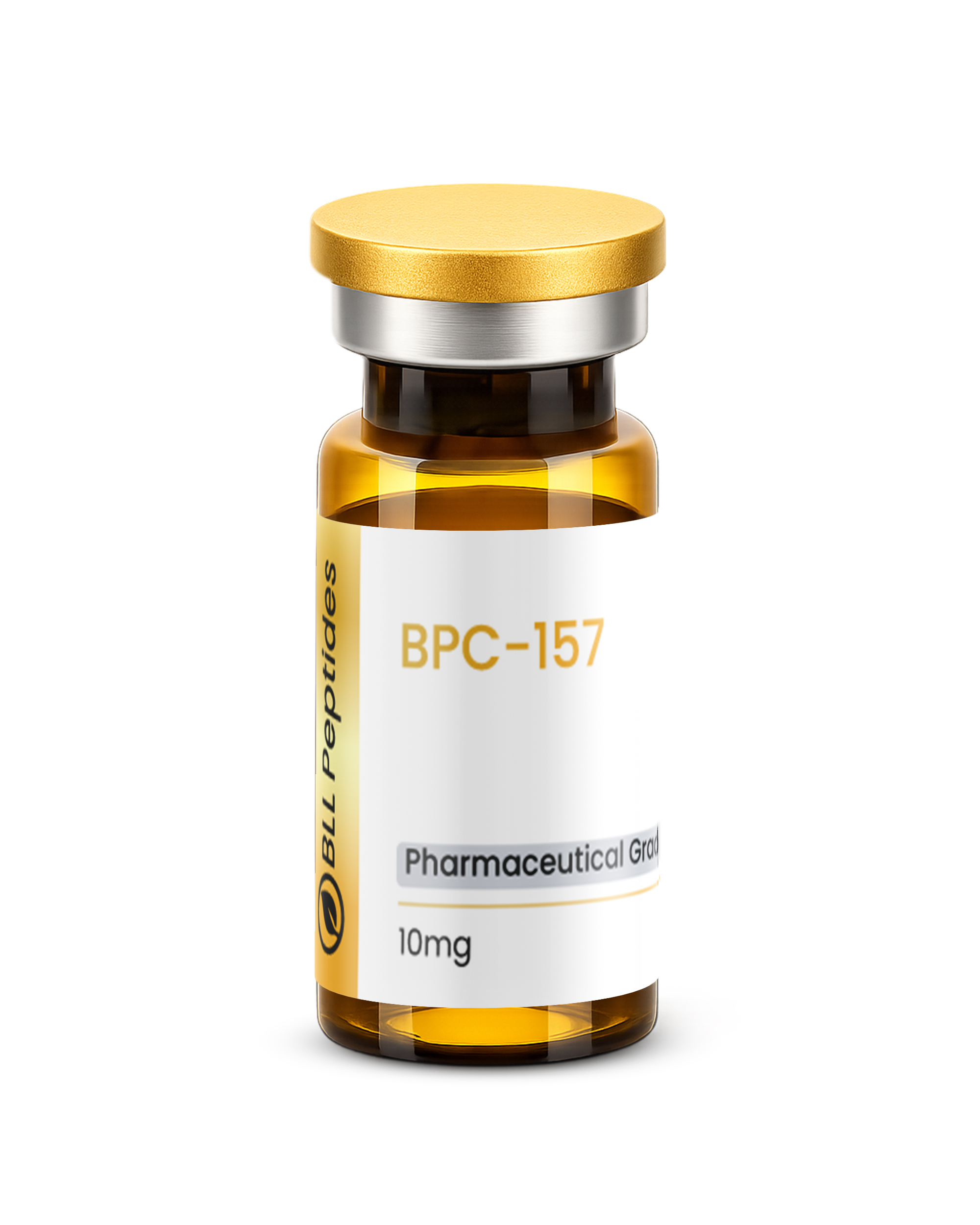
For researchers investigating tissue regeneration, gut-brain signaling, or neuroprotection, BLL Peptides offers BPC-157 (10mg/3mL) — a research-grade compound produced in GMP-certified, USA-based facilities with full third-party purity verification.
BLL Peptides is a veteran-owned supplier built on transparency and research integrity. For those exploring complementary compounds in the tissue repair literature, TB-500 (Thymosin Beta-4, 10mg/3mL) is frequently studied alongside BPC-157 for its distinct but potentially synergistic role in actin regulation and cell migration. Researchers interested in the neuroprotective and metabolic dimensions of recovery may also explore NAD+ (500mg/10mL), a compound under active study for its role in mitochondrial function and neuronal resilience.
Frequently Asked Questions About BPC-157 Research
What is BPC-157 and where does it come from?
BPC-157 is a 15-amino acid synthetic peptide derived from a partial sequence of a protein found naturally in human gastric juice. The “BPC” stands for Body Protection Compound, and “157” identifies its sequence position in the parent protein.
What biological systems does BPC-157 research cover?
Research spans the gastrointestinal tract, musculoskeletal system (tendons, ligaments, muscle), cardiovascular system, and central nervous system. Its multi-system activity is what makes it an unusually broad subject of study compared to most research peptides.
Has BPC-157 been studied in human clinical trials?
Yes — under the name PL 14736, BPC-157 has been investigated in Phase II clinical trials for inflammatory bowel disease. However, the bulk of existing data remains in in vitro and rodent models. Human clinical data is still limited and ongoing research is needed.
How does BPC-157 differ from TB-500 in research?
They target different primary mechanisms. BPC-157 primarily modulates nitric oxide pathways and growth factor receptor expression. TB-500 (Thymosin Beta-4) acts through actin regulation and cell migration pathways. Researchers often study both together given their complementary mechanisms in tissue repair models.
What is the most surprising finding in BPC-157 research?
For me personally, the neuroprotective data is the most surprising and underappreciated. The fact that a peptide derived from gastric protein shows measurable effects in traumatic brain injury models says something profound about how interconnected our biological systems really are.
About the Author: Dr. James Nguyen, MD
Dr. James Nguyen is a board-certified neurosurgeon and member of the BLL Peptides research team. His clinical background in brain and spine surgery informs a deep interest in neuroprotection, regenerative medicine, and the emerging science of therapeutic peptides. He writes to bridge the gap between peer-reviewed research and the researchers, clinicians, and health professionals working to understand it.
This content is intended for research purposes only. BLL Peptides products are not intended for human consumption.