
GHK-Cu Research: What This Copper Peptide Reveals About Tissue Repair, Gene Activation, and the Brain’s Healing Response
·

A few years ago, I was reviewing post-operative recovery data for a spinal fusion patient who simply wasn’t healing the way I expected. Normal inflammatory markers, adequate nutrition, no infection — but connective tissue repair was lagging behind. A colleague in regenerative medicine mentioned GHK-Cu almost offhandedly. I’d heard of it, written it off as a skincare ingredient. What he said next had me pulling up PubMed at midnight.
GHK-Cu isn’t just a skin peptide. It’s a systemic repair signal your body produces naturally — and may stop producing enough of as you age.
What Is GHK-Cu Copper Peptide?
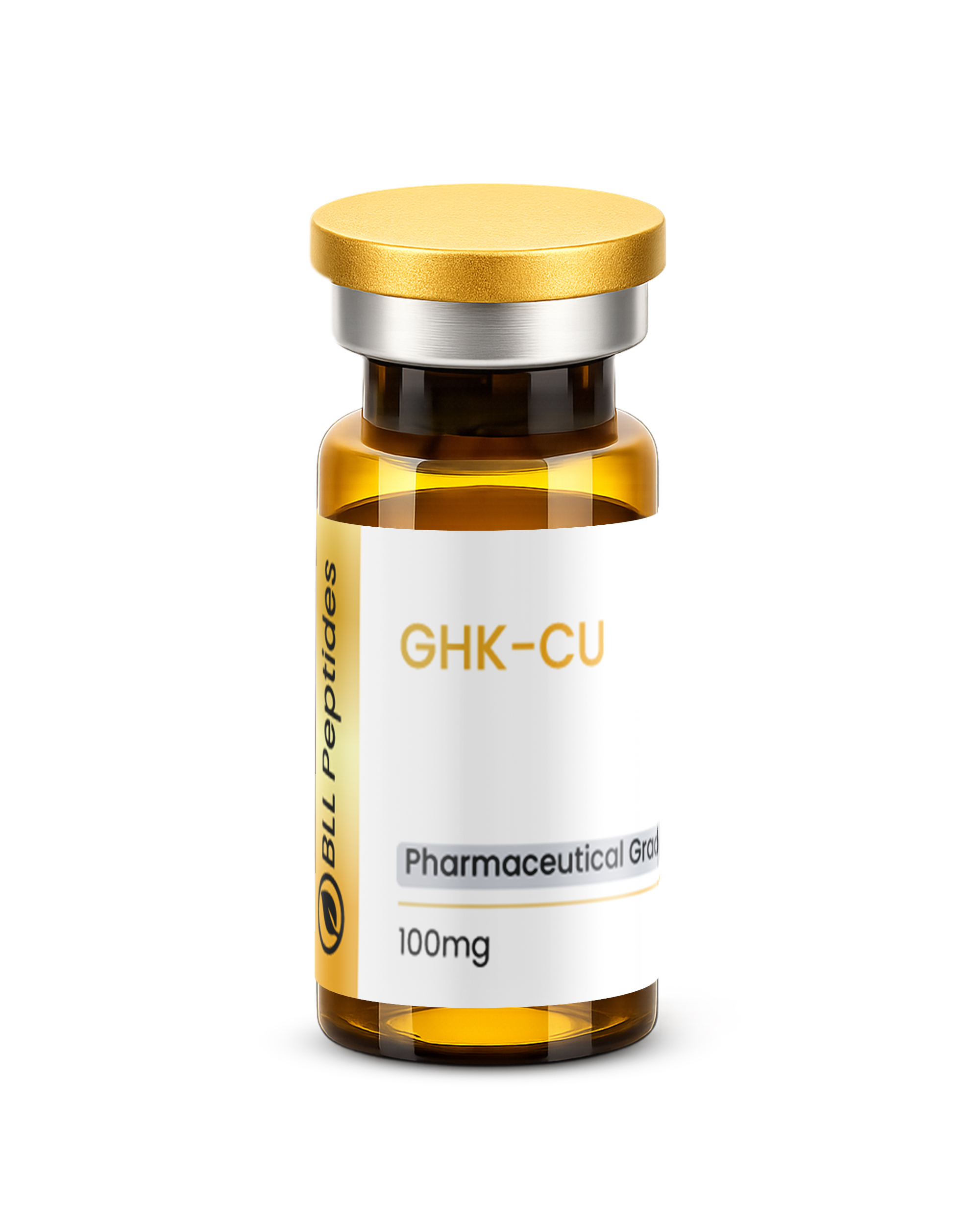
GHK-Cu (glycine-L-histidine-L-lysine copper) is a naturally occurring human plasma tripeptide first isolated from human plasma in the early 1970s by biochemist Loren Pickart. It consists of three amino acids — glycine, histidine, and lysine — bound to a copper ion. This copper-peptide complex is found in plasma, saliva, and urine, and its concentrations are tightly correlated with biological age.
Plasma levels of GHK-Cu are highest during youth — approximately 200 ng/mL at age 20 — and decline by roughly 60% to around 80 ng/mL by age 60. That steep drop has motivated researchers to ask a pointed question: is the erosion of GHK-Cu levels one of the signals that tells tissue to stop repairing itself efficiently?
How GHK-Cu Works: Mechanisms of Action
What makes GHK-Cu remarkable in the research literature isn’t any single pathway — it’s how many pathways it appears to touch simultaneously.
- Collagen and extracellular matrix remodeling: GHK-Cu has been shown to upregulate collagen synthesis in fibroblasts while simultaneously activating matrix metalloproteinases (MMPs), the enzymes that clear damaged extracellular matrix. This dual action promotes net tissue remodeling rather than fibrotic scar buildup.
- Gene expression modulation: Research by Pickart and Margolina demonstrated that GHK-Cu can alter the expression of over 4,000 human genes — resetting them toward profiles associated with youthful, healthy tissue. The peptide appears to suppress genes linked to inflammation and dysregulated cell growth while upregulating repair pathways.
- Antioxidant and anti-inflammatory activity: GHK-Cu exhibits significant free radical scavenging capacity and inhibits pro-inflammatory cytokines including TNF-α.
- Neuroprotection and BDNF upregulation: As a neurosurgeon, this is the mechanism that arrested my attention. Preclinical data suggests GHK-Cu can upregulate brain-derived neurotrophic factor (BDNF), promote nerve regeneration, and protect neurons from oxidative damage — a trifecta that’s hard to ignore in the context of CNS repair research.
What GHK-Cu Research Reveals: Key Data Points
A landmark study published in Biochemical Pharmacology found that GHK-Cu accelerated wound healing in animal models by promoting angiogenesis — new blood vessel formation — alongside increased local collagen production. The peptide’s wound healing properties have since been replicated across multiple laboratory models.
In one human fibroblast study, GHK-Cu treatment increased collagen synthesis by up to 70% compared to untreated controls. That’s not a marginal finding — it’s a substantial upregulation of the body’s primary structural protein.
Perhaps more striking is the gene expression data. A 2014 bioinformatics analysis found that GHK-Cu reversed gene expression signatures associated with aggressive metastatic cancer back toward normal tissue patterns in laboratory models. This positions GHK-Cu not merely as a repair agent, but as a potential biological reset signal — capable of shifting gene expression at scale. A full breakdown of this research is available via PubMed (Pickart et al., 2015).
On the neurological front, rodent models have shown GHK-Cu can cross the blood-brain barrier and increase BDNF levels — the neurotrophic factor I think about constantly in spinal injury and recovery contexts. If there’s a copper-binding tripeptide that bridges systemic wound healing and neural repair, GHK-Cu is the most compelling candidate in current research literature.
GHK-Cu Key Findings at a Glance
- Modulates expression of 4,000+ human genes (Pickart & Margolina, 2018)
- Plasma levels decline ~60% between ages 20 and 60
- Promotes angiogenesis, collagen synthesis, and extracellular matrix remodeling in preclinical models
- Neuroprotective properties and BDNF upregulation observed in rodent models
- Anti-inflammatory via TNF-α suppression pathways
- Demonstrated antioxidant activity across multiple in vitro models
Exploring Related Peptide Research at BLL Peptides
GHK-Cu’s tissue repair and gene-modulating mechanisms overlap with other peptides under active research. If you’re exploring the broader landscape of repair-signaling compounds, BLL Peptides carries BPC-157, which has been studied extensively for gastrointestinal and musculoskeletal repair pathways, and TB-500 (Thymosin Beta-4), an actin-regulating peptide with substantial connective tissue research behind it. For cellular energy and mitochondrial function research, NAD+ represents another active area of longevity science.
All BLL Peptides products are manufactured in the USA under GMP-certified conditions. As a veteran-owned brand, quality and accountability are foundational — not optional.
FAQ: GHK-Cu Copper Peptide Research
What does GHK-Cu stand for?
GHK-Cu stands for glycine-L-histidine-L-lysine bound to a copper (Cu) ion. It is a naturally occurring human tripeptide first isolated from human plasma in the 1970s by Loren Pickart.
Is GHK-Cu the same as copper peptide skincare?
GHK-Cu is the active compound in many copper peptide skincare products, but the research literature examines its systemic effects — gene modulation, neuroprotection, wound healing — at concentrations and delivery mechanisms well beyond what topical skincare products achieve. The two shouldn’t be conflated when evaluating the research.
What does GHK-Cu do to gene expression?
Research suggests GHK-Cu modulates the expression of more than 4,000 human genes, shifting profiles associated with aging and inflammatory disease toward patterns observed in younger, healthier tissue. This was documented in research published by Pickart and Margolina (2018).
Does GHK-Cu have neuroprotective properties?
Preclinical data indicates GHK-Cu may upregulate BDNF (brain-derived neurotrophic factor) and protect neurons from oxidative stress. This is an active area of laboratory research and has not yet been established in human clinical trials.
Why do GHK-Cu levels decline with age?
The exact mechanism behind age-related decline in plasma GHK-Cu concentrations is not fully understood. Researchers hypothesize it may involve reduced hepatic synthesis and changes in copper metabolism — but this remains an open question in the field.
About the Author: Dr. James is a board-certified neurosurgeon and member of the BLL Peptides medical advisory team. His clinical focus on neural repair and surgical recovery has deepened his interest in peptide research — particularly compounds that bridge cellular signaling with tissue regeneration. All content is produced for educational and research purposes only.
This content is intended for research purposes only. BLL Peptides products are not intended for human consumption.