
CJC-1295 Research: What This GHRH Analog Reveals About Pulsatile Growth Hormone Release
·

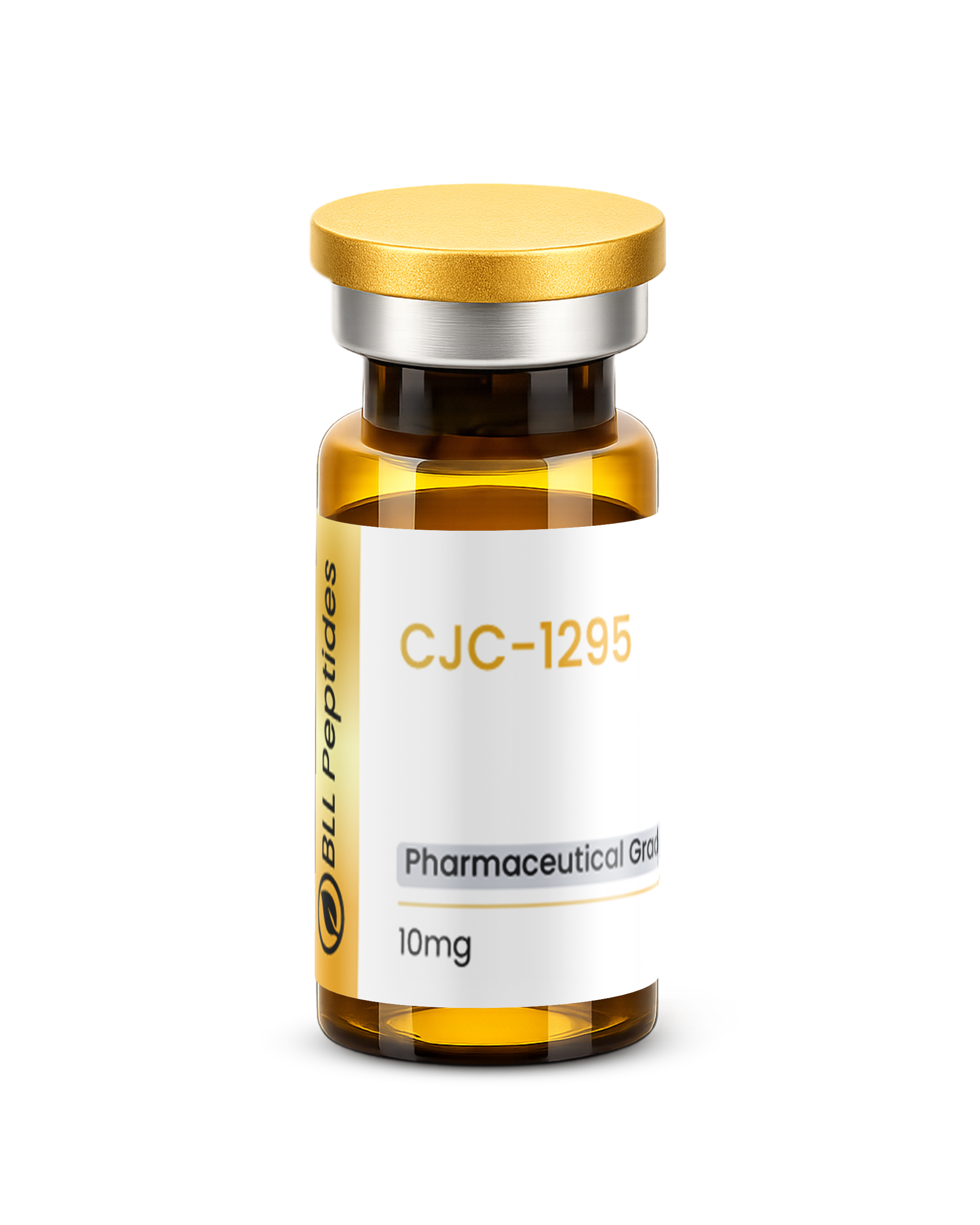
A patient once told me he felt like his body had forgotten how to recover. He was 52, active, disciplined with his nutrition — and still waking up stiff, healing slowly, losing the edge he’d had a decade earlier. I’d heard versions of this story hundreds of times. What I found interesting wasn’t the complaint itself — it was what the research on CJC-1295 suggests about why that happens, and what might be driving the shift.
CJC-1295 research centers on a modified growth hormone-releasing hormone (GHRH) analog designed to prolong GH pulse duration and sustain IGF-1 signaling — two processes that decline steadily after the third decade of life. Here’s what the peer-reviewed data actually says.
What Is CJC-1295?
CJC-1295 is a synthetic analog of growth hormone-releasing hormone (GHRH), the hypothalamic peptide that triggers pulsatile growth hormone (GH) secretion from the anterior pituitary. The native GHRH molecule is rapidly degraded by dipeptidyl peptidase IV (DPP-IV) in circulation — its half-life measured in minutes. CJC-1295 was engineered to resist this enzymatic degradation through strategic amino acid substitutions.
Two variants appear in the research literature: CJC-1295 without DAC (also called Modified GRF 1-29) and CJC-1295 with DAC (Drug Affinity Complex). The DAC form binds reversibly to albumin in the bloodstream, extending its half-life from minutes to several days. Both work via the same receptor; the difference lies in how long they remain active in circulation.
How CJC-1295 Works at the Receptor Level
GHRH binds to the GHRH receptor (GHRHR) on somatotroph cells in the anterior pituitary. This triggers a cyclic AMP (cAMP) signaling cascade, leading to GH synthesis and release. CJC-1295 activates the same receptor — it mimics endogenous GHRH structurally but with enhanced stability.
The critical distinction is this: CJC-1295 amplifies GH pulses rather than creating a flat, constant elevation. This matters because the downstream effects of GH — including IGF-1 production in the liver — are sensitive to pulsatility. A steady trickle of GH produces different outcomes than robust, timed pulses. The pituitary’s natural rhythm is preserved; CJC-1295 simply extends the amplitude and duration of each signal.
As a neurosurgeon, I find the neuroendocrine architecture here genuinely elegant. The hypothalamic-pituitary axis is a feedback system of extraordinary precision. What CJC-1295 research explores is how to modulate that system without overriding it — a fundamentally different approach than exogenous GH administration.
What the Research Shows
A landmark Phase II clinical trial by Teichman et al. (2006), published in the Journal of Clinical Endocrinology & Metabolism, remains the most-cited human study on CJC-1295. In that trial, a single administration of CJC-1295 with DAC produced 2- to 10-fold increases in mean GH concentrations that were sustained for 6 days post-dose. IGF-1 levels increased 1.5- to 3-fold and remained elevated for up to 14 days. You can review the original data at PubMed (PMID: 16822960).
Additional preclinical research has examined CJC-1295’s influence on:
- Tissue repair signaling — IGF-1 elevation downstream of CJC-1295 activates PI3K/Akt pathways involved in cellular repair and protein synthesis
- Sleep architecture — GHRH analogs have been studied in relation to slow-wave sleep, where GH secretion is most active
- Body composition parameters — Rodent models show shifts in lean mass and fat oxidation consistent with sustained IGF-1 elevation
- Bone density markers — GH/IGF-1 axis activation in aging animal models correlates with trabecular bone maintenance
Key Research Findings
GH pulses matter more than GH levels. The research increasingly points to the pattern of GH secretion — not just absolute concentration — as the variable driving downstream tissue effects. CJC-1295’s design preserves this pulsatility while extending its reach.
A second consistent finding: the GH response to CJC-1295 compounds with each administration in early study phases, suggesting receptor sensitization rather than desensitization — a finding that contrasts with some other secretagogues in long-term protocols.
CJC-1295 is also frequently studied in combination with GHRP-class peptides (such as Ipamorelin). These two peptide classes act on different but complementary receptors, and research suggests the combination produces synergistic GH release exceeding either alone. For context on the GHRP side of that interaction, see our breakdown of Ipamorelin research here, and our overview of the related GHRH analog Sermorelin research here.
CJC-1295 Research at BLL Peptides
At BLL Peptides, we supply high-purity research peptides manufactured in the USA under GMP-certified conditions. Our team includes medical and pharmacological professionals — Dr. Tom, our pharmacist, oversees quality standards at every production stage.
If your research involves the GH/IGF-1 axis, you may also find these research products relevant:
- NAD+ 500mg/10mL — studied for mitochondrial and metabolic research adjacent to GH axis work
- BPC-157 10mg/3mL — tissue repair signaling research in rodent models
- TB-500 10mg/3mL — actin regulation and recovery research, frequently studied alongside GH axis peptides
Frequently Asked Questions
What is the difference between CJC-1295 with DAC and without DAC?
CJC-1295 with DAC (Drug Affinity Complex) contains a chemical modification that allows it to bind reversibly to albumin in the bloodstream, extending its half-life from minutes to approximately 6-8 days. CJC-1295 without DAC (also called Modified GRF 1-29) has a shorter active window, more closely mimicking the pulsatile timing of endogenous GHRH. Both bind the GHRH receptor; researchers choose between them based on the dosing and timing variables of their study design.
How does CJC-1295 differ from exogenous growth hormone (rHGH)?
Recombinant human growth hormone (rHGH) introduces GH directly into circulation, bypassing the pituitary entirely. CJC-1295 acts upstream — it stimulates the pituitary to produce and release GH through its natural mechanisms. Research models exploring pulsatility and feedback regulation often prefer GHRH analogs precisely because the pituitary’s own regulatory architecture remains intact.
What does CJC-1295 research suggest about IGF-1?
The Teichman et al. (2006) trial documented IGF-1 increases of 1.5- to 3-fold sustained for up to two weeks following a single CJC-1295 with DAC administration. IGF-1 is the primary mediator of GH’s downstream anabolic and repair-related effects, making it a central biomarker in growth hormone secretagogue research.
Is CJC-1295 studied in combination with other peptides?
Yes. The most researched combination pairs CJC-1295 with Ipamorelin, a selective GHRP-2 class peptide. These act on different receptors — the GHRH receptor and the ghrelin/GHS receptor, respectively — and preclinical data suggests their co-administration produces synergistic GH release. This combination has become a standard pairing in research protocols examining GH pulse dynamics.
What safety parameters appear in CJC-1295 clinical research?
In the Teichman et al. Phase II trial, CJC-1295 was generally well-tolerated at the doses studied. Reported effects were transient and consistent with GH-related physiology. As with all peptide research, formal safety characterization is ongoing, and findings from clinical trials are not directly applicable to individual use contexts.
About the Author: Dr. James is a board-certified neurosurgeon and member of the BLL Peptides medical advisory team. His clinical background spans neurological recovery, neuroendocrinology, and the science of tissue repair. He writes about peptide research from the perspective of a physician who finds the data genuinely interesting — not just clinically useful.
This content is intended for research purposes only. BLL Peptides products are not intended for human consumption.