
Semax Research: What This Synthetic Neuropeptide Reveals About Cognitive Enhancement and Brain Protection
·

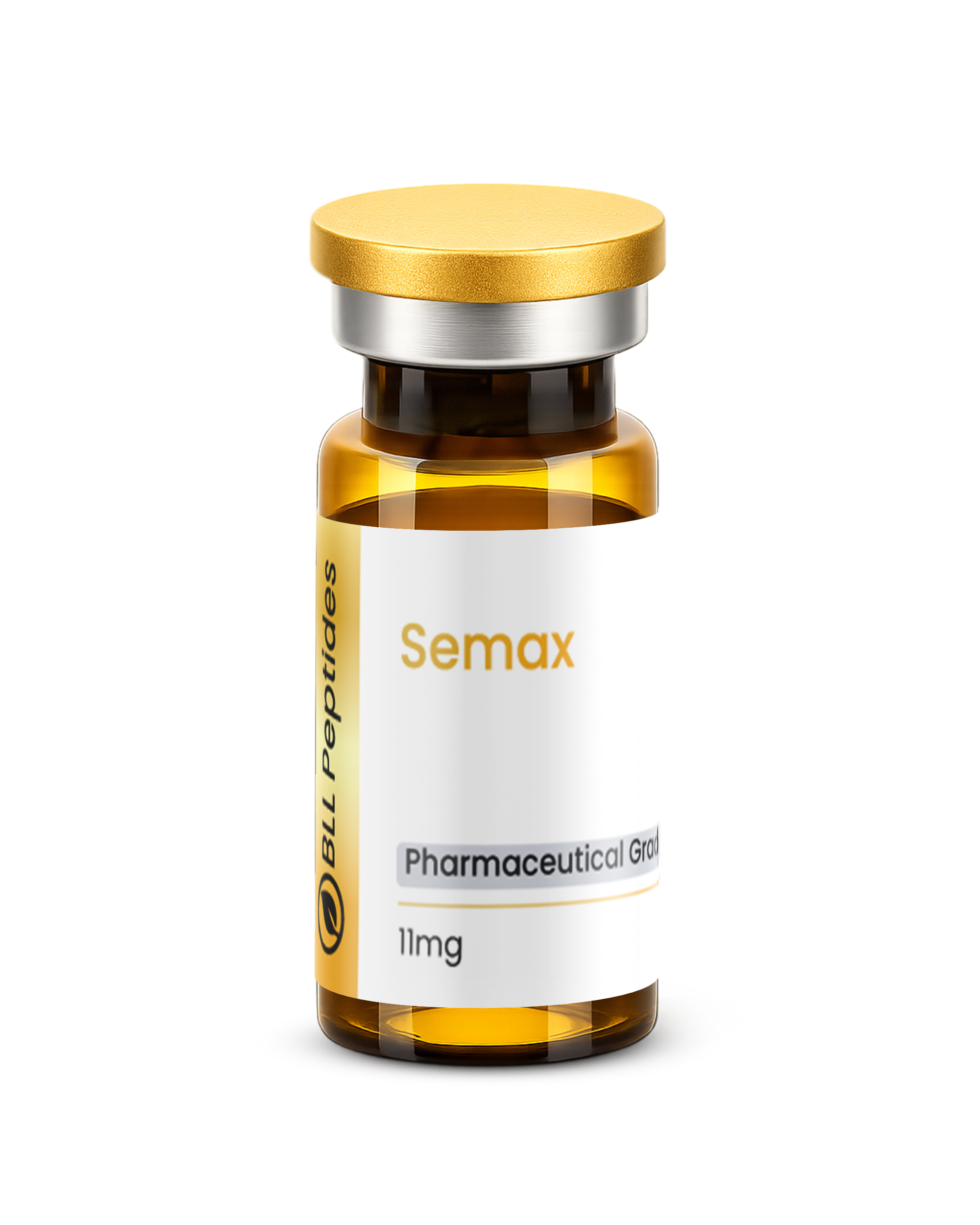
I’ve spent years inside the operating room—hands in the skull, navigating the most complex structure in the known universe. And the thing that never stops humbling me is this: the brain wants to heal. It reaches for recovery in ways we’re only beginning to map at the molecular level. One molecule that keeps appearing in the neuroprotection literature—and that I find myself returning to again and again—is Semax.
Not because it’s loud or flashy. Because the data is quietly, persistently interesting.
What Does Semax Research Actually Show?
Semax research centers on a synthetic heptapeptide analog of ACTH(4–7)—a fragment of adrenocorticotropic hormone—originally developed in Russia in the 1980s. Preclinical data suggests it may influence BDNF (brain-derived neurotrophic factor) expression, serotonin and dopamine metabolism, and oxidative stress pathways in the central nervous system. Studies have examined its potential role in cognitive performance, neuroprotection following ischemic events, and neuroplasticity modulation. All of this research is preclinical or early-stage clinical—this content is for research purposes only.
What Is Semax?
Semax (Met-Glu-His-Phe-Pro-Gly-Pro) is a seven-amino acid peptide derived from a conserved region of ACTH. Unlike the parent hormone, it carries no steroidogenic activity—it doesn’t trigger cortisol release or meaningfully interact with the HPA axis. What researchers noted early on was that its influence appeared preferentially localized to the central nervous system: areas governing memory, attention, and stress response.
It was developed at the Institute of Molecular Genetics of the Russian Academy of Sciences and has been the subject of ongoing research since the 1980s—a relatively long track record by peptide research standards.
As a neurosurgeon, the structures Semax research implicates—the hippocampus, prefrontal cortex, and basal forebrain cholinergic systems—are ones I think about daily. The relationship between neurotrophic support and functional recovery is central to what makes this peptide scientifically compelling.
How Does Semax Work in Preclinical Models?
The primary mechanism researchers have focused on is BDNF upregulation. In preclinical studies, Semax has been associated with increased expression of BDNF and its precursor proBDNF in brain tissue. BDNF is critical to synaptic plasticity, long-term potentiation, and neuronal survival—essentially a growth and maintenance signal for neurons. In some rodent studies, hippocampal BDNF mRNA expression increased by approximately 140–160% following Semax exposure.
Beyond BDNF, Semax has been studied for its effects on:
- Dopaminergic and serotonergic systems — with evidence pointing to modulation of monoamine metabolism in the frontal cortex and striatum
- Nitric oxide (NO) regulation — potentially influencing cerebrovascular tone and regional blood flow in ischemic models
- Anti-inflammatory signaling — via modulation of pro-inflammatory cytokines in neural tissue
- Oxidative stress reduction — protecting neurons from reactive oxygen species in experimental stress models
A molecule that appears to work on multiple neuroprotective fronts simultaneously is rare in the research literature—and that’s precisely what makes Semax worth understanding.
What the Semax Research Shows About Cognitive Function
A study indexed on PubMed examined Semax’s effects on learning and memory consolidation in rodent models, finding significant improvements in maze performance correlated with increased cholinergic activity in key cortical regions.
Russian clinical research—primarily published between 2000–2015—explored Semax in the context of ischemic stroke rehabilitation. One line of investigation reported that subjects receiving Semax as an adjunct to standard care showed measurably improved neurological recovery scores at 30-day follow-up compared to controls. A separate research stream examined attention and working memory performance under sustained stress conditions.
Key findings across the research literature include:
- Hippocampal BDNF mRNA expression increased by 140–160% in some rodent models following Semax administration
- In ischemic stroke models, markers of neuronal apoptosis were reduced in Semax-treated groups compared to controls
- Working memory task performance showed statistically significant improvement in multiple preclinical paradigms
- Semax appears to cross the blood-brain barrier efficiently in preclinical models, reaching CNS targets with notable speed
Key Research Findings Worth Knowing
A few observations stand out from a neuroscience standpoint:
- Rapid CNS penetration: Semax appears to cross the blood-brain barrier efficiently in preclinical models—an important pharmacokinetic consideration for any neuropeptide under study.
- BDNF pathway specificity: Unlike many compounds that broadly affect neurochemistry, Semax’s neurotrophic effects appear preferentially localized to regions involved in learning and memory.
- Stress resilience models: Several studies have used Semax in stress-induced cognitive impairment models, with results suggesting preserved performance relative to unprotected controls.
- Complementary mechanisms: There’s growing preclinical interest in studying Semax alongside peptides like Selank, given their overlapping but distinct roles in BDNF modulation and stress circuitry—two separate articles I’ve now covered on this blog.
From a neuroscience perspective, a peptide that upregulates BDNF, efficiently crosses the BBB, and demonstrates neuroprotective effects in ischemic models deserves serious research attention.
Explore BLL Peptides Research Compounds
Researchers studying neuroprotection and cognitive mechanisms may find several BLL Peptides compounds relevant to this space. Our NAD+ (500mg/10ml) is frequently studied alongside neuropeptides for its role in mitochondrial energy production and neuronal health. Researchers exploring neurorecovery mechanisms also frequently examine BPC-157, which has demonstrated interesting neuroplasticity-related properties in preclinical models.
All BLL Peptides products are USA-manufactured, GMP-certified, and produced under rigorous quality controls. As a veteran-owned research brand, quality and integrity aren’t optional—they’re the baseline.
Related research summaries worth reading: Sermorelin and Brain Function | Epithalon and Longevity Research
Frequently Asked Questions About Semax Research
What is Semax derived from?
Semax is a synthetic heptapeptide derived from a fragment of adrenocorticotropic hormone (ACTH 4–7). It was developed by researchers at the Institute of Molecular Genetics of the Russian Academy of Sciences and has been studied since the 1980s for its central nervous system effects.
What does Semax research suggest about BDNF?
Preclinical studies indicate that Semax may upregulate BDNF (brain-derived neurotrophic factor) expression in hippocampal and cortical tissue—by 140% or more in some rodent models. BDNF plays a critical role in synaptic plasticity, neuronal survival, and learning and memory processes.
Has Semax been studied in humans?
Yes, primarily through Russian clinical research investigating Semax as an adjunct in ischemic stroke rehabilitation and cognitive performance studies. It is not FDA-approved and is available for research purposes only.
How does Semax differ from Selank?
While both are synthetic peptides studied for CNS effects, Semax is primarily researched for cognitive enhancement and neuroprotection via BDNF upregulation, whereas Selank is studied more for anxiolytic effects via GABA modulation. Some researchers examine them together for their complementary profiles.
Is Semax available for research?
Semax is available as a research compound from specialized peptide suppliers. It is not approved for human consumption and is intended strictly for laboratory and preclinical research use.
About the Author
Dr. James is a board-certified neurosurgeon with a clinical practice focused on complex spine and brain surgery. Alongside his surgical work, he maintains an active interest in peptide pharmacology and neuroregeneration research. Dr. James serves as a scientific advisor to BLL Peptides, contributing research analysis and educational content to advance the research community’s understanding of novel peptide compounds.
This content is intended for research purposes only. BLL Peptides products are not intended for human consumption.