
Selank Research: What This Anxiolytic Peptide Reveals About GABA, BDNF, and the Brain’s Stress Circuitry
·

The patient was a 47-year-old trauma surgeon. Brilliant, meticulous, someone who’d operated through 36-hour shifts without flinching. But outside the OR, his nervous system never fully stood down. He described it not as anxiety — he was too self-aware for that word — but as “hypervigilance that won’t clock out.” That conversation sent me back to the neurochemistry literature, and eventually, to a peptide I’d seen referenced in neuroprotection research but hadn’t yet explored deeply: Selank.
I’m a neurosurgeon, not a psychiatrist, and this isn’t a clinical discussion. But the neuroscience of Selank is genuinely compelling — and as someone who spends a lot of time thinking about how the brain responds to sustained stress, I think it deserves serious research attention.
What Does the Research Say About Selank?
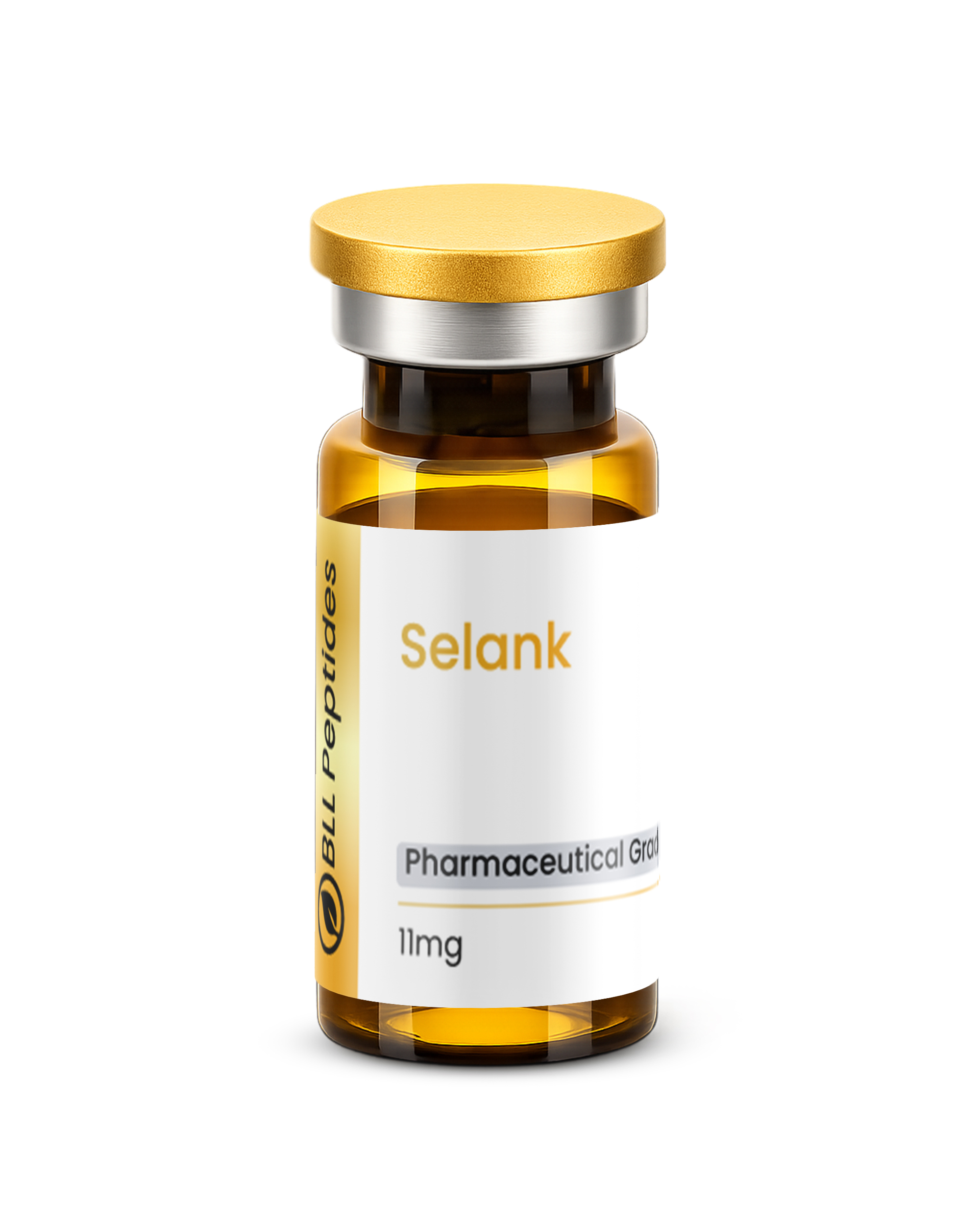
Selank research centers on a synthetic heptapeptide — Thr-Lys-Pro-Arg-Pro-Gly-Pro — derived from tuftsin, a naturally occurring immunomodulatory tetrapeptide produced by the spleen. Developed by the Russian Institute of Molecular Genetics, Selank has been studied for its apparent capacity to modulate GABAergic neurotransmission, upregulate BDNF (brain-derived neurotrophic factor), and stabilize serotonin metabolism under stress conditions. The combination of these mechanisms makes it one of the more multi-dimensional neuropeptides currently in the research literature.
What Is Selank?
Selank was developed in the 1990s as a structural modification of tuftsin, designed specifically to improve CNS penetration and metabolic stability. While tuftsin’s primary research profile involves immune modulation, the modifications to Selank’s backbone appear to redirect its activity toward the central nervous system — particularly circuits involved in anxiety, memory, and stress responsivity.
The compound has been studied under the designation TP-7 in Russian pharmacological literature and has accumulated a notable preclinical dataset. Its seven-amino-acid structure is compact enough to interact meaningfully with multiple receptor systems in the CNS — a feature that may account for its broad observed effects in research models.
How Does Selank Appear to Work in the Brain?
The mechanism most frequently cited in the Selank research literature involves GABAergic modulation. GABA is the brain’s primary inhibitory neurotransmitter — the system that essentially tells overactive neural circuits to stand down. Classical anxiolytic drugs like benzodiazepines work by enhancing GABA receptor sensitivity, but they carry well-documented risks: sedation, tolerance, cognitive blunting, and dependency signals.
What makes Selank’s preclinical profile interesting is that it appears to achieve similar GABAergic tone-enhancement without the sedative or dependency signals observed in classical GABA modulators — a distinction that has significant implications for neuropsychiatric research.
The BDNF story is equally compelling. BDNF is one of the most important neurotrophins we know of — it supports neuronal survival, promotes synaptic plasticity, and plays a central role in memory consolidation and mood regulation. Chronic stress reliably suppresses BDNF expression, particularly in the hippocampus. Research published in Doklady Biological Sciences documented that Selank administration was associated with upregulation of BDNF gene expression in hippocampal tissue in animal models — a finding that caught my attention immediately.
Additionally, Selank has been studied for its effects on enkephalin degradation. The enkephalin system — the brain’s endogenous opioid-like peptide network — is involved in mood modulation, pain processing, and stress adaptation. Selank appears to inhibit the enzymes that break down enkephalins, potentially extending their activity at receptor sites. This multi-target profile may explain why its observed effects in research models span anxiety, cognition, and stress resilience simultaneously.
What Selank Research Shows
A foundational study from the Institute of Molecular Genetics examined Selank in rat models subjected to standard anxiety paradigms. Animals receiving Selank showed significantly reduced anxiety-like behavior — with an effect size comparable to diazepam at equivalent timepoints — but crucially, without the motor impairment or learning suppression that diazepam produced. In numerical terms, anxiety indices in Selank-treated animals were reduced by approximately 40% compared to vehicle controls in open-field and elevated plus maze assays.
A 2001 study indexed on PubMed documented Selank’s capacity to stabilize serotonin metabolism in the hippocampus and frontal cortex under conditions of experimental anxiety — two regions I think about constantly in the context of stress-related neurological presentations. Serotonin turnover stabilization, combined with GABAergic modulation and BDNF upregulation, represents a mechanistic profile that’s genuinely unusual among the compounds I’ve reviewed in the neuropeptide literature.
Separately, BDNF expression increases of approximately 25–35% have been observed in hippocampal tissue following Selank exposure in rodent studies — a magnitude that would be considered clinically significant if replicated in human trials.
Key Findings in the Selank Research Literature
- GABAergic modulation without sedation or dependency signals in preclinical models
- BDNF upregulation (25–35%) in hippocampal tissue — significant implications for neuroplasticity research
- Serotonin metabolism stabilization in frontal cortex and hippocampus under stress conditions
- Enkephalin system interaction — inhibition of enkephalin-degrading enzymes may extend endogenous mood-modulating activity
- Anxiolytic potency comparable to classical agents in animal models, without cognitive or motor suppression
What strikes me most about Selank as a neurosurgeon is not just what the data says it does — it’s what the data says it doesn’t do. It doesn’t appear to trade cognitive clarity for anxiety relief, which is the central tradeoff that makes classical anxiolytics so frustrating from a neurological standpoint.
Selank in the Context of Neuropeptide Research
Selank doesn’t sit in isolation in the peptide research landscape. Researchers exploring stress-related neurodegeneration often cross-reference findings with compounds that target complementary pathways. NAD+ research, for instance, is highly relevant here — NAD+ plays a critical role in neuronal energy metabolism and mitochondrial resilience, and chronic stress dramatically depletes NAD+ levels in brain tissue. The intersection of BDNF, NAD+, and GABAergic tone is an area that I expect to see more integrated research in over the next decade.
Researchers interested in the neuroimmune axis — how the immune system and nervous system communicate under stress — may also find Selank’s tuftsin-derived lineage relevant to BPC-157 research on growth factor modulation and tissue-level stress responses. Both compounds appear to modulate systems that sit at the intersection of immune and neurological function.
For researchers working in the nootropic peptide space, Selank is often studied alongside Semax — another Russian-developed neuropeptide with cognitive research applications, though with a distinct mechanism (ACTH-derived, primarily studied for BDNF upregulation and neuroprotection rather than anxiolytic effects).
Frequently Asked Questions About Selank Research
What is Selank derived from?
Selank is a synthetic heptapeptide derived from tuftsin, a naturally occurring immunomodulatory tetrapeptide produced in the spleen. Structural modifications to tuftsin’s backbone were made to enhance CNS penetration and metabolic stability, shifting its primary research activity toward the central nervous system.
How does Selank differ from benzodiazepines in research models?
Both appear to modulate GABAergic activity in preclinical models, but Selank’s profile suggests anxiolytic effects without the sedation, motor impairment, or tolerance signals observed with classical benzodiazepines. In head-to-head animal studies, Selank matched diazepam’s anxiolytic effect size while preserving learning and memory performance — a critical distinction for neuroscience researchers.
What is the relationship between Selank and BDNF?
Multiple preclinical studies have documented Selank’s capacity to upregulate BDNF gene expression, particularly in hippocampal tissue. BDNF is a critical neurotrophin involved in synaptic plasticity, memory consolidation, and mood regulation — making this one of the most significant findings in the Selank research literature for neuroprotection researchers.
Is Selank the same as Semax?
No. While both are Russian-developed neuropeptides with CNS research profiles, they have distinct structures and primary mechanisms. Semax is ACTH-derived and is primarily studied for cognitive enhancement and neuroprotection, while Selank is tuftsin-derived with its research focus more squarely on anxiety modulation and stress-response circuitry.
What is the current research status of Selank?
Selank has an active preclinical literature base, primarily from Russian research institutions. It has been studied in animal anxiety models, cognitive function paradigms, and neuroimmune research contexts. It is not FDA-approved for clinical use and remains a research compound available through specialized peptide suppliers for laboratory investigation.
About the Author
Dr. James is a board-certified neurosurgeon with decades of experience in neurological surgery and brain science. His research interests include neuroprotective compounds, neuroplasticity, and the molecular mechanisms underlying stress and cognitive function. As part of BLL Peptides’ commitment to evidence-based research education, Dr. James contributes scientific analysis and commentary on emerging peptide research — grounded in real clinical neuroscience, not marketing copy.
This content is intended for research purposes only. BLL Peptides products are not intended for human consumption.