
Ipamorelin Research: What Scientists Are Discovering About This Selective Growth Hormone Secretagogue
·

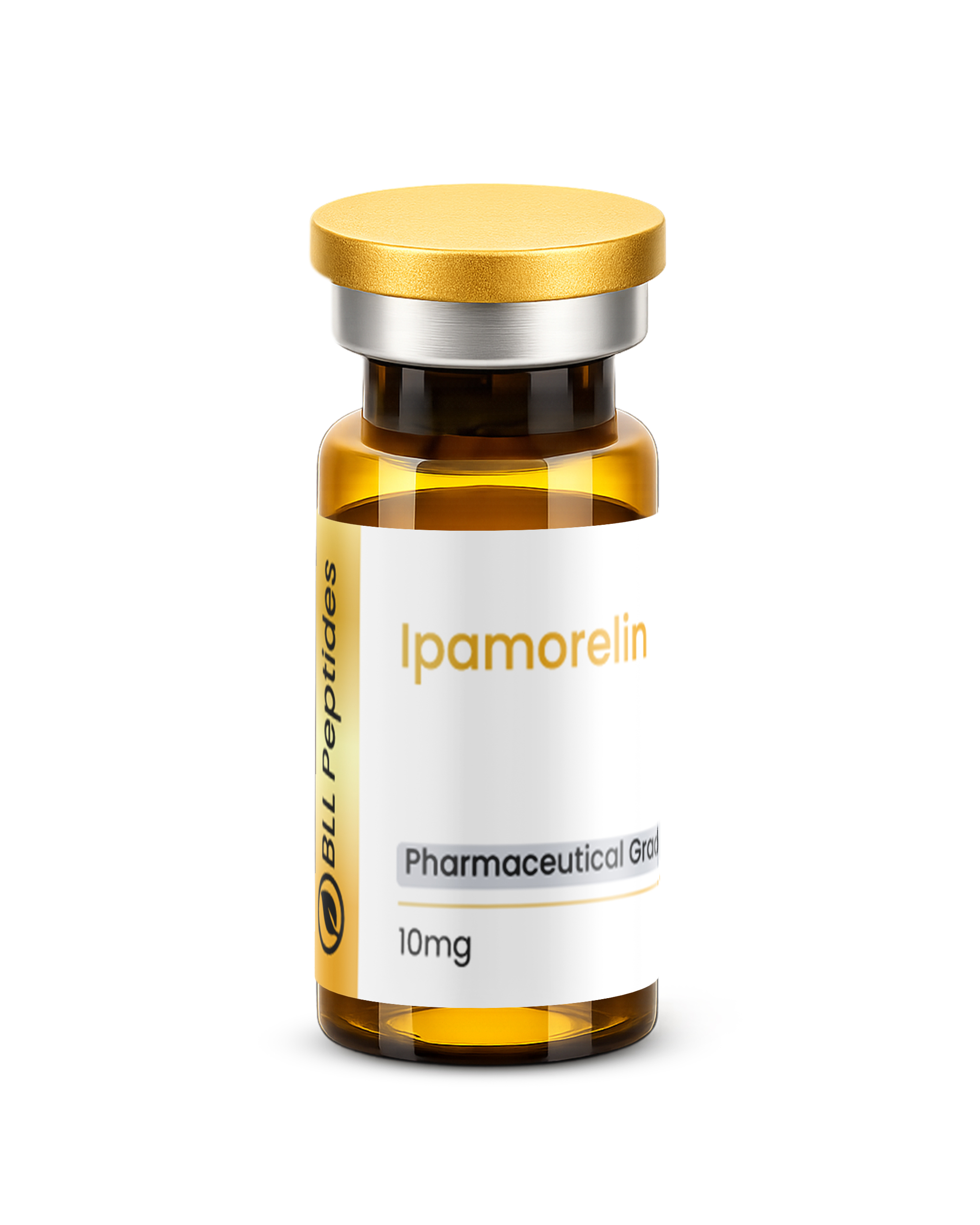
Every so often a molecule comes along that makes you stop mid-review and think, wait — this is doing what? That was my reaction the first time I dug into the ipamorelin literature. As someone who spends a lot of time thinking about neurochemistry and cellular signaling, the selectivity profile of this peptide genuinely surprised me. Most growth hormone secretagogues pull several levers at once; ipamorelin, at least in preclinical models, appears to pull just one — cleanly and precisely.
This post is a walk through the ipamorelin research landscape as it stands today: what the compound is, what the data shows, and why it has attracted sustained scientific attention since its characterization in the late 1990s.
What Is Ipamorelin?
Ipamorelin is a synthetic pentapeptide — five amino acids — designed to mimic ghrelin and act as a growth hormone secretagogue receptor (GHSR-1a) agonist. It was originally developed by Novo Nordisk and characterized in detail by Raun et al. in 1998, with their findings published in Endocrinology.
The molecule’s defining characteristic — and the thing that grabbed my attention — is its receptor selectivity. While many secretagogues in its class also trigger cortisol and prolactin release (which complicates research interpretation considerably), ipamorelin appears to stimulate growth hormone release through pituitary GH cells with minimal effect on those secondary hormones in animal studies. That cleaner signal makes it a more tractable research tool.
Unlike endogenous ghrelin, which binds broadly and triggers appetite signaling alongside GH release, ipamorelin was engineered for a narrower action footprint — a property researchers have found valuable when trying to isolate the downstream effects of GH pulsatility itself.
How Ipamorelin Works: The Receptor Mechanism
GHSR-1a receptors are expressed in the pituitary, hypothalamus, and several peripheral tissues. When ipamorelin binds to pituitary GHSR-1a, it triggers a calcium-dependent signaling cascade that prompts somatotroph cells to release stored growth hormone in a pulsatile pattern — mimicking the natural GH release rhythm rather than producing a flat, pharmacological elevation.
This pulsatility matters to researchers for a specific reason: GH’s downstream effects, including IGF-1 induction in the liver, are highly sensitive to the shape of the GH signal, not just its total area under the curve. A pulse looks different biologically than a constant drip. That’s one reason ipamorelin has been used as a research tool to study how GH pulse characteristics influence tissue responses.
Notably, the hypothalamus also appears to be involved. Studies suggest ipamorelin works partly through the hypothalamus to amplify GHRH output, meaning it may engage the natural GH regulatory axis rather than bypassing it — a subtle but important distinction when modeling physiological signaling.
For researchers interested in how growth factors interact with neural tissue, this mechanism has obvious relevance. IGF-1, the primary downstream mediator of GH action, crosses the blood-brain barrier and has documented roles in neurogenesis, synaptic plasticity, and neuroprotection in animal models. Ipamorelin’s ability to modulate this axis in a controlled, selective manner makes it a useful experimental tool.
What the Research Shows
The foundational Raun et al. (1998) study remains a landmark. In that rat model, ipamorelin produced a dose-dependent increase in GH secretion that was roughly comparable in magnitude to GHRP-6 — a well-characterized secretagogue — but without the significant cortisol and prolactin elevations GHRP-6 produced. In one key comparison, ipamorelin generated a GH pulse approximately 2-3 times larger than GHRH alone while maintaining a more selective hormonal profile.
Subsequent animal studies have explored several areas:
Bone Density and Body Composition Research
A series of studies using ipamorelin in rats examined its effects on bone mineral density and body composition. Svensson et al. (2000) found that adult female rats treated with ipamorelin for 12 weeks showed statistically significant increases in bone mineral content compared to controls, without concomitant increases in cortisol — a finding that attracted attention given that many interventions affecting bone metabolism also alter cortisol dynamics. The dissociation between GH-axis stimulation and HPA-axis activation was one of the compound’s more pharmacologically interesting features noted by the research team.
Gastrointestinal Motility Research
Ghrelin receptors are expressed throughout the gastrointestinal tract, and ipamorelin’s GHSR agonism has been studied in the context of GI motility. Trudel et al. examined GHSR-1a agonists including ipamorelin in postoperative ileus models, finding that GH secretagogue receptor activation could accelerate gastric emptying and colonic transit in animal models. From my own surgical perspective, the idea that a peptide operating primarily through a single well-characterized receptor could influence gut motility without broadly disrupting the hormonal environment is noteworthy. It’s the kind of selectivity that makes something useful as a research probe rather than just a pharmacological blunt instrument.
Neurological and Cognitive Research Context
The connection between GH/IGF-1 signaling and brain function is an active area of investigation. Preclinical work has documented IGF-1 receptors throughout the hippocampus and prefrontal cortex — regions central to memory formation and executive function. Animal studies using GH secretagogues have reported effects on hippocampal neurogenesis and cognitive task performance in aged rodents, though the mechanistic attribution remains under active investigation.
Ipamorelin’s selective GH-stimulating profile makes it a useful tool in this context: researchers can use it to probe the GH/IGF-1 axis in neural tissue without introducing the confounding variable of cortisol elevation, which itself has well-documented effects on hippocampal structure and function.
Key Research Findings at a Glance
- Ipamorelin selectively stimulates GH release via GHSR-1a with minimal cortisol or prolactin elevation in animal studies (Raun et al., 1998)
- 12-week ipamorelin treatment increased bone mineral content in adult female rats without HPA-axis disruption (Svensson et al., 2000)
- GHSR-1a agonists including ipamorelin have shown accelerated GI motility restoration in postoperative ileus animal models
- IGF-1, ipamorelin’s primary downstream mediator, is documented in preclinical literature to influence hippocampal neurogenesis and synaptic plasticity
- The pulsatile GH release pattern produced by ipamorelin more closely resembles physiological GH dynamics than continuous GH infusion models
Related Peptides Under Research at BLL Peptides
Ipamorelin is frequently studied alongside other peptides that operate on related or complementary pathways. A few compounds worth reviewing:
BPC-157 is a gastric pentadecapeptide with a substantial preclinical literature around tissue repair and angiogenesis — a useful comparison point when studying growth factor-mediated recovery mechanisms. Explore BLL Peptides’ BPC-157 research compound here.
TB-500 (Thymosin Beta-4) operates through actin-binding mechanisms and has been studied for roles in cellular migration, wound healing, and cardiac repair in animal models. Its mechanistic profile differs significantly from ipamorelin, but both sit within the broader category of peptides being investigated for tissue biology applications. Explore TB-500 research material at BLL Peptides.
NAD+ research intersects with GH/IGF-1 signaling in the context of cellular metabolism and aging biology — a connection researchers studying age-related GH decline have noted with interest. BLL Peptides also carries NAD+ for research use.
Frequently Asked Questions About Ipamorelin Research
What makes ipamorelin different from other growth hormone secretagogues?
The primary distinguishing feature documented in preclinical research is selectivity. Most GHSR agonists in ipamorelin’s class — including GHRP-2 and GHRP-6 — produce notable cortisol and prolactin elevations alongside GH release. Ipamorelin’s profile in animal studies showed substantially less effect on those secondary hormones, giving researchers a cleaner experimental signal.
What is GHSR-1a and why does it matter to ipamorelin research?
GHSR-1a (Growth Hormone Secretagogue Receptor 1a) is the primary receptor for ghrelin, the endogenous hunger hormone. It’s expressed in the pituitary, hypothalamus, and throughout the gastrointestinal tract. Ipamorelin binds this receptor to trigger GH release, and its expression across multiple tissue types is why researchers have explored ipamorelin in several biological contexts beyond GH secretion alone.
Has ipamorelin been studied in human clinical trials?
Most ipamorelin research in the published literature is preclinical, conducted in rodent models. Some early-phase human safety and pharmacokinetic data exist from the compound’s original development program at Novo Nordisk, but the extensive human clinical trial database that exists for pharmaceutical GH-axis therapies does not currently exist for ipamorelin. It remains primarily a research compound.
How does ipamorelin relate to IGF-1 research?
Ipamorelin stimulates GH release, and GH in turn stimulates hepatic IGF-1 production. IGF-1 is the primary mediator of many GH downstream effects and has its own extensive research literature in the context of tissue repair, neurogenesis, and metabolic regulation. Ipamorelin is sometimes used as an upstream tool in studies that are ultimately focused on IGF-1 pathway dynamics.
Is ipamorelin the same as CJC-1295?
No — these are mechanistically distinct compounds often discussed together because they’re frequently studied in combination in preclinical research. CJC-1295 is a GHRH analogue; ipamorelin is a GHSR agonist. They act on different parts of the GH secretion axis, and their combined study in research is designed to explore whether effects on GH pulse amplitude are additive or synergistic.
About the Author
Dr. James is a board-certified neurosurgeon and member of the BLL Peptides research advisory team. His clinical background in neural repair and perioperative physiology informs his ongoing interest in peptide signaling compounds — particularly those with documented effects on growth factor pathways and tissue recovery mechanisms in preclinical models. He contributes regularly to the BLL Peptides research blog.
This content is intended for research purposes only. BLL Peptides products are not intended for human consumption.