
LL-37 Peptide Research: What Scientists Are Discovering About the Body’s Built-In First Defender
·

Most people think of immune defense as something that kicks in after a threat is detected — white blood cells mobilizing, inflammation rising, antibodies forming. But there’s a peptide already on the front line before any of that happens. Scientists studying LL-37 peptide research are finding that this small, 37-amino-acid molecule may be one of the most multifunctional compounds in human biology. And the more I read about it, the harder it is to stay quiet about what the data shows.
What Is LL-37? The Short Answer
LL-37 is the only known member of the cathelicidin family of antimicrobial peptides (AMPs) found in humans. It’s encoded by the CAMP gene and is produced primarily by neutrophils, epithelial cells, and keratinocytes. The name comes from its structure: it begins with two leucine (L) residues and contains 37 amino acids in total.
What makes LL-37 fascinating from a research standpoint isn’t just its antimicrobial activity — it’s the sheer breadth of biological processes it appears to influence, from immune modulation and wound healing to emerging findings in neuroprotection. For researchers, it’s a compelling target precisely because of how many systems it touches.
How LL-37 Works at the Molecular Level
LL-37 operates through several distinct mechanisms that researchers are still piecing together. At its core, it’s a cationic, amphipathic alpha-helix — meaning it carries a positive charge and has both hydrophilic and hydrophobic faces. This structure allows it to disrupt negatively charged bacterial membranes by inserting itself and creating pores that compromise cell integrity.
But antimicrobial activity is just the starting point. Preclinical data shows LL-37 also:
- Binds and neutralizes bacterial lipopolysaccharides (LPS), blunting downstream inflammatory cascades
- Acts as a chemoattractant for monocytes, neutrophils, and T-cells, directing immune cell trafficking
- Modulates Toll-like receptor (TLR) signaling — capable of both dampening and amplifying inflammation depending on context
- Promotes angiogenesis and keratinocyte migration, both essential for tissue repair
- Disrupts bacterial biofilms — the protective scaffolding that shields resistant pathogens from conventional antibiotics
The fact that one endogenous peptide can simultaneously function as an antimicrobial, anti-inflammatory, pro-healing, and immune-modulating agent is precisely what makes LL-37 peptide research so scientifically compelling.
What LL-37 Peptide Research Currently Shows
The research base for LL-37 has grown substantially over the past two decades. A comprehensive review published in Cellular Immunology described LL-37 as “the factotum human cathelicidin peptide” — a descriptor that captures just how many biological roles researchers have attributed to it. Key areas of active investigation include:
Wound Healing and Tissue Repair
In preclinical wound models, LL-37 has consistently accelerated epithelial closure and enhanced vascularization. Studies have demonstrated it promotes keratinocyte migration and stimulates VEGF (vascular endothelial growth factor) expression — a key driver of new blood vessel formation. This mechanistic overlap with other regenerative peptides studied at BLL Peptides, like BPC-157 and TB-500, makes for an interesting comparative research question.
Anti-Biofilm Activity
Antibiotic resistance is one of the defining challenges in modern medicine. LL-37 has demonstrated the ability to disrupt biofilms formed by Pseudomonas aeruginosa, Staphylococcus aureus, and other resistant organisms — environments where conventional antibiotics routinely fail. In one preclinical study, sub-inhibitory concentrations of LL-37 reduced biofilm formation by more than 50%, suggesting utility at concentrations below those required for direct bactericidal activity.
Neuroprotection and Neuroinflammation
As a neurosurgeon, this is the thread I find most interesting. Emerging data suggests LL-37 may play a role in modulating neuroinflammation — the chronic inflammatory state increasingly implicated in neurodegenerative disease progression. Cathelicidins have been detected in central nervous system tissue, and preclinical studies have examined their interactions with microglial cells and the blood-brain barrier. A 2019 study found that LL-37 demonstrated protective effects against LPS-induced neuroinflammation in microglial cell models — early-stage data, but directionally meaningful.
When a peptide shows up in CNS tissue and demonstrates TLR-modulating properties, it raises legitimate questions about its role in the neuroimmune interface — questions that deserve rigorous investigation.
Key Findings in LL-37 Research
- LL-37 is expressed in human brain tissue, particularly in neurons and astrocytes
- Serum LL-37 levels are measurably reduced in patients with sepsis, suggesting rapid depletion during acute systemic infection
- Sub-inhibitory concentrations of LL-37 reduced biofilm formation by over 50% in multiple preclinical studies
- LL-37 has shown anti-tumor properties in several cancer cell lines, including colon and lung cancer, via apoptosis induction and angiogenic suppression
- Topical LL-37 application in diabetic wound models accelerated closure rates compared to untreated controls
For a single endogenous peptide, LL-37’s research footprint spans infectious disease, oncology, wound care, and neuroscience — a breadth that’s rare and that continues to attract serious scientific attention.
LL-37 Research Availability
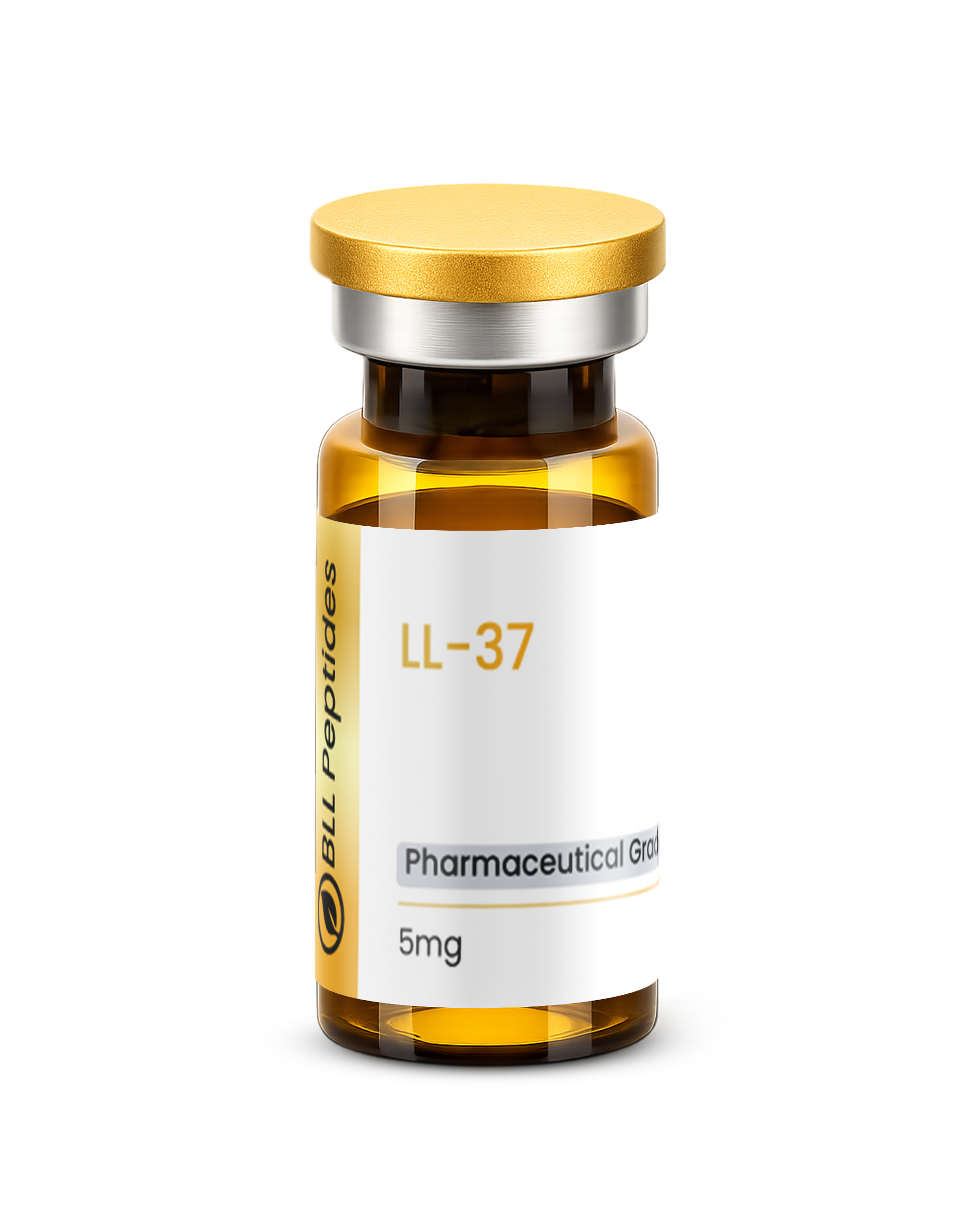
For researchers interested in studying LL-37, BLL Peptides offers LL-37 5mg (3ml) for research purposes, manufactured under GMP-certified conditions in the USA. For broader context on the peptide research landscape, the BLL Peptides research guide provides a useful starting point.
Frequently Asked Questions About LL-37 Peptide Research
What does LL-37 stand for?
LL-37 refers to its structural features: it begins with two leucine (L) residues at the N-terminus and contains a total of 37 amino acids. It is derived from the 18-kilodalton cationic antimicrobial protein (hCAP18) via proteolytic cleavage and is the only cathelicidin-derived antimicrobial peptide identified in humans to date.
What does LL-37 research focus on?
Current research on LL-37 spans antimicrobial and anti-biofilm defense, wound healing and tissue regeneration, immune modulation, anti-tumor properties, and emerging investigations into neuroinflammation and CNS biology. All research is conducted in preclinical and laboratory settings.
How is LL-37 different from other antimicrobial peptides?
Most antimicrobial peptides are primarily defined by their bactericidal activity. LL-37 is uniquely multifunctional — acting as a direct antimicrobial agent, an immune signaling molecule, a pro-angiogenic factor, and a modulator of TLR-mediated inflammation. This range of biological activity in a single endogenous peptide is unusual and drives substantial research interest.
Is LL-37 found naturally in the human body?
Yes. LL-37 is produced endogenously by neutrophils, monocytes, NK cells, mast cells, epithelial cells, and — as more recent research suggests — cells within the central nervous system. Its expression can be upregulated by vitamin D signaling, bacterial infection, and tissue injury.
Where can researchers source LL-37 for study?
Research-grade LL-37 is available through specialized peptide suppliers. BLL Peptides offers LL-37 5mg (3ml) for research purposes only, produced under USA GMP-certified conditions.
About the Author
Dr. James is a board-certified neurosurgeon with a deep interest in the intersection of peptide biology, neuroinflammation, and regenerative medicine. As a scientific advisor to BLL Peptides, he tracks emerging research across the peptide landscape — with particular focus on compounds influencing the central nervous system, immune function, and tissue repair. All content reflects his review of published scientific literature and is intended strictly for educational and research purposes.
This content is intended for research purposes only. BLL Peptides products are not intended for human consumption.