Selank Peptide Research: What Scientists Are Discovering About This Synthetic Anxiolytic Compound
·

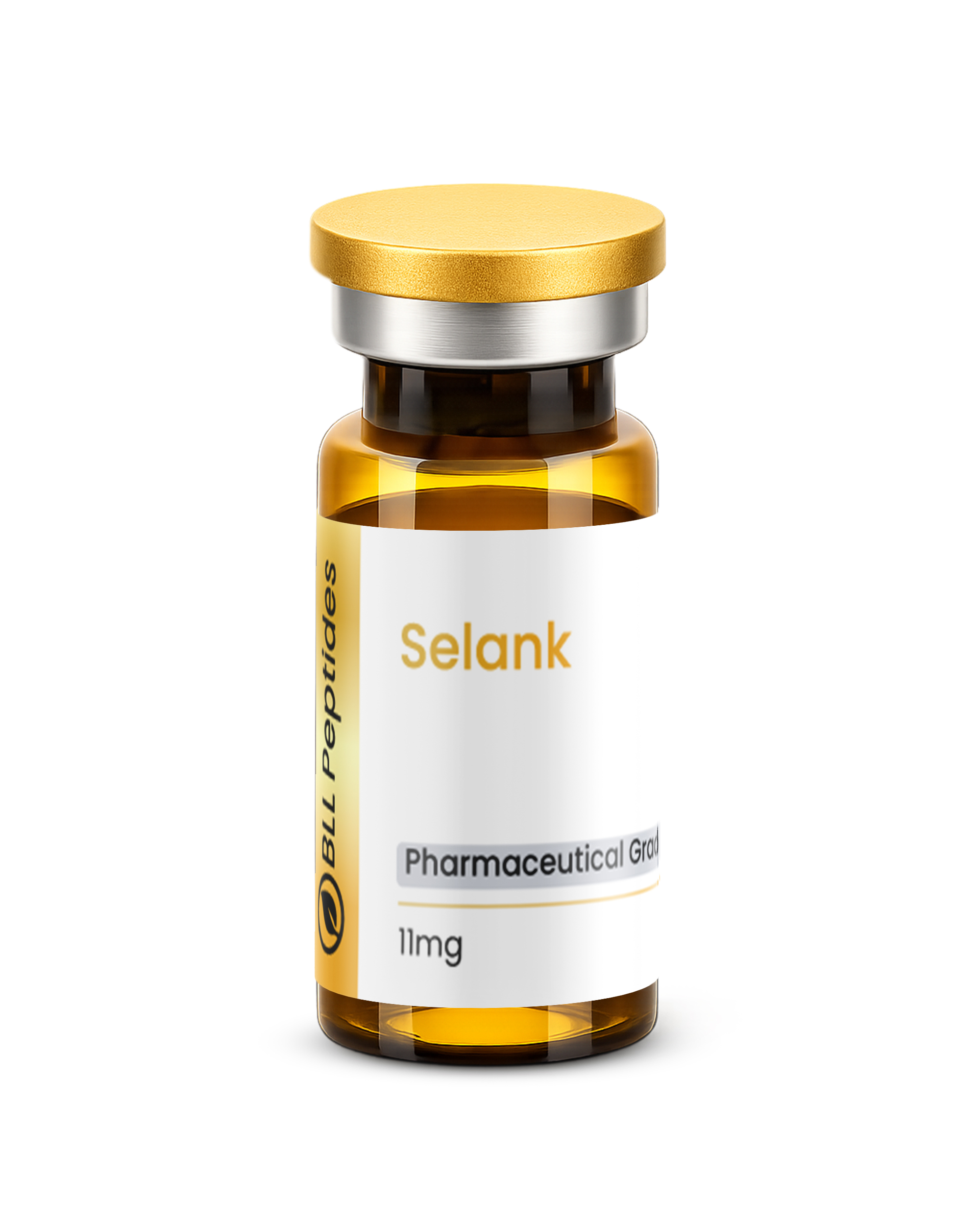
In my years working as a neurosurgeon, I’ve developed a deep respect for how fragile the balance of the nervous system truly is. Anxiety isn’t just a feeling — it’s a measurable cascade of neurochemical events that can reshape how the brain functions over time. So when I first encountered Selank, a synthetic heptapeptide with a remarkably broad pharmacological profile, I did what any neuroscientist would: I went straight to the literature.
Selank peptide research has been accumulating since the 1980s, primarily out of Russian and Eastern European institutions, and the findings raise genuinely interesting questions for anyone studying the neurochemistry of anxiety and cognition. Here is a clear-eyed look at what the science currently shows.
What Is Selank?
Selank (chemical sequence: Thr-Lys-Pro-Arg-Pro-Gly-Pro) is a seven-amino-acid synthetic heptapeptide developed at Russia’s Institute of Molecular Genetics. It was designed as a stabilized analog of tuftsin, a naturally occurring tetrapeptide (Thr-Lys-Pro-Arg) derived from human immunoglobulin G and associated with immune regulation. Scientists extended tuftsin’s sequence with three additional amino acids — Pro-Gly-Pro — to significantly increase metabolic stability and central nervous system activity.
In Russia and Ukraine, Selank is approved as a pharmaceutical anxiolytic. In Western research contexts, it is classified as a research compound with an intriguing mechanism of action that differs meaningfully from conventional pharmaceutical approaches to anxiety.
How Does Selank Work? The Proposed Mechanisms
What makes Selank particularly fascinating from a neuroscience perspective is its multi-modal mechanism of action. Rather than acting on a single receptor pathway, the research suggests it interacts with several neurobiological systems simultaneously:
GABA-A receptor modulation: Research has demonstrated that Selank appears to enhance GABAergic transmission — the brain’s primary inhibitory system. Notably, this appears to occur through a modulatory pathway distinct from how benzodiazepines bind directly to GABA-A receptors.
Serotonin system effects: Studies in rodent models have found that Selank may increase serotonin turnover and alter serotonin metabolism ratios, which researchers believe contributes to its observed mood-related effects.
BDNF upregulation: Perhaps most interesting to me as a neurosurgeon: research has shown Selank may upregulate brain-derived neurotrophic factor (BDNF) expression in the hippocampus — a protein absolutely central to neuronal survival, synaptic plasticity, and cognitive resilience. Any compound that moves the BDNF needle deserves scientific attention.
Enkephalin metabolism: Some studies have found that Selank inhibits the enzymatic breakdown of enkephalins, endogenous peptides involved in pain modulation, stress response, and mood regulation.
What the Selank Research Shows
A 2011 study published in the Bulletin of Experimental Biology and Medicine found that Selank produced significant anxiolytic effects in rodent stress models — comparable to diazepam in magnitude but without the sedation or motor impairment diazepam produced. That is a meaningful distinction, and it’s one that keeps appearing across the literature.
Research from the Institute of Molecular Genetics examined Selank’s effects on gene expression in neural tissue and found that it altered the transcription of more than 80 genes related to immune function and nervous system activity. That is a remarkably broad molecular footprint for a seven-amino-acid peptide, and it raises compelling questions about the downstream effects of tuftsin-derived compounds on brain biology.
A clinical trial involving participants with generalized anxiety disorder found that Selank demonstrated measurable anxiolytic effects and was well-tolerated. Participants reported improvements in mood and cognitive clarity. It’s worth noting that most formal clinical trials have been conducted in Russia and Eastern Europe; large-scale Western clinical trials remain limited, and this is an important caveat when interpreting the evidence base.
For further reading on the serotonin modulation findings, the PubMed literature on Selank and monoamine systems provides a useful foundation.
Key Research Findings at a Glance
- Anxiolytic without sedation: Multiple preclinical studies found Selank reduced anxiety-related behaviors without the motor impairment characteristic of benzodiazepines.
- Cognitive performance: Rodent studies observed improvements in learning and memory tasks, suggesting a possible nootropic component beyond anxiolytic effects.
- BDNF expression: Research documented increases in BDNF expression in the hippocampus — a region critical for memory consolidation and mood regulation.
- Immune-neural crosstalk: Selank appears to influence the balance between Th1 and Th2 immune responses, an area that connects directly to its tuftsin-derived origins and raises interesting questions about the gut-brain-immune axis.
- Gene expression breadth: The 80+ gene transcription changes observed in neural tissue studies suggest Selank’s mechanism extends well beyond simple receptor binding.
The fact that a peptide this small can modulate gene expression across dozens of pathways simultaneously is exactly the kind of finding that makes peptide research so compelling to follow.
Selank’s potential to produce anxiolytic effects without triggering sedation or dependence represents a pharmacological profile that researchers find fundamentally different from conventional approaches.
From a neuroscience standpoint, any compound capable of upregulating BDNF in the hippocampus warrants serious scientific attention — this protein is central to brain health and long-term cognitive resilience.
If you’re exploring peptide research more broadly, BLL Peptides carries research-grade BPC-157 — another peptide with significant neurological research behind it — as well as TB-500 and NAD+ for researchers interested in cellular energy and neuroprotection studies.
Frequently Asked Questions About Selank Peptide Research
What is Selank studied for in research settings?
Selank has been studied primarily for its anxiolytic and nootropic properties. Scientists have investigated its effects on GABA receptor modulation, serotonin metabolism, BDNF expression, and immune-neural interaction.
How does Selank differ from benzodiazepines in research models?
While both have been studied for anxiolytic effects, Selank appears to modulate GABA-A receptor activity rather than directly binding to benzodiazepine receptor sites. Preclinical research found that Selank reduced anxiety-related behaviors without the sedation and motor impairment associated with benzodiazepines.
Is Selank approved for human use?
Selank is approved as a pharmaceutical anxiolytic in Russia and Ukraine. In the United States and most Western countries, it is classified as a research compound and is not FDA-approved for human use.
What is the relationship between Selank and tuftsin?
Selank is a synthetic stabilized analog of tuftsin, a naturally occurring tetrapeptide found in human immunoglobulin G. Scientists extended tuftsin’s amino acid sequence and added chemical stabilization to create Selank, which has demonstrated both immune-modulating and central nervous system effects in research.
Are there studies examining Selank and cognitive function?
Yes. Multiple preclinical studies observed improvements in learning and memory performance in animal models following Selank administration. Researchers believe this may be connected to BDNF upregulation in the hippocampus and Selank’s effects on serotonin metabolism, though large-scale human cognitive trials remain an area for future research.
About the Author
Dr. James is a board-certified neurosurgeon with decades of experience in neurological medicine. As a member of the BLL Peptides research team, he brings a clinical neuroscience perspective to evaluating emerging peptide research — helping bridge the gap between academic findings and accurate, accessible public information.
This content is intended for research purposes only. BLL Peptides products are not intended for human consumption.