

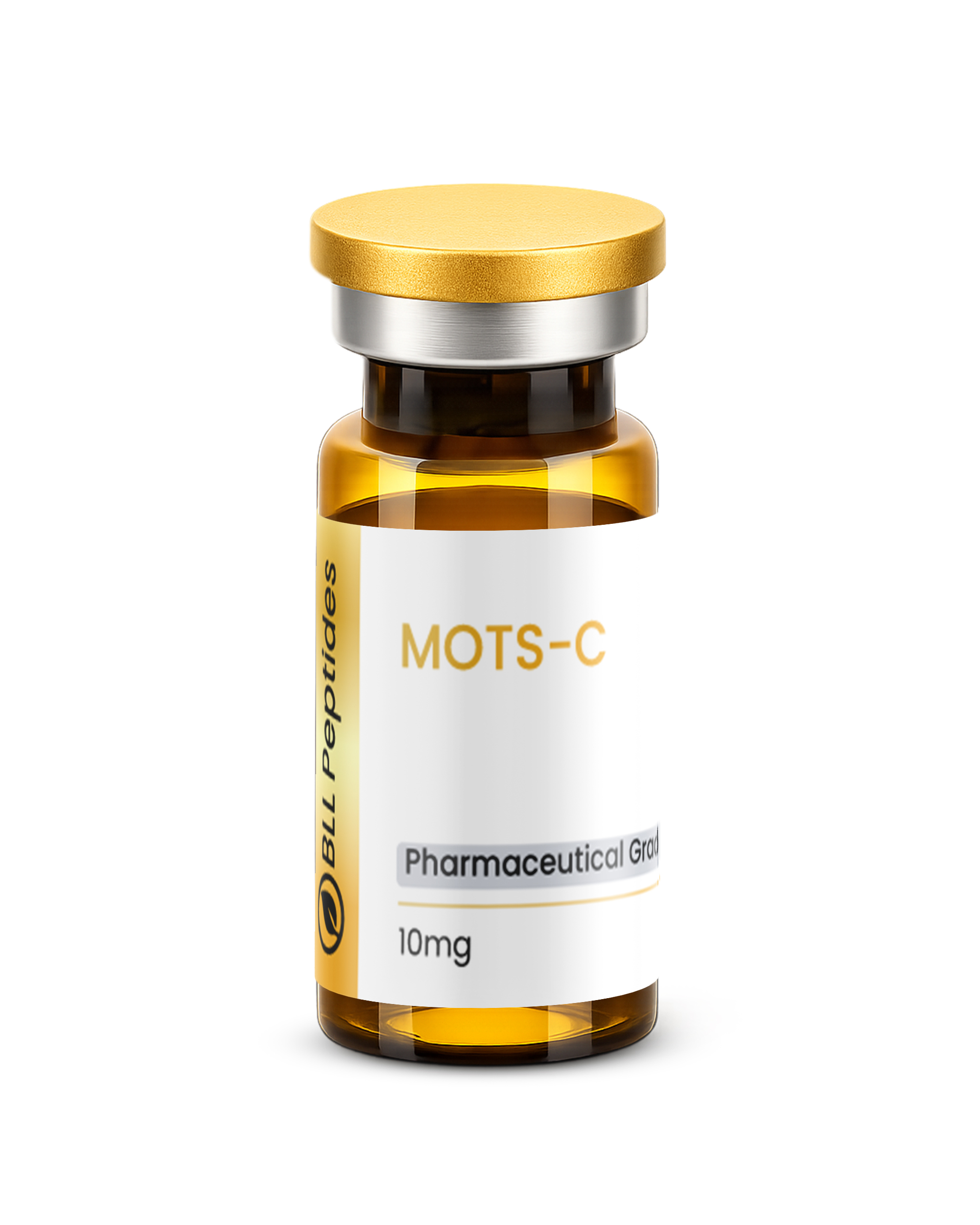
Something unexpected happens inside your cells during exercise. A tiny peptide — encoded not in your chromosomes but inside your mitochondria — floods into your bloodstream, migrates into your cell nuclei, and reprograms gene expression in real time. That peptide is MOTS-c, and its 2015 discovery upended a foundational assumption of biology: that our mitochondrial genome was functionally silent beyond encoding the machinery of energy production.
As a neurosurgeon, I think about cellular energy constantly. The brain consumes roughly 20% of the body’s total energy while representing just 2% of its mass. So when research started emerging on a mitochondria-derived peptide that directly regulates metabolism, declines with age, and rises with exercise — I paid close attention.
What Is MOTS-c? The Direct Answer
MOTS-c (Mitochondrial Open Reading Frame of the Twelve S rRNA type-c) is a 16-amino acid peptide encoded within the mitochondrial genome — specifically within the 12S rRNA gene. It was first identified in 2015 by Lee et al. at the University of Southern California in a landmark Cell Metabolism paper.
What makes MOTS-c extraordinary isn’t just its function — it’s its origin. MOTS-c is the first hormone-like peptide shown to be encoded within mitochondrial DNA rather than nuclear DNA — a discovery that forced researchers to fundamentally rethink how mitochondria communicate with the rest of the cell and with the body as a whole.
Like a true hormone, MOTS-c is secreted by mitochondria, enters circulation, and acts on distant tissues. Its levels decline measurably with age. In preclinical models, supplementing MOTS-c restores youthful metabolic function. That’s a research profile worth taking seriously.
How MOTS-c Works: AMPK Activation and Nuclear Translocation
MOTS-c’s mechanism is still being fully characterized, but the core signaling pathways are increasingly well understood.
AMPK: The Master Energy Switch
MOTS-c activates AMPK (AMP-activated protein kinase) — the cell’s master energy-sensing enzyme. Think of AMPK as the cell’s low-fuel warning system: it detects when the ATP-to-AMP ratio drops (signaling energy stress) and responds by activating fat-burning, glucose uptake, and mitochondrial biogenesis — while suppressing energy-costly anabolic processes.
This is the same pathway activated by metformin and by caloric restriction — two of the most extensively studied interventions in aging and metabolic research. By activating AMPK, MOTS-c shifts cellular metabolism toward an efficient, “exercise-like” state without the mechanical demands of actual exercise.
Nuclear Translocation: Mitochondria Talking to the Genome
Perhaps the most remarkable feature of MOTS-c: under cellular stress or exercise, MOTS-c physically translocates from the mitochondria into the cell nucleus, where it directly binds chromatin and modulates gene expression. This represents a newly characterized form of retrograde mitochondria-to-nucleus signaling — a communication channel researchers are still working to map.
Folate Cycle Modulation
MOTS-c also modulates the folate one-carbon metabolic cycle — the pathway central to nucleotide synthesis, methylation reactions, and antioxidant production. By altering folate cycle flux, MOTS-c can shift cells toward fatty acid oxidation and improve metabolic flexibility across fuel sources.
What the Research Shows
Insulin Sensitivity and Metabolic Disease Models
The foundational 2015 Lee et al. study demonstrated that MOTS-c treatment in diet-induced obese mouse models significantly improved insulin sensitivity and reduced adiposity — with glucose tolerance restored toward lean-control levels despite continued high-fat feeding. This has since been replicated and extended by multiple independent research groups.
Two research statistics stand out:
- In the original Lee et al. study, MOTS-c treatment reversed high-fat-diet-induced insulin resistance in mice, with glucose tolerance curves approaching those of lean controls — a striking metabolic rescue effect
- A 2019 study by Reynolds et al. found that circulating MOTS-c levels were significantly higher in centenarians than in 85-year-olds — positioning MOTS-c not just as a metabolic regulator, but as a potential biomarker of successful aging
The implication is striking: MOTS-c abundance in old age may reflect — or actively contribute to — how well an organism is aging at the cellular level.
Exercise Mimicry: The Movement-MOTS-c Connection
MOTS-c levels rise in circulation during and immediately after physical exercise — and the downstream metabolic effects MOTS-c produces (AMPK activation, improved insulin signaling, increased fatty acid oxidation) closely parallel exercise’s own systemic benefits.
Kim et al. (2022) demonstrated that MOTS-c administration in aged mice improved running performance, muscle endurance, and metabolic efficiency in an AMPK-dependent manner. This positions MOTS-c as a key molecular mediator through which exercise communicates its metabolic benefits to the whole body.
Aging and Longevity Preclinical Data
In aged mouse models, MOTS-c supplementation has extended median lifespan and improved multiple healthspan markers including physical function, metabolic markers, and inflammatory status. MOTS-c levels naturally decline with biological aging in both humans and rodents — consistent with the hypothesis that declining MOTS-c contributes to age-related metabolic deterioration.
Inflammatory Modulation
More recent research has explored MOTS-c’s anti-inflammatory properties. MOTS-c appears to suppress NF-κB signaling — a master pro-inflammatory transcription factor — and reduces production of inflammatory cytokines in preclinical models. Given that chronic low-grade inflammation (“inflammaging”) is now recognized as a central driver of aging-related disease, MOTS-c’s anti-inflammatory effects add another dimension to its longevity research profile.
Key MOTS-c Research Findings
- First peptide discovered to be encoded in mitochondrial DNA — a paradigm-shifting find in cell biology
- Activates AMPK, the master energy-sensing kinase — same pathway as metformin and caloric restriction
- Translocates into the nucleus under stress, enabling direct gene expression modulation
- Improves insulin sensitivity and metabolic flexibility in diet-induced obesity models
- Levels rise with exercise and decline with age
- Higher circulating levels observed in centenarians vs. average elderly populations (Reynolds et al., 2019)
- Extends lifespan and healthspan metrics in aged mouse models
- Anti-inflammatory via NF-κB pathway suppression
For the primary discovery paper, see: Lee et al. (2015), “The Mitochondrial-Derived Peptide MOTS-c Promotes Metabolic Homeostasis and Reduces Obesity and Insulin Resistance” — Cell Metabolism.
MOTS-c in Context: Related Compounds
MOTS-c sits within a broader emerging field of mitochondria-derived peptides (MDPs) — a class of small peptides encoded in mitochondrial DNA that act as intercellular hormones. Other characterized MDPs include humanin and the SHLP family. Together, they represent a newly recognized mitochondrial signaling language with implications across metabolic disease, aging, and cellular stress research.
For researchers exploring overlapping mitochondrial energy metabolism pathways, NAD+ (500mg/10ml) targets the NAD+/SIRT1/SIRT3 axis — which converges meaningfully with AMPK activity and mitochondrial biogenesis. The two research areas are closely related mechanistically.
For context on GH-axis and metabolic peptide research, our breakdown of Tesamorelin and the GHRH-GH-IGF-1 axis covers another important metabolic signaling pathway with aging implications.
BLL Peptides: Research-Grade MOTS-c
BLL Peptides carries MOTS-c and related research compounds for laboratory research applications — pharmaceutical grade, third-party Certificate of Analysis on every batch.
- NAD+ 500mg (10ml) → Mitochondrial energy pathway research compound
- View all research peptides at BLL Peptides →
Pharmaceutical grade. Third-party COA on every batch. USA manufactured.
Frequently Asked Questions: MOTS-c Research
What is MOTS-c?
MOTS-c is a 16-amino acid peptide encoded within the mitochondrial genome — specifically in the 12S rRNA gene. Discovered in 2015 by Lee et al. at USC, it is the first hormone-like peptide shown to originate from mitochondrial DNA rather than nuclear DNA. MOTS-c is secreted by mitochondria, enters systemic circulation, and regulates metabolic function throughout the body.
How does MOTS-c improve insulin sensitivity?
MOTS-c activates AMPK (AMP-activated protein kinase), the cell’s master energy sensor. This shifts cellular metabolism toward fatty acid oxidation, increases glucose uptake in peripheral tissues, and suppresses inflammatory signaling — a combination that improves insulin sensitivity in preclinical models. MOTS-c also modulates the folate one-carbon cycle to alter metabolic substrate utilization.
Does MOTS-c decline with aging?
Yes. Circulating MOTS-c levels decline with aging in both humans and animal models. A 2019 study by Reynolds et al. found significantly higher MOTS-c levels in centenarians than in 85-year-olds — suggesting that maintaining higher MOTS-c levels may correlate with exceptional aging outcomes. Whether MOTS-c decline is causative of aging-related metabolic changes or a marker of them remains an active research question.
What is the connection between MOTS-c and exercise?
MOTS-c levels rise measurably in circulation during and after physical exercise. Preclinical research by Kim et al. (2022) demonstrated that exogenous MOTS-c improved physical performance and metabolic efficiency in aged mice via AMPK-dependent mechanisms. Current evidence positions MOTS-c as a key molecular mediator through which exercise signals its metabolic benefits — though it is not a substitute for exercise itself.
About Dr. James Nguyen
Dr. James Nguyen is a board-certified neurosurgeon trained at Yale University with over 20 years of clinical and research experience. His surgical practice focuses on complex spine and cranial procedures, and his research interests include neuroprotective mechanisms, tissue regeneration, and the emerging science of peptide-based compounds in preclinical models. Dr. Nguyen serves as Medical Advisor to BLL Peptides, where he oversees scientific integrity, reviews formulations, and authors the research blog. All content authored by Dr. Nguyen is written for research and educational purposes only and does not constitute medical advice.
Disclaimer: This content is intended for research purposes only. BLL Peptides products are not intended for human consumption.