
PT-141 Research: What Scientists Are Learning About This Melanocortin Receptor Agonist
·

The brain’s role in desire signaling has fascinated me throughout my career in neurosurgery — but I’ll admit, when I first encountered PT-141 research, my initial reaction was skepticism. Most compounds studied in this space work peripherally. What caught my attention about bremelanotide is that it doesn’t. It works in the brain.
PT-141 (bremelanotide) is a synthetic melanocortin receptor agonist that activates MC3R and MC4R receptors in the hypothalamus, targeting desire signaling at the central nervous system level rather than through peripheral vascular pathways. That distinction — central vs. peripheral — is what makes it stand out in the peptide research literature, and it’s what drew me in as someone who has spent years studying the architecture of the brain.
What Is PT-141 (Bremelanotide)?
PT-141, also known as bremelanotide, is a cyclic heptapeptide derived from Melanotan II — specifically, a metabolite of that compound with its C-terminal amide removed. This modification eliminates the pigmentation-related effects associated with Melanotan II while preserving the receptor activity relevant to desire signaling research. PT-141 is classified as a melanocortin receptor agonist, meaning it binds to and activates G protein-coupled receptors called melanocortin receptors (MCRs).
There are five melanocortin receptor subtypes (MC1R–MC5R). PT-141 research has focused primarily on its affinity for MC3R and MC4R — two subtypes densely expressed in hypothalamic nuclei associated with motivation, reward, and autonomic regulation. As a neurosurgeon who works near this region regularly, the neuroanatomy here is anything but abstract to me.
For related neuropeptide research, the science on Semax and Selank also touches on overlapping areas of POMC-derived and hypothalamic peptide systems — worth exploring if you’re interested in the broader neuropeptide landscape.
How PT-141 Works: The Melanocortin System Explained
The melanocortin system is part of a broader neuroendocrine signaling network derived from the precursor molecule proopiomelanocortin (POMC). When POMC is cleaved, it produces several biologically active peptides — including alpha-melanocyte-stimulating hormone (α-MSH), the natural ligand for MC3R and MC4R.
PT-141 is a structural analog of α-MSH’s active fragment, engineered to be more stable and receptor-selective. In research models, it has demonstrated the ability to engage hypothalamic circuits — particularly in the paraventricular nucleus (PVN) and medial preoptic area — that are associated with motivational and appetitive behaviors. These are structures I’m intimately familiar with from surgical training: the PVN alone is implicated in everything from stress hormone release to autonomic regulation.
What distinguishes PT-141 in the research literature is precisely what makes it scientifically fascinating: it acts on the brain, not just the body.
This central mechanism is meaningfully different from earlier compounds studied in related contexts. Rather than modulating vascular tone or peripheral receptor activity, PT-141 appears to modulate the motivational circuitry upstream — at the source of the signal, not the downstream output. For a neuroscientist, that’s the more interesting question.
PT-141 Research: What the Studies Show
Research on PT-141 spans preclinical animal models, Phase I safety studies, and Phase II/III randomized controlled trials. A few findings stand out to me as particularly compelling:
Animal model findings: In rodent studies, melanocortin receptor activation in the paraventricular nucleus produced measurable increases in appetitive motivational behavior, independent of peripheral vascular effects. A landmark 2003 study published in Neuroscience helped establish the hypothalamic MC4R pathway as a key mediator of this activity, providing foundational mechanistic evidence for the central-acting hypothesis.
MC4R knockout research: Studies using MC4R-deficient mouse models showed significantly blunted appetitive and motivational responses compared to wild-type controls — providing strong causal evidence that this receptor subtype is essential to the behavioral circuit PT-141 engages. It’s not just correlation; knockout models let researchers isolate the contribution of a single receptor subtype.
Phase III clinical trial data: A pivotal randomized controlled trial of bremelanotide in premenopausal women with hypoactive sexual desire disorder (HSDD) demonstrated statistically significant improvements in desire-related endpoints versus placebo (p < 0.001), with a favorable tolerability profile. The authors specifically noted the compound’s central mechanism as a distinguishing feature — and the compound subsequently received FDA approval under the brand name Vyleesi, which is notably rare for a peptide-based compound.
PT-141 represents one of the first peptide compounds studied for its ability to modulate desire signaling directly at the central nervous system level.
Key Research Findings on PT-141
- Central mechanism: PT-141 activates MC3R and MC4R in the hypothalamus, distinguishing it mechanistically from peripherally-acting compounds in this research space
- Rapid CNS engagement: Peptide pharmacokinetics data suggest relatively fast receptor engagement consistent with hypothalamic targeting in research models
- MC4R dependency confirmed: Knockout models demonstrate this receptor is essential to the motivational behavior circuit that PT-141 engages
- Clinical efficacy signal: Phase III data showed statistically significant improvements in desire and distress metrics (p < 0.001) in a large, well-controlled cohort of premenopausal women
- Selective receptor profile: PT-141’s affinity pattern for MC3R/MC4R is more targeted than full-spectrum melanocortin agonists, which may explain its focused behavioral profile in research settings
- FDA approval milestone: Bremelanotide’s approval as Vyleesi makes it one of the few peptide compounds to have completed the full clinical development and regulatory pathway — lending additional scientific credibility to the underlying research
I find the intersection of the melanocortin system with broader hypothalamic circuits genuinely compelling from a neuroscience perspective. The melanocortin system also plays a role in energy homeostasis, stress response, and pain modulation — areas I’ve encountered repeatedly in neurosurgical contexts. Research on compounds like PT-141 opens windows into how these systems interact and overlap, which has implications well beyond any single application.
For broader CNS peptide research context, the work on BPC-157 and neurological function is also worth reviewing — it touches on different mechanisms but highlights how peptides can engage the nervous system at multiple levels.
PT-141 for Research
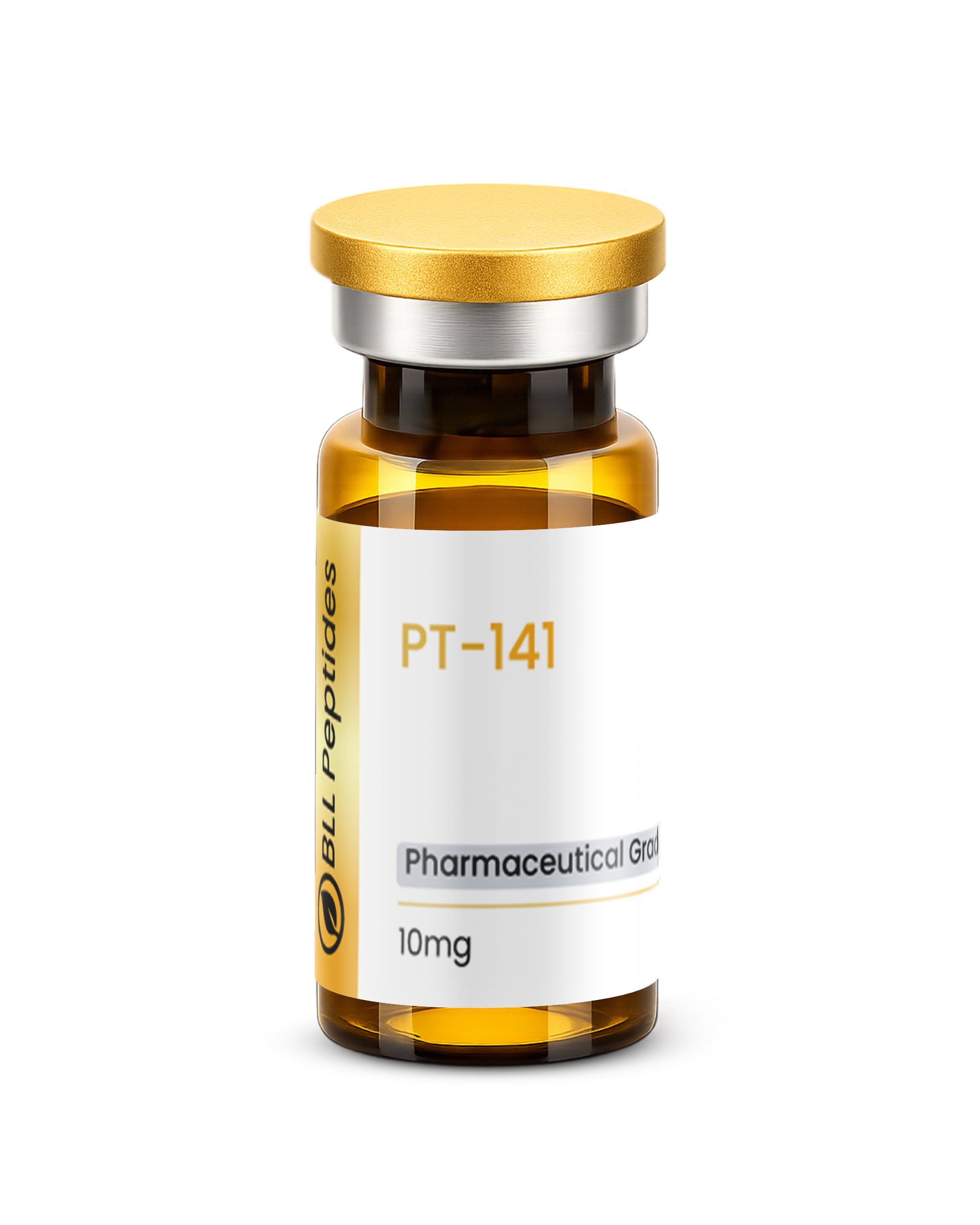
For researchers studying melanocortin receptor pharmacology, hypothalamic motivation circuits, or peptide-based CNS signaling, BLL Peptides offers PT-141 (10mg/3ml) for laboratory research purposes. All BLL Peptides products are USA-manufactured and GMP-certified — important for researchers who need quality-controlled compounds.
This product is intended for research purposes only and is not for human consumption.
Frequently Asked Questions About PT-141 Research
What receptors does PT-141 target in research models?
PT-141 primarily targets melanocortin 3 receptor (MC3R) and melanocortin 4 receptor (MC4R) subtypes. These receptors are concentrated in the hypothalamus — particularly in the paraventricular nucleus and medial preoptic area — where they modulate motivational and appetitive behaviors in preclinical models.
How is PT-141 different from Melanotan II?
PT-141 (bremelanotide) is a metabolite of Melanotan II in which the C-terminal amide has been removed. This modification eliminates the tanning and pigmentation-related activity seen with Melanotan II while largely preserving the MC3R/MC4R activity relevant to desire signaling research. PT-141 has also undergone substantially more rigorous clinical trial evaluation than Melanotan II.
What does MC4R knockout research reveal about PT-141’s mechanism?
MC4R knockout mouse studies have consistently shown that animals lacking this receptor exhibit significantly blunted motivational and appetitive responses compared to wild-type controls. This body of research strongly supports the hypothesis that MC4R activation is essential to the behavioral effects observed with PT-141 in research models — ruling out non-specific or off-target effects as the primary driver.
Has PT-141 been studied in human clinical trials?
Yes. Bremelanotide (PT-141) has been evaluated in multiple Phase II and Phase III randomized controlled trials. The largest Phase III trial focused on premenopausal women with HSDD and demonstrated statistically significant improvements in desire-related endpoints versus placebo. The compound received FDA approval under the brand name Vyleesi — making it notable as one of the few peptide compounds to have completed the full regulatory pathway.
What other peptides interact with the melanocortin system?
Alpha-MSH is the primary endogenous ligand for MC3R and MC4R. Research on ACTH-derived peptides like Semax also touches on overlapping aspects of the broader POMC-derived peptide family, though through distinct mechanisms and receptor profiles. The POMC system is remarkably interconnected — pulling on one thread often reveals connections to others.
About the Author
Dr. James is a neurosurgeon and research advisor at Better Life Lab. With a career focused on the brain and central nervous system, he brings a clinical and anatomical perspective to peptide research — particularly compounds that interact with hypothalamic circuitry, neuromodulation, and CNS signaling pathways. He writes about emerging peptide science with the goal of making complex research accessible to a scientifically curious audience.
This content is intended for research purposes only. BLL Peptides products are not intended for human consumption.