
Sermorelin and the Aging Brain: What a Neurosurgeon Found in the GHRH Research
·

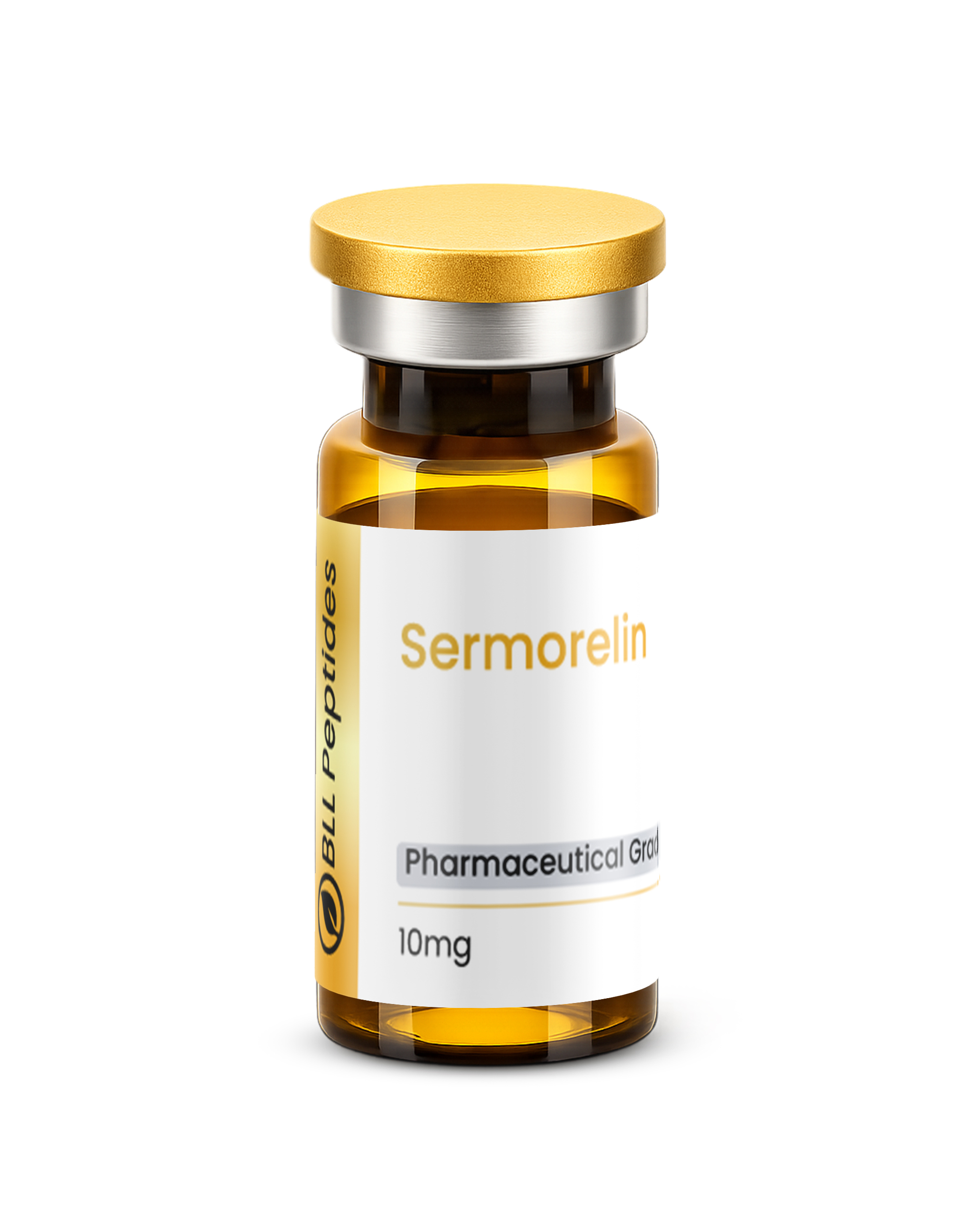
I’ve watched more brains age than most people encounter in a lifetime. In the OR, I’ve seen the structural toll that years take on neural tissue — the shrinkage, the vascular changes, the slowing of repair processes that once happened quietly and efficiently. But one phenomenon keeps showing up in my research reading that I find genuinely hard to dismiss: the relationship between growth hormone signaling and how the brain ages.
Sermorelin sits at the upstream end of that relationship. And the more I read the literature, the more I think most discussions about it bury the most interesting parts.
What Is Sermorelin? A Direct Answer
Sermorelin is a synthetic analog of growth hormone-releasing hormone (GHRH) — specifically the first 29 amino acids of endogenous GHRH — that stimulates the pituitary to produce and secrete growth hormone through the body’s own physiological feedback systems. It does not introduce exogenous growth hormone; it prompts the somatotroph cells of the anterior pituitary to release GH naturally, which means the hypothalamic-pituitary axis remains in control of output and self-regulation.
That distinction matters enormously in research contexts. Growth hormone declines roughly 14–15% per decade after age 30 — a process called somatopause. Sermorelin has been studied as a means of investigating whether restoring upstream GHRH signaling can modulate that decline and its downstream effects.
The Mechanism: How Sermorelin Works
Sermorelin binds to GHRH receptors (GHRHr) on pituitary somatotrophs, triggering the intracellular cAMP pathway and leading to synthesis and pulsatile release of GH. This GH then travels to the liver and peripheral tissues, where it induces production of insulin-like growth factor 1 (IGF-1) — the primary downstream mediator of most growth hormone effects.
The pulsatile nature of this response is a key feature. Unlike direct GH administration, Sermorelin-stimulated release follows the body’s natural secretory rhythms — predominantly during deep sleep, in the early morning, and in response to exercise or fasting states. This pattern appears relevant to how the downstream effects integrate into biological systems without overwhelming feedback inhibition.
Critically, because the hypothalamic-pituitary axis retains regulatory control, high-dose saturation responses are naturally limited. Somatostatin, the inhibitory counterpart to GHRH, continues to exert feedback — something direct GH replacement bypasses entirely.
What Research Reveals About Sermorelin and the Brain
Here’s where it gets interesting for someone with my background.
The brain isn’t just a downstream recipient of growth hormone — it actively produces and responds to GHRH locally. Research has identified GHRH receptors in multiple brain regions, including the hippocampus, cortex, and hypothalamus. This suggests a paracrine or autocrine signaling role that’s entirely separate from pituitary-axis stimulation.
“GHRH appears to function as a neurotrophic signal within the brain itself — not merely as a pituitary trigger — which means Sermorelin research touches on neurological biology in ways that go well beyond growth hormone replacement.”
A 2010 study published in PNAS found that GHRH administration in older adults significantly improved sleep quality — specifically slow-wave sleep (SWS), the deep restorative stage during which the glymphatic system clears metabolic waste from the brain. Disrupted SWS is a feature of both aging and neurodegeneration research. The finding that a GHRH analog can influence this stage of sleep has continued to attract attention.
In animal models, GHRH and IGF-1 signaling have been linked to hippocampal neurogenesis — the formation of new neurons in the hippocampus, one of the few brain regions where this continues in adulthood. Research from the Salk Institute and others has shown that growth hormone axis signaling affects the rate of this process, and that its decline with age correlates with reduced neuroplasticity markers.
“The intersection of Sermorelin research with sleep architecture and neuroplasticity is, to me as a neurosurgeon, the most compelling reason to follow this literature closely — because both of those systems are central to how the brain maintains itself across decades.”
Key Research Findings
- A double-blind, placebo-controlled study found Sermorelin administration over 6 months significantly increased slow-wave sleep duration and reduced nighttime awakenings in adults over 60
- Growth hormone axis signaling has been shown to modulate myelination processes in rodent models — relevant to the study of white matter integrity and neurological aging
- IGF-1 (the downstream mediator of GH effects) crosses the blood-brain barrier and has been measured in cerebrospinal fluid, where its levels correlate with cognitive performance markers in aging populations
- Sermorelin has a short half-life (~11 minutes in plasma), which may contribute to its relatively clean receptor engagement profile compared to longer-acting GHRH analogs like CJC-1295
- Research comparing Sermorelin to direct GH replacement consistently notes that the pulsatile, physiologically regulated response preserves feedback dynamics that exogenous GH disrupts
“The fact that Sermorelin works upstream — asking the pituitary to do its job rather than replacing its output — makes it one of the more philosophically interesting compounds in the GHRH research space.”
How This Fits in the Broader Peptide Research Landscape
Sermorelin doesn’t operate in isolation. Growth hormone signaling intersects with cellular repair systems, mitochondrial function, inflammatory regulation, and tissue maintenance — all of which have their own dedicated peptide research literatures.
For researchers interested in overlapping mechanisms, BLL Peptides carries several related compounds:
- BPC-157 — studied extensively for tissue repair signaling, with research touching on neurological recovery and neuroprotection
- NAD+ — a central coenzyme in energy metabolism and DNA repair, with overlapping research interests in cognitive aging and mitochondrial function
- TB-500 — Thymosin Beta-4, studied for actin regulation, tissue healing, and potential neurological applications
All BLL Peptides compounds are USA manufactured, third-party tested, and intended strictly for research purposes.
Frequently Asked Questions
What makes Sermorelin different from direct growth hormone?
Sermorelin stimulates the pituitary to release its own growth hormone rather than introducing exogenous GH. This preserves the natural feedback loop — the hypothalamic-pituitary-somatotropic axis — meaning the body’s own regulatory signals (like somatostatin) continue to govern output. Direct GH administration bypasses this regulation entirely.
Why do researchers focus on Sermorelin’s effects on sleep?
Growth hormone is primarily secreted during slow-wave sleep (deep sleep), and GHRH plays a direct role in initiating and maintaining that sleep stage. Research has found that GHRH analogs like Sermorelin can increase SWS duration — which is significant because SWS is when the glymphatic system is most active in clearing neurotoxic waste from brain tissue.
How does Sermorelin relate to IGF-1?
Sermorelin triggers GH release from the pituitary; GH then stimulates the liver and peripheral tissues to produce IGF-1. Most of GH’s physiological effects — including tissue repair, cellular metabolism, and neuroplasticity research signals — are mediated through IGF-1. Researchers studying Sermorelin often monitor IGF-1 levels as a downstream readout of GHRH axis activity.
Is there research on Sermorelin and cognitive function?
Early-stage research has noted correlations between GHRH signaling, IGF-1 levels, and cognitive performance markers in aging populations. The mechanisms under study include hippocampal neurogenesis, synaptic plasticity, and the indirect effects of improved sleep quality on memory consolidation. This is an emerging area rather than an established clinical finding.
How does Sermorelin compare to CJC-1295 in research contexts?
Both are GHRH analogs, but they differ significantly in half-life. Sermorelin has a very short plasma half-life (~11 minutes), which means it drives a transient, physiologically-timed pulse. CJC-1295 (with DAC modification) has a half-life of days, producing sustained GH elevation. Researchers often select between them based on whether they’re studying pulsatile physiology versus chronic GH axis modulation.
About the Author: Dr. James is a board-certified neurosurgeon with a focused interest in peptide research and its intersections with neurological health, cognitive aging, and tissue recovery. He serves on the medical advisory team at BLL Peptides as part of the Better Life Lab, bringing clinical perspective to the emerging literature on research compounds.
This content is intended for research purposes only. BLL Peptides products are not intended for human consumption.