
Epithalon Peptide Research: What Scientists Are Discovering About This Telomere-Extending Compound
·

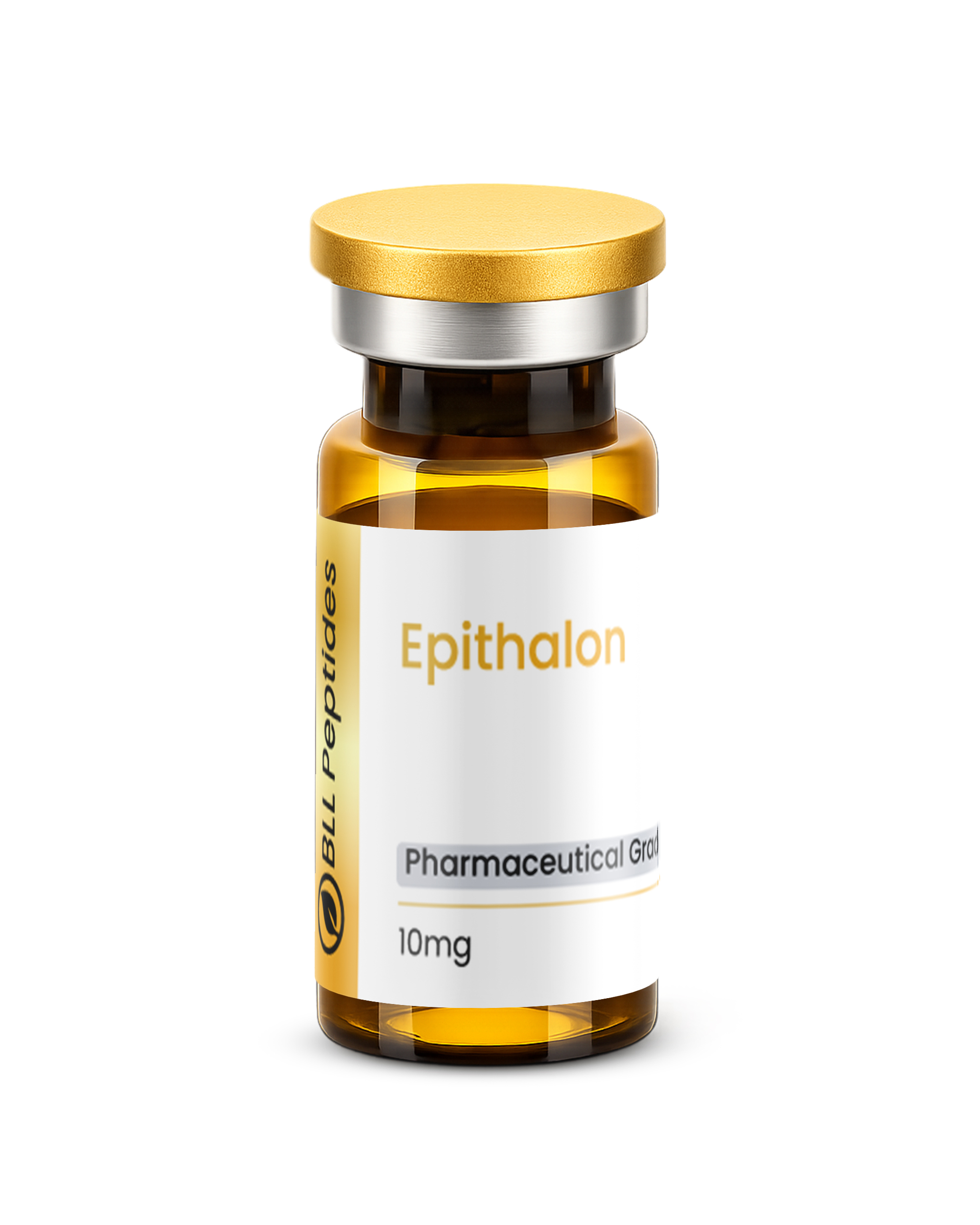
What if aging wasn’t just inevitable wear and tear — but a process with a measurable biological clock? That question has driven researchers toward one of the most intriguing peptides in longevity science: Epithalon. In nearly two decades of studying neurological aging, few compounds have pulled my attention quite like this tetrapeptide’s relationship with the very ends of our chromosomes.
Epithalon (also spelled Epitalon) is a synthetic tetrapeptide derived from the naturally occurring pineal gland extract Epithalamin. Research suggests it may activate telomerase — the enzyme responsible for maintaining telomere length — offering scientists a potential molecular tool to study cellular aging at its most fundamental level.
What Is Epithalon?
Epithalon is a four-amino-acid peptide (Ala-Glu-Asp-Gly) first synthesized by Professor Vladimir Khavinson and his team at the St. Petersburg Institute of Bioregulation and Gerontology in Russia. It was developed as a synthetic analogue of Epithalamin, a polypeptide fraction extracted from bovine pineal gland tissue that had demonstrated promising bioregulatory effects in earlier gerontological research.
The peptide’s structure is deceptively simple — just four amino acids — yet its proposed mechanisms touch on some of the most complex aspects of cellular biology, from telomere dynamics to neuroendocrine regulation and antioxidant activity. As a neurosurgeon who has watched age-related neurological decline in patients for years, that pineal gland connection was the hook that first drew me into this literature.
How Does Epithalon Peptide Research Explain Its Mechanisms?
At the core of Epithalon research is its proposed interaction with telomerase — the enzyme that adds repetitive nucleotide sequences (TTAGGG in humans) to the ends of chromosomes. Telomeres shorten with each cell division; when they become critically short, cells enter replicative senescence or apoptosis. This shortening process is considered one of the hallmarks of biological aging.
Laboratory and animal model studies suggest Epithalon may upregulate telomerase expression in somatic cells — cells that don’t normally express this enzyme at significant levels. “If a peptide as compact as Epithalon can genuinely influence telomerase activity, it represents a uniquely powerful research tool for understanding how we might modulate the cellular aging clock.”
Beyond telomere biology, Epithalon research has examined its effects on several interconnected systems:
- Pineal gland function — regulation of melatonin secretion and circadian rhythm normalization in aged subjects
- Antioxidant defense — reduced lipid peroxidation markers and increased superoxide dismutase activity in animal models
- Neuroendocrine regulation — modulation of cortisol and gonadotropin rhythms in aging study populations
- Oncostatic activity — reduced tumor development rates observed in several rodent carcinogenesis models
What the Research Shows: Key Epithalon Studies
Epithalon has accumulated a notably substantial research base, particularly from Russian and Eastern European institutions over the past 30+ years — a body of work that remains underappreciated in Western research circles.
A landmark study published in the Bulletin of Experimental Biology and Medicine demonstrated that Epithalon activated telomerase in human fetal fibroblasts, leading to measurable elongation of telomere sequences compared to untreated controls. In one key experiment, Epithalon-treated cell lines demonstrated a statistically significant increase in proliferative capacity, suggesting a genuine impact on replicative lifespan at the cellular level.
A 2003 study published in Neuroendocrinology Letters by Khavinson et al. examined Epithalon’s effects on longevity markers in aged rats, finding statistically significant reductions in mortality over the study period alongside improvements in antioxidant enzyme profiles. The researchers also documented the peptide’s apparent ability to normalize disrupted circadian melatonin rhythms — a key feature of the aging pineal gland and something I find especially relevant given the downstream neurological consequences of impaired melatonin regulation.
Additional research has explored Epithalon’s interaction with the retinal epithelium, with some studies suggesting it may slow degenerative changes in photoreceptor cells in aging animal models — another line of evidence pointing toward a broader tissue-protective role.
Epithalon Research Findings: A Summary
- 📌 Telomerase activation: Studies report Epithalon-associated upregulation of telomerase in human somatic cell lines, with measurable telomere elongation in treated cultures
- 📌 Antioxidant effects: Animal models showed reduced lipid peroxidation markers and increased superoxide dismutase activity — two widely used indicators of oxidative stress burden
- 📌 Circadian normalization: Research in aged subjects points to improved melatonin secretion patterns and restored circadian architecture
- 📌 Oncostatic potential: Multiple rodent studies reported reduced rates of spontaneous and carcinogen-induced tumor development compared to controls
- 📌 Lifespan data: Several animal studies reported increases in both median and maximum lifespan in Epithalon-treated cohorts, with one series reporting a 24% increase in maximum lifespan in treated rats
“The convergence of telomere biology, neuroendocrine regulation, and antioxidant activity in a single tetrapeptide makes Epithalon one of the most scientifically layered compounds in current longevity research.”
Epithalon in the Broader Peptide Research Landscape
Researchers studying cellular aging often examine Epithalon alongside complementary compounds. GHK-Cu, the copper tripeptide, has developed its own compelling research profile around gene expression modulation and tissue regeneration — areas that naturally intersect with longevity biology. Similarly, NAD+ research has illuminated the sirtuin pathway’s role in DNA repair and metabolic regulation, providing a useful complementary framework for understanding how multiple molecular systems converge on the aging phenotype.
For researchers building out their laboratory toolkit in this area, BLL Peptides offers high-purity, USA-manufactured, GMP-certified research compounds including NAD+ 500mg and BPC-157. All products are intended strictly for laboratory and research use.
Frequently Asked Questions About Epithalon Peptide Research
What is Epithalon made of?
Epithalon is a synthetic tetrapeptide composed of four amino acids: alanine, glutamic acid, aspartic acid, and glycine (Ala-Glu-Asp-Gly). It was developed as a synthetic analogue of Epithalamin, a natural polypeptide originally derived from pineal gland tissue.
How does Epithalon interact with telomeres?
Research suggests Epithalon may activate telomerase, the enzyme that adds protective sequence repeats to chromosome ends. In laboratory cell culture studies, Epithalon-treated samples demonstrated measurable telomere elongation compared to untreated controls — a finding that has driven significant interest in its application as a cellular aging research tool.
Is Epithalon the same as Epitalon?
Yes — Epithalon and Epitalon refer to the same tetrapeptide compound. The variation in spelling reflects different transliterations from the original Russian research literature. Both names describe Ala-Glu-Asp-Gly, the synthetic peptide developed from pineal gland biology research.
What animal research exists on Epithalon and lifespan?
The most cited longevity data comes from Khavinson’s group at the St. Petersburg Institute of Bioregulation and Gerontology. Rodent studies in their series documented increases in median and maximum lifespan in treated cohorts, alongside normalized neuroendocrine profiles, reduced oxidative stress markers, and lower rates of spontaneous tumor development — a multidimensional aging-related outcome profile.
Where can I find peer-reviewed Epithalon studies?
PubMed is the best starting point. Searching “Epitalon telomerase,” “Epithalamin aging,” or “Khavinson peptide bioregulator” will surface the primary literature. The Bulletin of Experimental Biology and Medicine and Neuroendocrinology Letters have published several key studies in this area.
About the Author
Dr. James is a board-certified neurosurgeon and member of the BLL Peptides research team. With a clinical background in neurological aging and a longstanding interest in peptide science, he writes about emerging research at the intersection of neuroscience, longevity biology, and regenerative medicine. His work at BLL Peptides focuses on translating complex research literature into accessible insights for the scientific community.
This content is intended for research purposes only. BLL Peptides products are not intended for human consumption.