

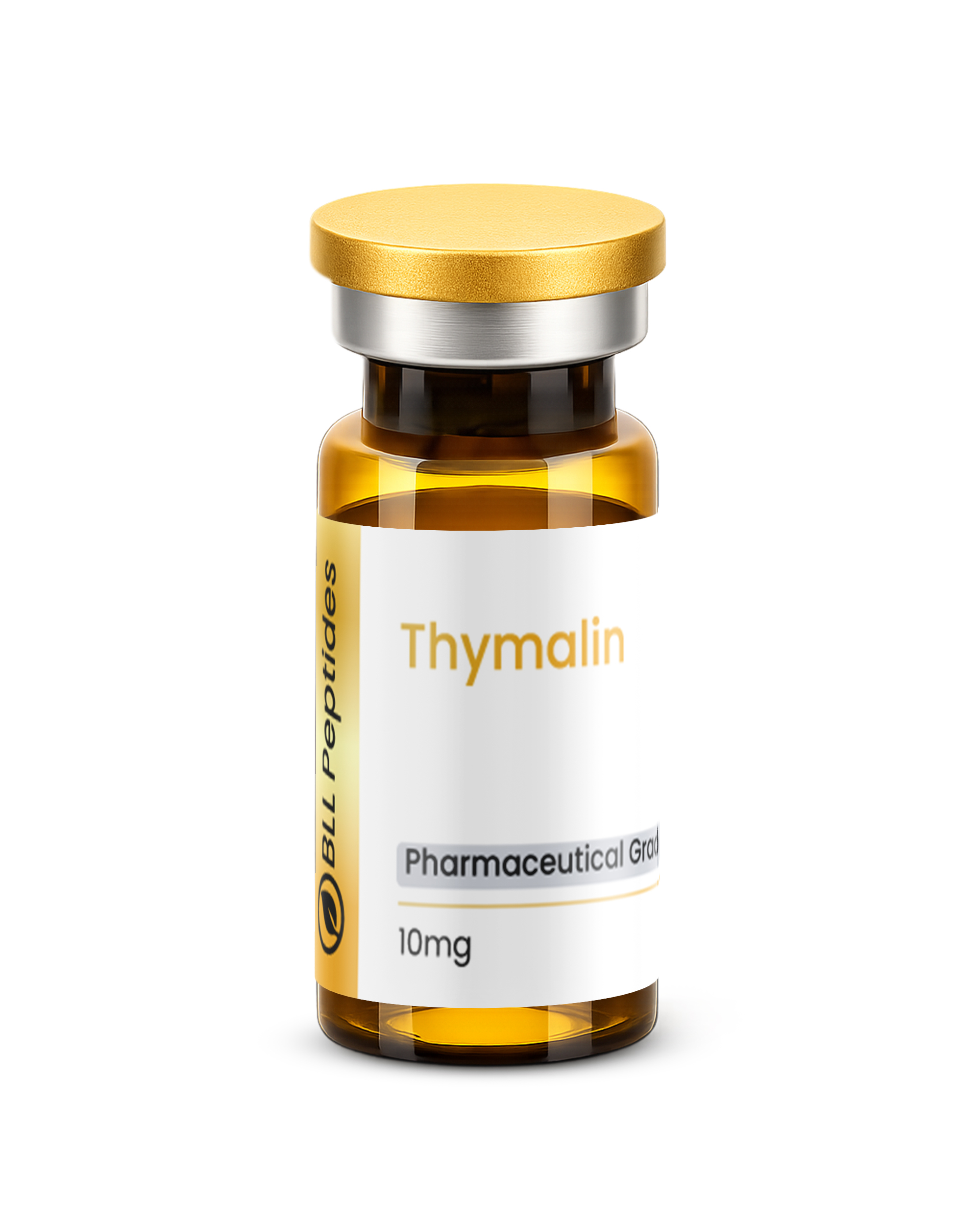
In the 1970s and 1980s, a group of Soviet gerontologists conducted something remarkable: a 15-year longitudinal study examining whether thymic peptides could extend healthy lifespan in aging humans. The results were striking enough that the researchers continued their work for decades. The peptide at the center of that research was Thymalin — and its story is one of the most underappreciated chapters in the history of aging science.
Thymalin is a polypeptide extract derived from calf thymus tissue, containing a mixture of thymic peptides that mimic the immune-regulatory signaling of the thymus gland. Unlike synthetic single-peptide compounds, Thymalin is a complex natural extract — a distinction that has both complicated and enriched its research profile. Its primary research applications sit at the intersection of immune restoration, aging biology, and what geroscientists now call “hallmarks of aging.”
Thymalin Research and the Biology of Longevity
The thymus is the primary training ground for T-cells — the adaptive immune cells that coordinate responses to viruses, bacteria, and malignant cells. The problem is that the thymus begins involuting (shrinking and losing function) in early adulthood, with dramatic functional decline after age 40. By age 65, most people retain only 10-15% of youthful thymic function. This thymic involution is now considered one of the primary drivers of age-related immune deterioration.
Thymalin research has focused on whether exogenous thymic peptides can partially compensate for this decline — not by regenerating the thymus itself, but by maintaining the functional capacity of peripheral T-cell populations that can no longer be continuously renewed by thymic output.
The most extensive human longevity research on Thymalin comes from St. Petersburg gerontologist Vladimir Khavinson, whose 15-year studies found that Thymalin treatment in aging subjects was associated with a 20-30% reduction in overall mortality compared to matched control groups.
These findings, published in Russian medical literature and partially translated into English through Khavinson’s extensive output, describe reductions in cardiovascular events, cancer incidence, and all-cause mortality in treated groups. While these studies have methodological limitations by modern RCT standards, they represent one of the longest observational datasets in peptide aging research.
Key Research Findings: Immune Function, Cancer, and Biological Age
In controlled laboratory research, Thymalin has been shown to restore several key immune parameters that decline with age: CD4+/CD8+ T-cell ratios (a key marker of immune balance), natural killer (NK) cell activity, and production of key cytokines including interleukin-2 and interferon-gamma. These are not peripheral markers — they represent the functional capacity of the adaptive immune system to mount effective responses.
A peer-reviewed study examining Thymalin’s effects on elderly subjects (mean age 73) found significant improvements in T-cell counts, NK cell activity, and inflammatory marker profiles over a treatment period (PMID: 15115295). The researchers also noted reductions in autoimmune markers — consistent with Thymalin’s proposed role in restoring immune tolerance that deteriorates with age.
Beyond immune markers, Thymalin research has examined its effects on biomarkers of biological aging, including telomere length measurements, DNA methylation patterns, and gene expression profiles associated with cellular senescence. Some researchers have proposed that Thymalin’s effects extend beyond immune modulation to a broader epigenetic regulatory role — though this remains an active area of investigation.
The concept of “geroprotection” — compounds that slow the biological aging process rather than treating specific diseases — is increasingly central to longevity research, and Thymalin is one of the few compounds with multi-decade human data in this framework.
For longevity researchers, Thymalin represents a compelling research subject alongside other thymic regulators. For reference, BPC-157 and NAD+ offer complementary angles on tissue repair and cellular energy maintenance in aging research. BLL Peptides sources Thymalin for qualified researchers.
Frequently Asked Questions About Thymalin and Longevity Research
- What is Thymalin and how does it differ from Thymosin Alpha-1?
- Thymalin is a complex polypeptide extract from calf thymus containing multiple active peptides, while Thymosin Alpha-1 is a single purified 28-amino-acid compound. Both derive from thymic biology but represent different approaches to thymic peptide research.
- What is the evidence base for Thymalin in longevity research?
- The most extensive data comes from Khavinson’s multi-decade longitudinal studies in Russia, showing 20-30% reductions in mortality. Controlled studies have documented restored T-cell ratios, NK cell activity, and reduced inflammatory markers in elderly subjects.
- How does thymic involution relate to aging?
- The thymus shrinks progressively from adulthood, reaching minimal function by the mid-60s. This loss of T-cell training capacity is associated with increased vulnerability to infections, cancer, and autoimmune conditions — making it a central target in aging research.
- What does “geroprotection” mean in the context of Thymalin research?
- Geroprotection refers to interventions that slow or modify the biological aging process itself, rather than treating specific age-related diseases. Thymalin is studied in this context because its effects appear to extend across multiple hallmarks of aging simultaneously.
Dr. James Nguyen is a neurosurgeon and research advisor at BLL Peptides. His work focuses on peptide research, neurological recovery, and longevity science. All content is for educational and research purposes only.
This content is intended for research purposes only. BLL Peptides products are not intended for human consumption.