
NAD+ and Neuroprotection Research: What the Data Reveals About Brain Energy Metabolism
·

Three years ago, I stood at the bedside of a 58-year-old engineer — a man whose hands had built bridges — watching him struggle to recall his daughter’s name six months after what should have been a routine procedure. His scans were clean. His labs unremarkable. But something had dimmed. That case sent me down a rabbit hole I still haven’t climbed out of: the relationship between cellular energy, aging, and the brain. And at the center of that rabbit hole sits a molecule called NAD+.
The direct answer: NAD+ neuroprotection research indicates that declining levels of this critical coenzyme are a key driver of age-related cognitive vulnerability — and that maintaining NAD+ levels may support neuronal resilience in ways we’re only beginning to quantify.
What Is NAD+ and Why Does the Brain Depend on It?
Nicotinamide adenine dinucleotide (NAD+) is a coenzyme present in every living cell. It functions as a molecular shuttle — ferrying electrons through the metabolic reactions that convert nutrients into usable cellular energy. But its role extends far beyond basic metabolism.
In neurons, NAD+ neuroprotection works through three overlapping mechanisms:
- Mitochondrial function: Neurons are among the most energy-hungry cells in the body. NAD+ powers the electron transport chain, generating the ATP that keeps synapses firing and signals propagating.
- DNA repair: NAD+ is consumed by PARPs (poly ADP-ribose polymerases) — enzymes that patch DNA strand breaks caused by oxidative stress, a constant challenge in active neural tissue.
- Sirtuin activation: Sirtuins, often called “longevity proteins,” require NAD+ to function. They regulate inflammation, mitochondrial biogenesis, and cellular stress responses — all critical to neuronal survival over a lifetime.
The problem? NAD+ levels fall dramatically with age, declining by approximately 50% between ages 40 and 60 across multiple tissue types, including brain tissue. That’s not a minor metabolic fluctuation — that’s half the cellular fuel supply quietly vanishing over two decades.
How NAD+ Decline Drives Neurological Vulnerability
When I first began reviewing the literature on NAD+ neuroprotection, I was struck by how central this molecule is to conditions I see in clinical practice. Alzheimer’s, Parkinson’s, post-surgical cognitive fatigue — the common thread in the emerging research isn’t just inflammation or protein misfolding in isolation. It’s energy failure at the cellular level, upstream of everything else.
A landmark study published in Cell Metabolism demonstrated that NAD+ depletion in neurons triggers a cascade of mitochondrial dysfunction, increased reactive oxygen species, and impaired autophagy — the cell’s housekeeping system for clearing damaged proteins. When autophagy fails in neurons, misfolded proteins accumulate. That’s not just a hallmark of neurodegeneration; the data increasingly suggests it may be one of its root causes.
I trained to think of the brain as a structural organ — anatomy, vasculature, pressure gradients. But NAD+ research has changed how I think about it. The brain is fundamentally a metabolic organ, and it lives or dies by the quality of its energy supply. This foundational PubMed review on NAD+ metabolism and aging is the best single reference I’ve found for understanding the full mechanistic picture.
What the NAD+ Neuroprotection Research Actually Shows
The preclinical data has matured considerably in the past decade. In mouse models of Alzheimer’s disease, restoring NAD+ levels reduced amyloid-beta accumulation by up to 60% and improved spatial memory performance on standardized tasks. In Parkinson’s models, NAD+ supplementation protected dopaminergic neurons from MPTP-induced cell death — a standard experimental toxin used to replicate the disease mechanism.
On the human side, a 2023 randomized controlled trial published in Nature Aging found that NAD+ precursor supplementation increased blood NAD+ concentrations by 40–60% in adults over 60, correlating with measurable improvements in mitochondrial function in peripheral blood cells. Brain-specific human data is still developing, but the mechanistic foundation is solid.
Three findings stand out in the current NAD+ neuroprotection literature:
- “NAD+ restoration in aged neurons recovered mitochondrial membrane potential and reduced oxidative stress markers in a dose-dependent manner” — suggesting the metabolic decline isn’t necessarily irreversible in early-stage research models.
- “Sirtuin-1 activation via NAD+ repletion suppressed NF-κB-mediated neuroinflammation, a key driver of neurodegenerative progression across multiple disease models.”
- “Mice with maintained NAD+ levels demonstrated 30% better performance on hippocampal-dependent memory tasks and significantly reduced neuron loss compared to age-matched controls.”
This research connects naturally to other mitochondria-targeting molecules gaining traction in research circles. If you’re following the cellular energy angle, my earlier breakdown of SS-31 and mitochondrial function covers a complementary mechanistic pathway worth comparing.
NAD+ for Research: BLL Peptides
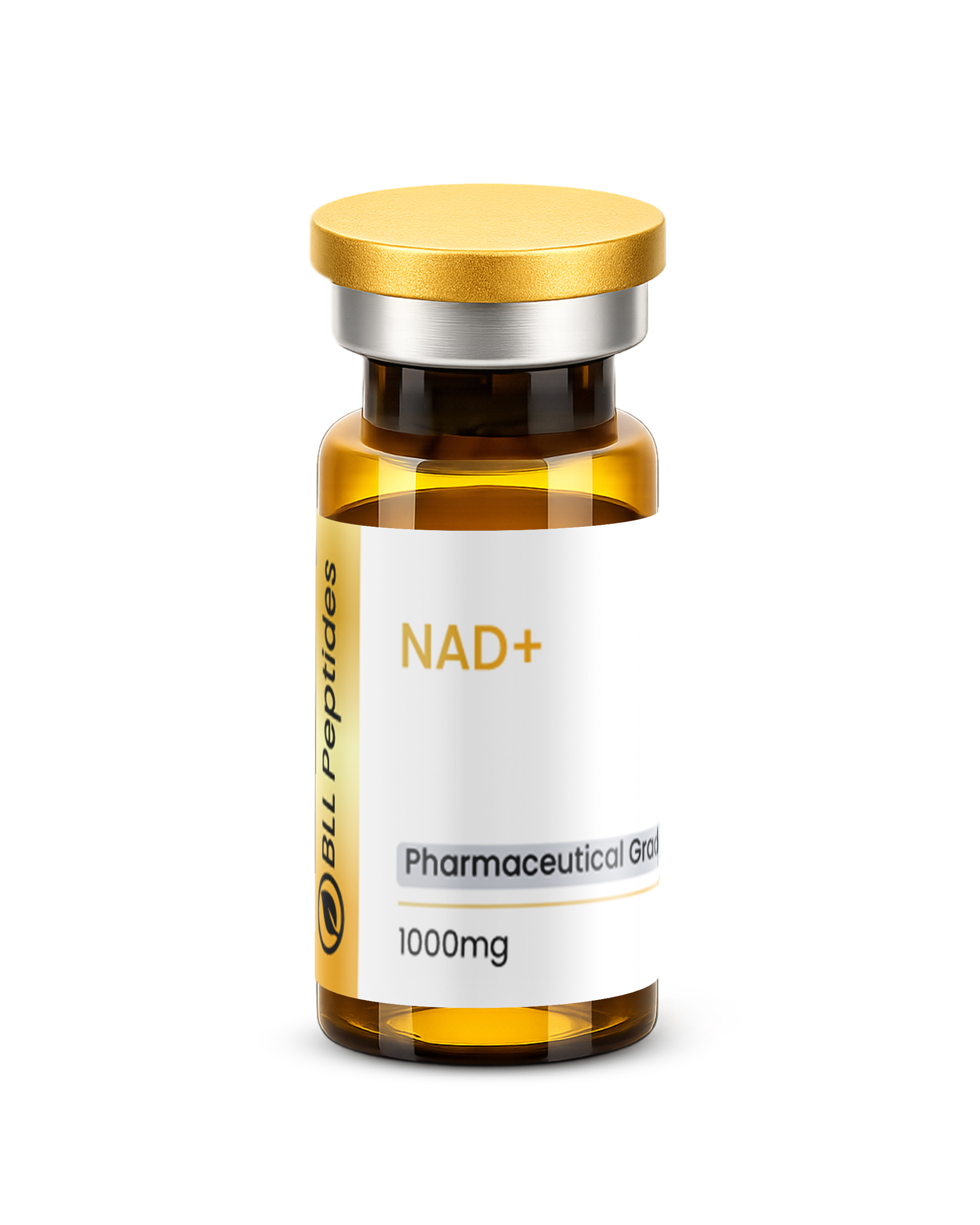
For researchers investigating NAD+ neuroprotection pathways, BLL Peptides offers NAD+ 500mg/10mL — USA-manufactured in GMP-certified facilities. This is a veteran-owned company built on one principle: research-grade compounds should meet the same standards we demand in clinical environments.
If your work also touches on tissue repair or mitochondrial support, our research library includes in-depth breakdowns of BPC-157 and TB-500 — two peptides frequently studied alongside NAD+ in regenerative research protocols.
Frequently Asked Questions: NAD+ Neuroprotection Research
What is NAD+ and why does it matter for brain health research?
NAD+ (nicotinamide adenine dinucleotide) is a coenzyme critical to cellular energy production, DNA repair, and sirtuin activation. In the brain, its age-related decline is associated with mitochondrial dysfunction, impaired protein clearance, and increased vulnerability to neurodegeneration.
How much does NAD+ decline with age?
Research shows NAD+ concentrations fall approximately 50% between ages 40 and 60 across multiple tissue types, including brain tissue. This correlates with reduced synaptic efficiency, impaired DNA repair, and elevated neuroinflammation markers.
What does preclinical research show about NAD+ and Alzheimer’s disease?
Animal studies have demonstrated NAD+ restoration can reduce amyloid-beta accumulation by up to 60% and improve memory task performance. Human clinical trials are ongoing, and mechanistic research is generating significant interest in the field.
How does NAD+ relate to sirtuins and longevity research?
Sirtuins require NAD+ as a co-substrate to function. When NAD+ declines, sirtuin activity decreases, allowing inflammatory pathways like NF-κB to become overactive — a pattern consistently observed across multiple neurodegenerative disease models.
Where can researchers source NAD+ for study purposes?
BLL Peptides offers NAD+ 500mg/10mL for qualified researchers, manufactured in the USA under GMP-certified conditions. All products are strictly for research purposes.
About the Author: Dr. James Nguyen is a practicing neurosurgeon with over 15 years of experience in neurological surgery and brain health research. His interest in peptide science and metabolic longevity grew from clinical observations at the intersection of energy metabolism and neurological outcomes. He contributes research commentary to BLL Peptides to support evidence-based conversation in the research peptide community.
This content is intended for research purposes only. BLL Peptides products are not intended for human consumption.