
Epithalon Research: What the Pineal Tetrapeptide Data Reveals About Telomere Extension and Longevity Mechanisms
·

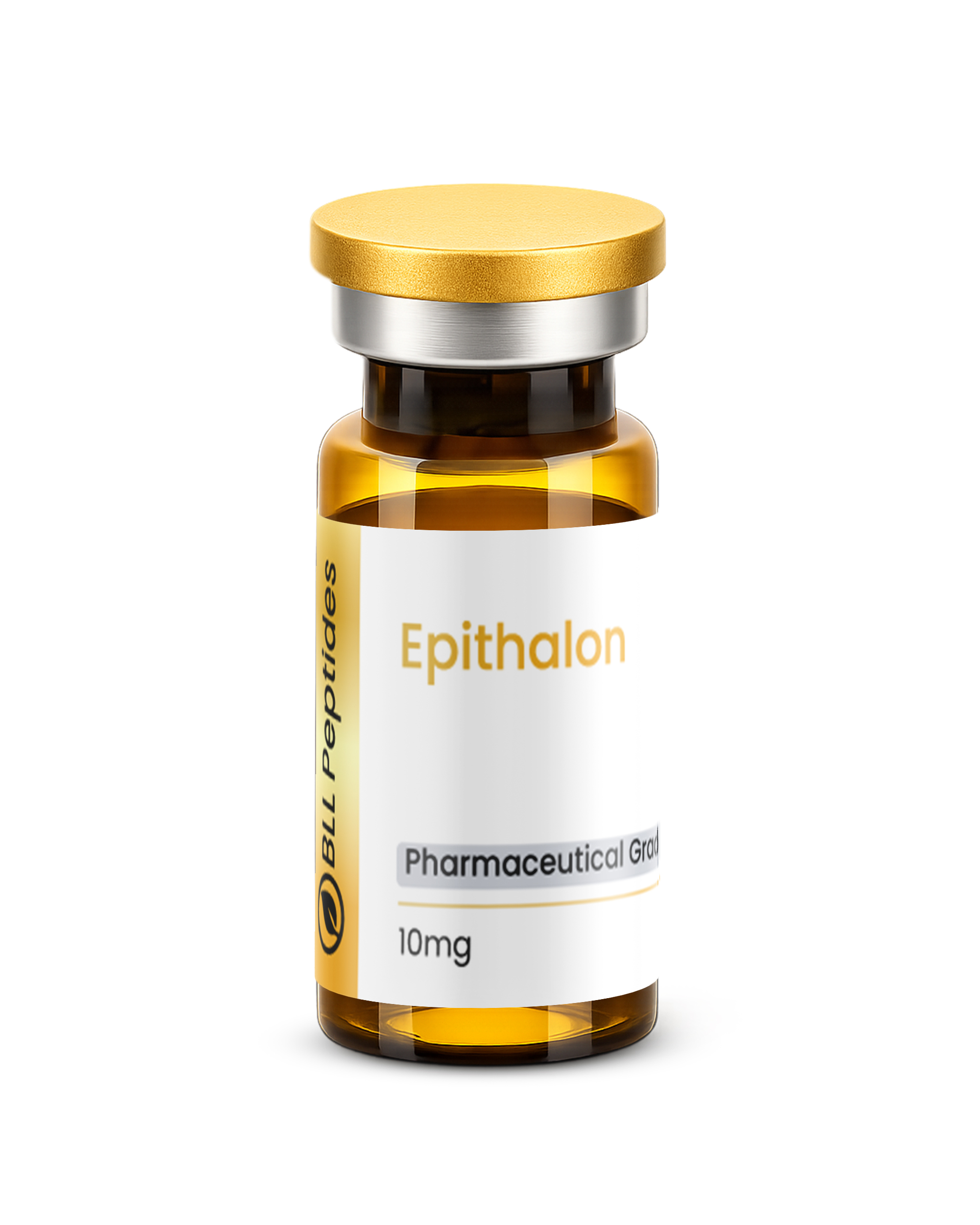
I see the effects of cellular aging every time I open a skull. Patients in their 60s whose brains look decades older than their chronological age — stiff vasculature, diminished cortical reserve, atrophy that just doesn’t match what’s on the chart. It’s one of the things that pushed me, long ago, to look beyond the operating room for answers about Epithalon research and the underlying biology of aging itself.
What I found was a tetrapeptide derived from the pineal gland — one of the more quietly compelling compounds in longevity science — with data pointing toward mechanisms most of us were taught were essentially fixed. The story of Epithalon is ultimately a story about telomeres, about the clocks inside our cells, and about whether those clocks can be reset.
What Is Epithalon?
Epithalon (also rendered as Epitalon) is a synthetic tetrapeptide composed of four amino acids: alanine, glutamic acid, aspartic acid, and glycine (Ala-Glu-Asp-Gly). It was developed by Dr. Vladimir Khavinson at the St. Petersburg Institute of Bioregulation and Gerontology, modeled on a natural extract called epithalamin isolated from bovine pineal tissue.
The pineal gland is widely known as the source of melatonin — the hormone that regulates sleep. But in aging biology, its role is considerably broader. It functions as a kind of pacemaker for neuroendocrine aging, coordinating hormonal signals that decline with age. Epithalamin was the natural extract; Epithalon is the synthetic, more stable version that researchers have been studying for over two decades.
Epithalon Research and the Telomere Connection
One of the most striking areas of Epithalon research involves telomeres — the protective caps at the ends of chromosomes that shorten incrementally with each cell division. When telomeres become critically short, cells enter senescence (a kind of cellular retirement) or undergo programmed death. This shortening process is one of the most well-characterized biological clocks of aging we have.
A landmark 2003 study published in Neoplasma by Khavinson and colleagues examined Epithalon’s effects on telomere length in human fetal fibroblasts. The researchers observed that Epithalon appeared to activate telomerase — the enzyme responsible for rebuilding telomeres — in somatic cells. This is significant because telomerase is normally active only in stem cells and germ cells. Most adult somatic cells can’t repair their own telomere caps. If Epithalon can upregulate that activity, it touches something fundamental about how cellular aging progresses.
Epithalon remains one of the only peptides in research literature with data specifically suggesting telomerase activation in non-germline human cells.
How Epithalon Works — Proposed Mechanisms
Based on available preclinical and cell culture data, Epithalon appears to operate through several converging mechanisms:
- Telomerase upregulation: Stimulating telomerase expression in cells that don’t normally produce the enzyme, potentially extending replicative lifespan
- Pineal/melatonin axis regulation: Research suggests Epithalon may normalize melatonin production rhythms that become dysregulated with age, restoring aspects of circadian neuroendocrine signaling
- Epigenetic modulation: Some data points to Epithalon influencing gene expression patterns associated with oxidative stress resistance and cellular repair
- Antioxidant enzyme upregulation: Studies in aged animals noted increases in superoxide dismutase (SOD) and glutathione peroxidase activity — two of the body’s primary intracellular antioxidant defenses
The pineal gland is far more than a melatonin factory — it appears to function as a master pacemaker for aging biology, and Epithalon was designed to speak that language.
Key Findings From Epithalon Studies
The Khavinson laboratory has published extensively on Epithalon, with findings across multiple model systems:
Lifespan extension in mice: In long-term animal studies, Epithalon-treated mice showed a 27% increase in maximum lifespan compared to controls. Notably, treated animals maintained normal physical activity and behavioral function significantly longer — suggesting healthspan extension, not just added time.
Retinal preservation: Aged rats treated with Epithalon showed significantly better preservation of photoreceptors and retinal architecture compared to controls. This is a finding worth noting, given the pineal gland’s anatomical and functional proximity to visual processing systems.
Hayflick limit data: In human cell culture research, Epithalon at concentrations between 10⁻⁵ and 10⁻¹⁰ M stimulated division of somatic cells beyond the Hayflick limit — the 50–70 division ceiling that normal human cells typically can’t exceed. The cells continued to divide while maintaining normal morphology and function.
The intersection of telomere biology, epigenetic regulation, and circadian neuroendocrine function makes Epithalon one of the more multi-mechanistic compounds currently being studied in longevity research.
Exploring Longevity Research at BLL Peptides
Epithalon sits at the intersection of several aging-related pathways that have become major focus areas in longevity research. Researchers exploring these mechanisms may also find value in reviewing data on complementary compounds:
- NAD+ (500mg/10ml) — operates through sirtuin activation and mitochondrial biogenesis, pathways that intersect with epigenetic aging clocks. Our NAD+ neuroprotection research overview covers the cellular energy mechanisms in depth.
- SS-31 and mitochondrial research — mitochondrial dysfunction is tightly linked to telomere attrition and cellular senescence; understanding how these pathways interact is central to longevity biology.
BLL Peptides supplies research-grade compounds for laboratory use. All products are USA-manufactured and GMP-certified, backed by a veteran-owned team committed to purity and transparency in the research supply chain.
FAQ: Epithalon Research
What is Epithalon made of?
Epithalon is a synthetic tetrapeptide consisting of four amino acids: alanine, glutamic acid, aspartic acid, and glycine (Ala-Glu-Asp-Gly). It was synthesized based on epithalamin, a natural peptide extract from bovine pineal gland tissue.
What does Epithalon research primarily focus on?
Current Epithalon research centers on telomere biology and telomerase activation, circadian rhythm and melatonin modulation, antioxidant enzyme upregulation, epigenetic aging mechanisms, and lifespan extension in animal models. Human cell culture data exists, but large-scale human clinical trials remain limited.
Is Epithalon the same as Epitalon?
Yes — Epithalon and Epitalon are the same compound. The difference is simply a transliteration variation from Russian. Both names refer to the identical Ala-Glu-Asp-Gly tetrapeptide sequence developed by Dr. Khavinson’s laboratory.
What is the Hayflick limit and why does it matter for Epithalon research?
The Hayflick limit describes the finite number of times normal human somatic cells can divide — typically 50–70 divisions — before entering permanent senescence. Epithalon research has examined whether this ceiling can be extended in cell culture conditions, with some published data suggesting that at specific concentrations, Epithalon may allow cells to divide beyond this threshold while retaining normal function.
How does Epithalon relate to telomerase activity?
Research suggests Epithalon may upregulate telomerase — the enzyme that rebuilds shortened telomeres — in somatic cells that don’t normally express it. Since telomere shortening is one of the primary drivers of cellular aging and senescence, this proposed mechanism is a central focus of Epithalon longevity research.
About the Author: Dr. James is a board-certified neurosurgeon with extensive clinical experience in complex cranial and spinal procedures. His research interests include neuroprotection, cellular longevity mechanisms, and the emerging science of peptide biology. He serves as a scientific advisor to BLL Peptides.
This content is intended for research purposes only. BLL Peptides products are not intended for human consumption.