
Selank Peptide Research: A Neurosurgeon’s Investigation into Tuftsin-Derived Anxiolysis, BDNF, and Cognitive Resilience
·

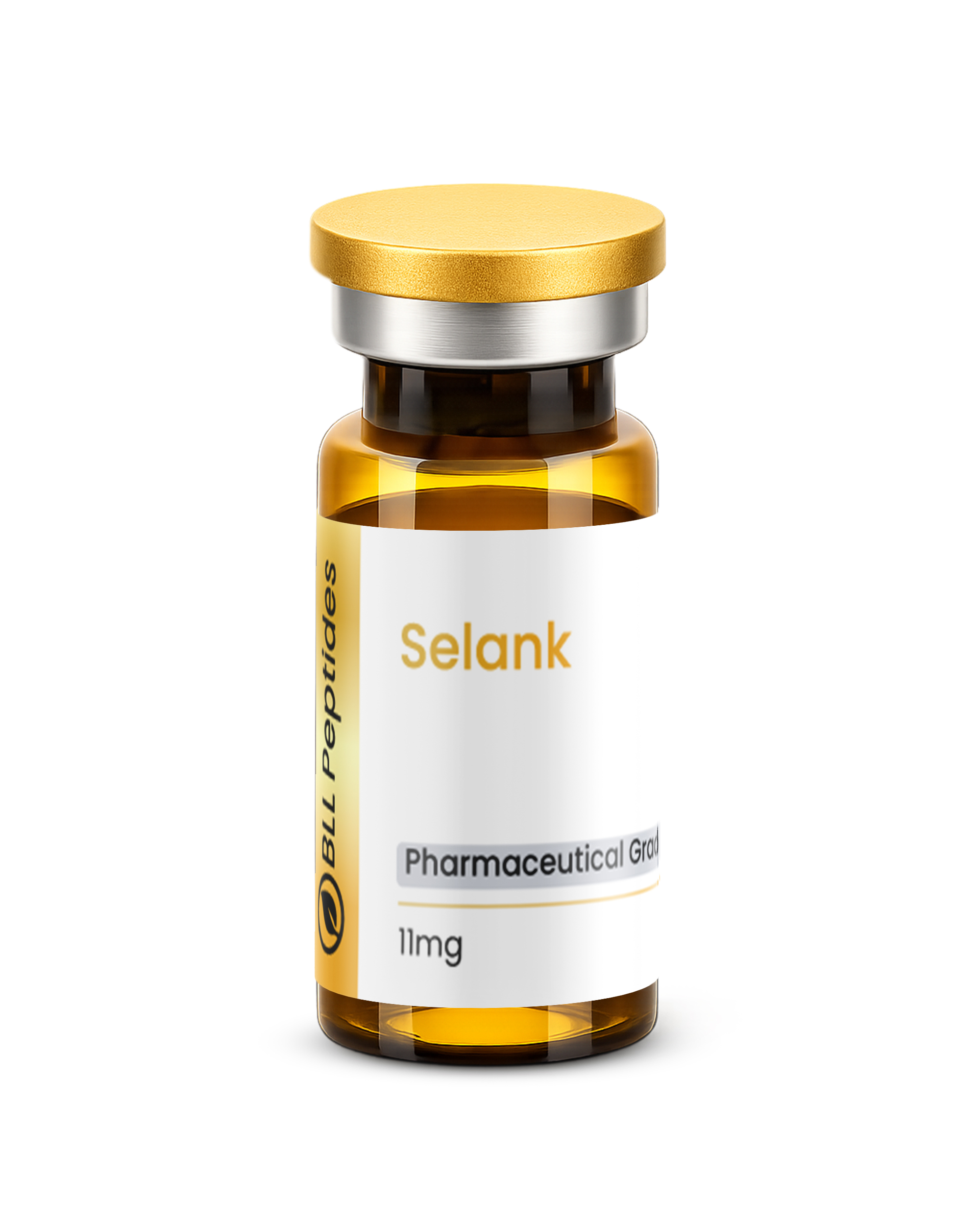
The patient had no abnormal imaging. No lesion I could excise, no pressure I could relieve. She was a 47-year-old attorney who described her mind as “perpetually stuck in threat mode” — high-functioning by every external measure, but chronically dysregulated in ways that affected her memory, her sleep, and her quality of life. That case sent me back into the neuroscience of anxiolytic compounds, and eventually to Selank peptide research — a body of literature I had not explored deeply before. What I found was genuinely interesting.
Selank is not a household name outside niche research circles, but its mechanistic profile and preclinical data make it one of the more carefully characterized anxiolytic peptides in the scientific literature. Here is what the research shows.
What Is Selank? The Direct Answer
Selank (Thr-Lys-Pro-Arg-Pro-Gly-Pro) is a synthetic heptapeptide analog of tuftsin — a naturally occurring tetrapeptide (Thr-Lys-Pro-Arg) produced in the spleen and found on the heavy chain of immunoglobulin G. Like Semax, Selank was developed at the Institute of Molecular Genetics of the Russian Academy of Sciences and holds clinical approval in Russia as an anxiolytic compound. The Pro-Gly-Pro C-terminal extension dramatically improves metabolic stability by protecting against rapid enzymatic degradation, enabling the compound to reach its targets of action in meaningful concentrations in preclinical models.
Tuftsin itself is an endogenous immunomodulatory tetrapeptide with known roles in macrophage activation and phagocytosis. What makes Selank research compelling is how the synthetic analog extends far beyond those immune origins into central nervous system territory — specifically into anxiolytic, cognitive, and neurotrophin-modulating effects that have been characterized across a substantial body of preclinical and limited clinical work.
How Selank Works: GABAergic Modulation, Enkephalin Dynamics, and BDNF Upregulation
As a neurosurgeon accustomed to thinking in systems, I was drawn to Selank’s multi-layered mechanism profile. Three primary pathways emerge from the research literature:
GABAergic system modulation: Unlike benzodiazepines — which are direct positive allosteric modulators of GABA-A receptors and carry well-documented risks of tolerance, dependence, and withdrawal — Selank appears to modulate the GABAergic system indirectly. Research suggests it influences GABA synthesis and turnover, as well as the expression of GABA-A receptor subunits, producing anxiolytic effects via a gentler mechanism that does not replicate the sedation or dependency signatures of classical GABAergic agents. In rodent models, Selank consistently reduces anxiety-related behavior without impairing motor coordination.
Enkephalin system regulation: One of the more distinctive findings in Selank research involves its effect on enkephalins — endogenous opioid peptides involved in stress response, emotional regulation, and pain modulation. Studies have demonstrated that Selank significantly inhibits the degradation of met-enkephalin in the brain, effectively extending its activity window. This enkephalinergic mechanism likely contributes to the anxiolytic and mood-stabilizing effects documented in behavioral models, and represents a pathway entirely distinct from both benzodiazepines and SSRI-class compounds.
BDNF upregulation: In common with its structural cousin Semax, Selank has been shown to upregulate brain-derived neurotrophic factor (BDNF) expression in preclinical models — particularly in the hippocampus, a region central to both anxiety regulation and memory consolidation. The fact that Selank promotes BDNF while simultaneously reducing anxiety-related behavior positions it at a compelling intersection: it may address the acute disruption of stress while simultaneously supporting the neuroplastic remodeling that underlies long-term resilience.
What Selank Peptide Research Actually Shows
Anxiolytic Effects Without Sedation or Dependence
The core finding across Selank’s anxiety research is consistent: meaningful reduction of anxiety-related behavior in animal models, without the sedation, muscle relaxation, or cognitive impairment that typically accompany GABAergic anxiolytics. In elevated plus maze and open field tests — standard preclinical anxiety paradigms — Selank-treated animals show increased exploration and reduced freezing behavior at doses that do not impair motor coordination. Research has found Selank produces anxiolytic effects comparable to certain benzodiazepines in some behavioral measures, but without the sedation or withdrawal phenomena. PubMed-indexed research on Selank’s anxiolytic and cognitive-enhancing profile provides a useful overview of the compound’s preclinical evidence base.
Cognitive Performance Under Stress
Anxiety and cognitive impairment are closely linked — chronic stress degrades working memory, attention, and executive function through overlapping neurobiological mechanisms. Selank research has examined this intersection explicitly: in rodent models subjected to chronic mild stress, Selank-treated animals showed measurably better performance on spatial memory and learning tasks compared to controls. The proposed mechanism involves Selank’s combined effects on BDNF (supporting synaptic plasticity) and enkephalin modulation (reducing stress-induced interference with hippocampal function). This positions Selank as a research compound relevant not just to anxiety models in isolation, but to the cognitive consequences of chronic stress — a more ecologically relevant research question for most health contexts.
Immune and Anti-Inflammatory Modulation
Given Selank’s tuftsin heritage, immune modulation was an expected domain — and the findings are consistent with that lineage. Selank has been shown to influence IL-6 and other cytokine levels in preclinical models, with a pattern suggesting modulation of immune activation rather than gross immunosuppression. This intersects directly with research on the stress-immune axis, where chronic psychological stress produces measurable dysregulation of immune function through well-characterized HPA-axis and sympathetic nervous system pathways. Research documents that chronic stress reduces natural killer cell cytotoxicity by up to 50% in some rodent models, and that hippocampal BDNF levels correlate directly with anxiety-related behavioral outcomes across multiple paradigms — two data points that frame exactly why a compound like Selank merits careful investigation.
Key Findings from Selank Peptide Research
- Anxiolytic effects in rodent behavioral paradigms comparable to some benzodiazepines in certain measures, but without sedation, motor impairment, or dependency signatures
- Inhibits met-enkephalin degradation, extending endogenous opioid peptide activity in CNS tissue — a mechanistically distinct anxiolytic pathway
- Upregulates hippocampal BDNF expression, supporting synaptic plasticity alongside and independent of its anxiolytic activity
- Improves spatial memory and learning task performance in chronic mild stress animal models — a direct link between anxiolytic and cognitive-enhancing research profiles
- Influences IL-6 and cytokine dynamics, consistent with its tuftsin-derived structure and linking its activity to the stress-immune axis
- Holds Russian regulatory approval as an anxiolytic — providing a clinical research context alongside the extensive animal model literature
A compound that simultaneously reduces anxiety-related behavior, supports neuroplastic BDNF signaling, and modulates the endogenous opioid system — without producing the dependency profile of classical anxiolytics — represents a genuinely distinct research target in neuropsychiatric peptide biology.
Selank and Related Research Compounds at BLL Peptides
Researchers exploring anxiolytic and neuroprotective peptides often examine Selank alongside structurally adjacent compounds. Our Semax peptide research overview covers a closely related compound — also Russian Academy-developed, also BDNF-upregulating, but with a primary focus on neuroprotection and post-ischemic cognitive recovery rather than anxiolysis. The two compounds share structural strategy (the Pro-Gly-Pro stabilization extension) while serving as useful contrasts in research design: Semax for neuroprotective and post-ischemic models, Selank for stress, anxiety, and cognitive resilience models.
For researchers examining the mitochondrial and neuroenergetic dimensions of cognitive function under chronic stress, NAD+ research provides a complementary lens — particularly in the context of oxidative stress pathways activated by sustained psychological stress states. For the broader tissue-repair dimension of peptide research, BPC-157 covers mechanisms involved in angiogenesis and musculoskeletal repair that intersect with systemic recovery in post-stress and post-injury research contexts.
This content is intended for research purposes only. BLL Peptides products are not intended for human consumption.
Frequently Asked Questions About Selank
What is the difference between Selank and benzodiazepines?
Benzodiazepines are direct positive allosteric modulators of GABA-A receptors, producing anxiolytic effects alongside sedation, muscle relaxation, and significant dependency and withdrawal risk. Selank modulates GABAergic systems indirectly, while also acting through enkephalin and BDNF pathways. Preclinical research shows comparable anxiolytic effects in some behavioral models, but without the sedation, motor impairment, or dependency signatures associated with direct GABA-A agonists.
Is Selank the same as Semax?
No. Selank is derived from tuftsin — an endogenous immune peptide — and is studied primarily for anxiolytic and stress-related cognitive effects. Semax is derived from ACTH(4-7) and is studied primarily for neuroprotection and post-ischemic cognitive recovery. Both were developed at the Institute of Molecular Genetics in Russia, both use Pro-Gly-Pro C-terminal stabilization, and both upregulate BDNF — but their primary mechanisms, receptor interactions, and research applications differ substantially.
What is tuftsin and why is it relevant to Selank research?
Tuftsin (Thr-Lys-Pro-Arg) is an endogenous tetrapeptide produced in the spleen and found on the heavy chain of immunoglobulin G. It functions as an immunomodulator — activating macrophages, monocytes, and granulocytes in the innate immune response. Selank extends the tuftsin sequence with a Pro-Gly-Pro tripeptide for improved metabolic stability, which also significantly expands its biological activity into CNS and anxiolytic research territory well beyond tuftsin’s primarily immune role.
What behavioral models have been used in Selank research?
The primary behavioral paradigms used in Selank research include the elevated plus maze, open field test, Morris water maze, passive avoidance task, and chronic mild stress protocols. These models collectively assess anxiety-related behavior, spatial memory acquisition and retention, and cognitive performance under stress — covering the main research domains where Selank shows documented activity.
Does Selank research show effects on immune function?
Yes. Consistent with its tuftsin-derived structure, Selank research documents influence on cytokine profiles — including IL-6 modulation — and immune activity in preclinical models. This intersects with research on the stress-immune axis, where chronic psychological stress produces measurable dysregulation of immune function through HPA-axis and sympathetic nervous system pathways. Selank’s combined anxiolytic and immunomodulatory profile positions it as a useful research tool for studying this intersection.
About the Author
Dr. James is a board-certified neurosurgeon and member of the BLL Peptides research advisory team. With decades of surgical experience and a focused interest in neural recovery, neuroprotection, and the emerging science of signaling peptides, Dr. James regularly reviews preclinical literature and translates complex findings for clinicians and researchers working at the frontier of neuroscience.
This content is intended for research purposes only. BLL Peptides products are not intended for human consumption.