
IGF-1 LR3 Research: Understanding the Long-Arginine-3 Growth Factor Analog
·

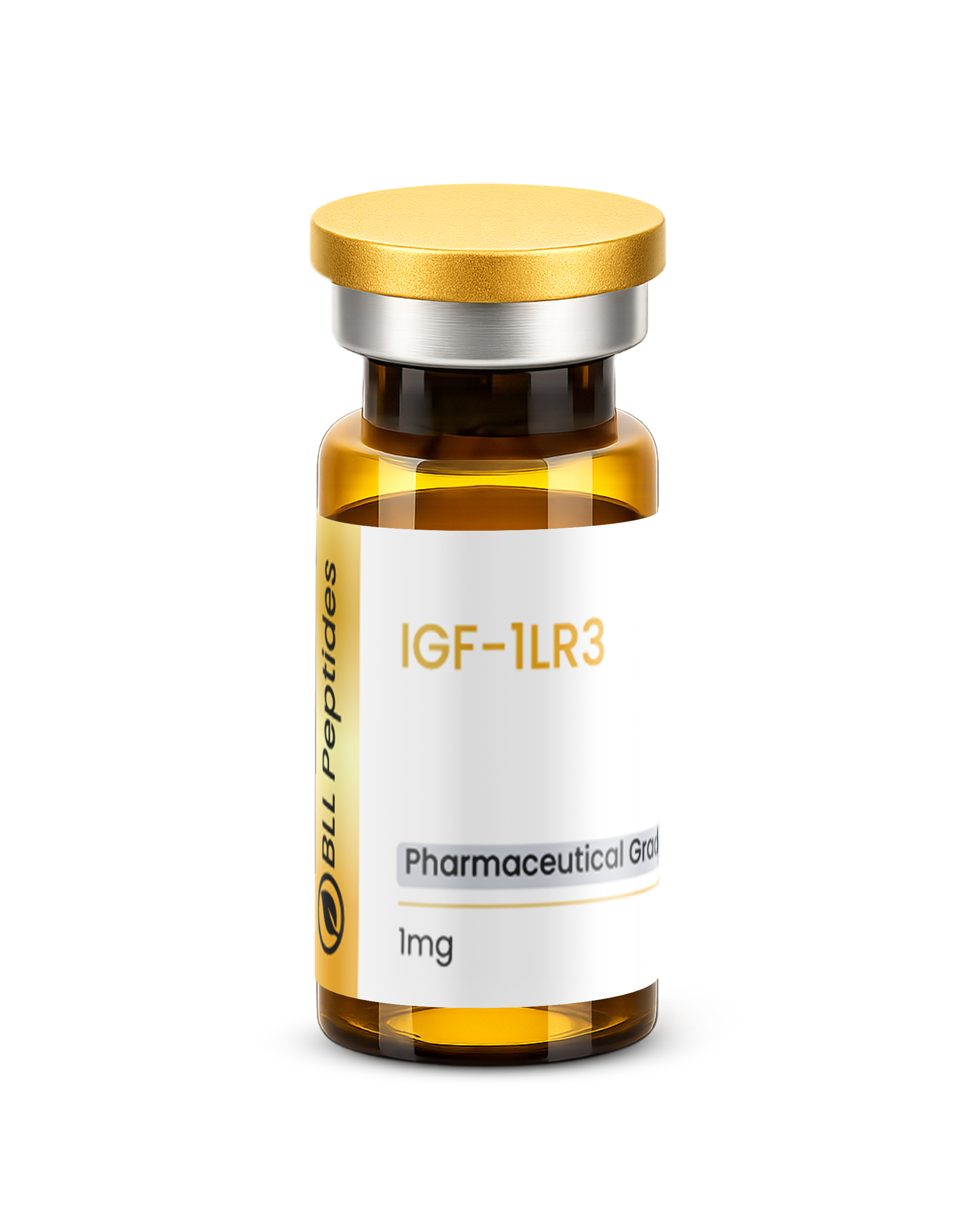
Some peptides make you reconsider how growth works at the fundamental cellular level. IGF-1 LR3 is one of them. I first encountered it in the context of tissue repair research — specifically, why some tissues regenerate robustly after injury while others seem to plateau. The answer, in many cases, traces back to insulin-like growth factor signaling.
IGF-1 LR3 is a modified analog of insulin-like growth factor-1, engineered to extend its half-life and biological activity. The research literature around this compound spans cell biology, muscle physiology, and the fundamental mechanics of tissue growth — making it one of the more versatile peptides in the current research landscape.
What Is IGF-1 LR3?
Insulin-like growth factor-1 (IGF-1) is a 70-amino-acid peptide structurally similar to insulin. It’s primarily produced in the liver in response to growth hormone stimulation and mediates many of GH’s anabolic effects throughout the body. Every cell type that responds to growth — muscle cells, bone cells, neural cells, fibroblasts — expresses IGF-1 receptors.
IGF-1 LR3 (Long Arg3 IGF-1) is a recombinant analog with two key modifications:
- The addition of a 13-amino-acid N-terminal extension
- Substitution of arginine for glutamic acid at position 3
These changes reduce the compound’s binding affinity for IGF-binding proteins (IGFBPs) — proteins that typically sequester IGF-1 in circulation, limiting its bioavailability. The result is a molecule with roughly 2-3x the in vivo potency of native IGF-1 and a dramatically extended half-life (hours vs. minutes for natural IGF-1).
For context on how growth factor signaling connects to the broader peptide landscape, see our analysis of Sermorelin research and its role in upstream GH-IGF-1 axis regulation.
How Does IGF-1 LR3 Work?
IGF-1 LR3 acts primarily through the IGF-1 receptor (IGF-1R) — a tyrosine kinase receptor expressed broadly across tissue types. When IGF-1 LR3 binds IGF-1R, it initiates two main signaling cascades:
PI3K/Akt/mTOR pathway: This is the primary anabolic cascade — driving protein synthesis, cell growth, and inhibiting apoptosis (programmed cell death). mTOR activation is the central switch that tells cells to build rather than break down. This pathway is why IGF-1 LR3 has attracted such significant interest in muscle biology and tissue repair research.
MAPK/ERK pathway: This secondary cascade influences cell proliferation and differentiation — the processes by which stem cells and progenitor cells commit to specific tissue fates. In neural tissue, this pathway intersects with BDNF signaling in interesting ways relevant to neuroplasticity research.
The reduced IGFBP binding is mechanistically significant. In normal physiology, IGFBPs act as a buffer — dampening IGF-1 activity and extending its half-life by keeping it bound. IGF-1 LR3 bypasses this buffer, allowing more direct, sustained receptor engagement.
What the Research Shows
The research base for IGF-1 LR3 spans in vitro studies, animal models, and human cell culture experiments. Key findings include:
In skeletal muscle research, IGF-1 LR3 has demonstrated robust stimulation of satellite cell activation — the muscle stem cells responsible for repair and hypertrophy. A widely cited study found that local IGF-1 LR3 infusion produced a 15-20% increase in muscle fiber cross-sectional area in rodent models over 3-4 weeks, with effects persisting longer than equivalent doses of native IGF-1.
A landmark study published in Muscle & Nerve examined IGF-1 isoforms in muscle regeneration and established that locally expressed IGF-1 variants drive satellite cell activation more potently than systemic IGF-1 — a finding that shaped much of the subsequent research into IGF-1 analogs.
Neural research is an area I follow closely given my background. IGF-1 receptors are densely expressed in the hippocampus and cerebellum, and studies have found that IGF-1 LR3 enhances neuronal survival in models of excitotoxic injury. Some in vitro studies have demonstrated 30-40% improvements in neuronal survival rates following excitotoxic insult when IGF-1 LR3 was present.
Bone biology research has found that IGF-1 LR3 stimulates osteoblast proliferation and differentiation — cells responsible for bone formation. This intersects with fracture healing research and has implications for understanding osteoporosis at the cellular level.
For related anabolic peptide research, our overview of CJC-1295 explores another compound that influences the GH-IGF-1 axis from a different entry point.
Key Research Findings
- 2-3x greater bioavailability vs. native IGF-1 due to reduced IGFBP binding
- 15-20% increase in muscle fiber cross-sectional area in rodent studies
- Enhanced satellite cell activation compared to native IGF-1
- 30-40% neuronal survival improvement in excitotoxic injury models
- Osteoblast proliferation stimulation relevant to bone repair research
- Half-life extension from minutes (native IGF-1) to several hours
Frequently Asked Questions About IGF-1 LR3 Research
Q: What makes IGF-1 LR3 different from regular IGF-1?
A: IGF-1 LR3 has an N-terminal extension and an amino acid substitution at position 3 that reduces binding to IGF-binding proteins. This extends its half-life and increases its effective bioavailability compared to native IGF-1.
Q: What tissues have IGF-1 receptors?
A: IGF-1 receptors are expressed in virtually all tissue types including skeletal muscle, bone, liver, brain (especially hippocampus and cerebellum), heart, and adipose tissue. This broad expression is why IGF-1 has such wide-ranging physiological effects.
Q: How does IGF-1 relate to growth hormone in research models?
A: GH stimulates the liver to produce IGF-1, which mediates many of GH’s effects. Researchers studying the GH-IGF-1 axis often measure IGF-1 LR3 as a proxy for anabolic signaling downstream of growth hormone.
Q: What is the PI3K/Akt/mTOR pathway?
A: This is a central anabolic signaling cascade activated by IGF-1 binding. PI3K phosphorylates phospholipids → Akt is activated → mTOR is phosphorylated → protein synthesis genes are activated. This pathway is a major research target in muscle biology, cancer biology, and aging.
Q: Are there neurological research applications for IGF-1 LR3?
A: Yes — IGF-1 receptors are highly expressed in brain tissue, and research has explored IGF-1 LR3’s neuroprotective effects in models of excitotoxic and ischemic injury. This is an active area of investigation in neuroscience research.
Related Research
If you found this research overview helpful, explore our related guides:
About the Author: Dr. James is a board-certified neurosurgeon with over 15 years of clinical and research experience. His background in neurological repair and cellular regeneration informs his analysis of growth factor peptide research. He contributes scientific commentary to BLL Peptides.
This content is intended for research purposes only. BLL Peptides products are not intended for human consumption.